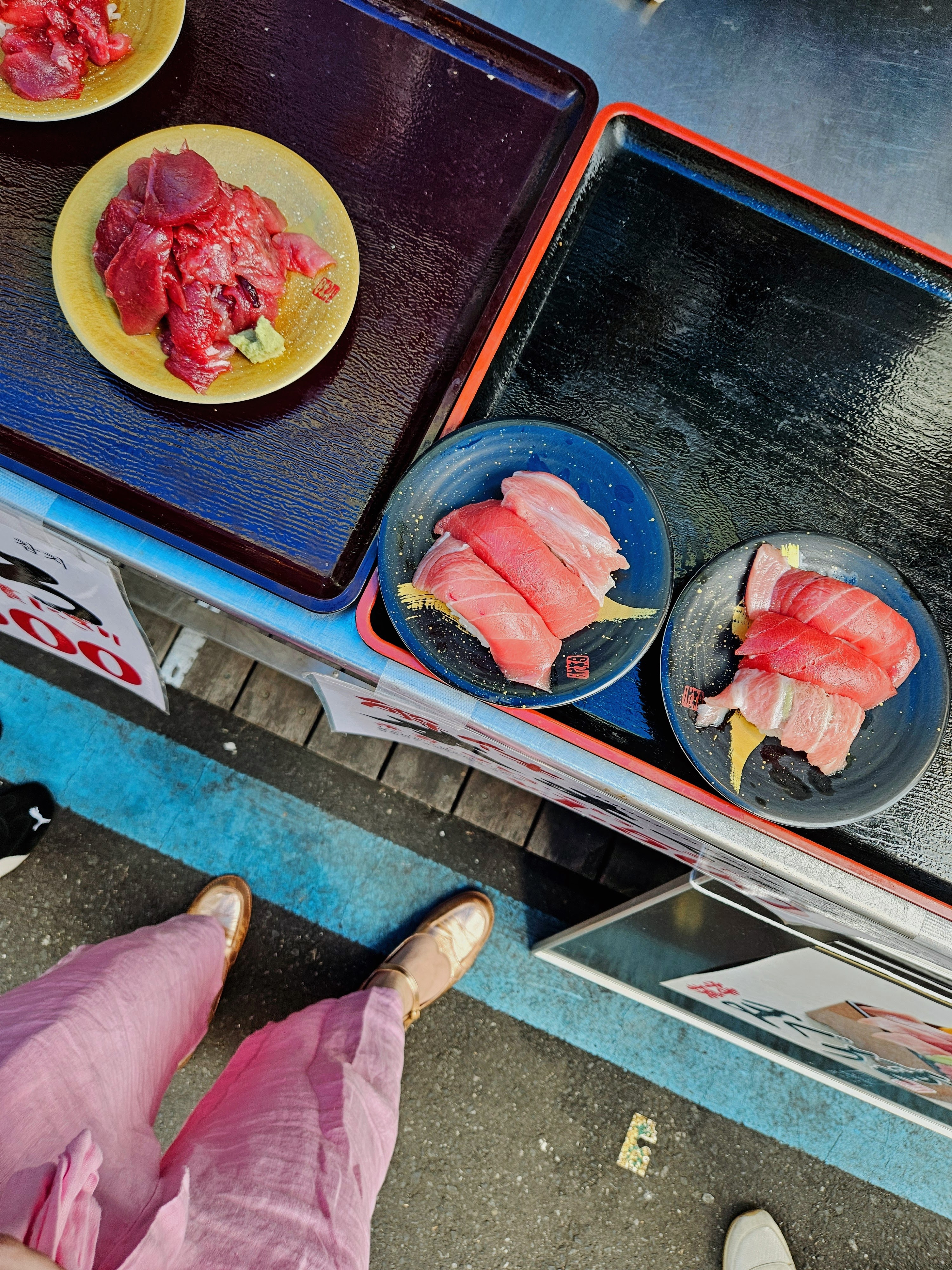
It's not just a fish market. Not even close. Everyone tells you the same thing about Tsukiji in Tokyo: go early, eat sushi, check it off your list. But if you're looking for the best street food stalls in Tsukiji Outer Market, sushi is just the beginning. The first thing that stopped me in my tracks wasn't a piece of nigiri. It was a massive slab of bluefin tuna, laid open on a counter for everyone to see, while a vendor carved thick chunks off it with the calm precision of someone who's done this ten thousand times. No glass case, no ceremony, just a man, a knife, and a fish worth more than most people's rent.
Tsukiji Outer Market is not a sushi destination. It's a 400-stall open-air food hall where you can eat wagyu skewers with a glass of wine at 9 AM, chase it with a tuna-shaped pastry filled with red bean and apricot, cool down with fresh watermelon juice that tastes nothing like what you get back home, and finish with a matcha latte whisked from 12th-century Uji tea. There are knife shops where artisans forge blades using techniques passed down from samurai swordsmithing. There are dim sum steamers, fruit stands selling individual strawberries like jewels, and an omelette sandwich that might ruin every egg sandwich you eat for the rest of your life.
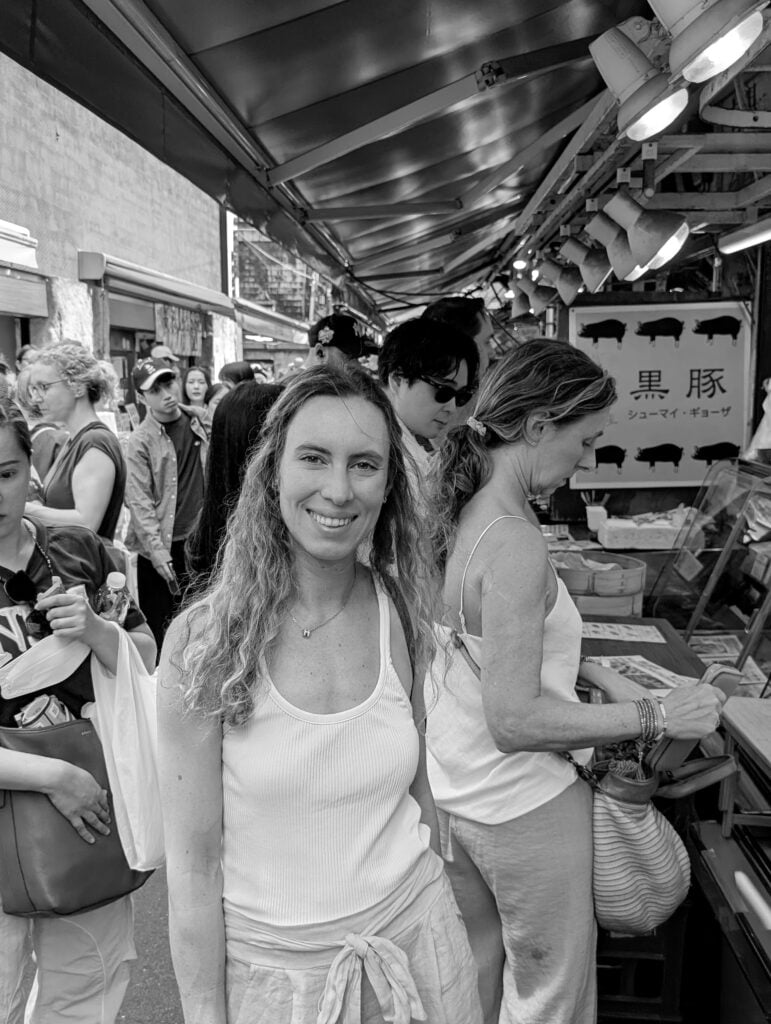

I've been to Tsukiji twice. Once with my husband, where we ate ourselves into a happy stupor. And once with my husband, my mom, and my 6 month old baby in a stroller, which sounds chaotic but was surprisingly doable. The alleys are tight, yes, and I wasn't sure we'd make it through, but I wasn't the only parent pushing a stroller through the crowds. My daughter, Sibby, lasted about twenty minutes before the noise, the smells, and the sheer sensory overload knocked her out cold in the stroller. Honestly, fair. It's a lot.
This guide covers 17 best street food stalls in Tsukiji Outer Market, organized by type, with cultural context for everything you're eating, what to order, what to skip, and the honest tips that most Tsukiji guides leave out. I grew up in Japan. I've been eating at markets like this since I was a kid. And I can tell you that the biggest mistake people make here isn't ordering the wrong thing. It's pacing.
Svadore Tip
You will want to go back for seconds and thirds at the first stall that blows your mind. Resist. Take small portions, keep moving, and save room. If you fill up on the first three stops, you'll miss the best stuff deeper in the market.

The Svadore Secret: How I Actually Get There
You know all those people on social who claim they traveled in business class or economy for free? This is the "cheat code." I use it to find those hidden Business Class seats for 65k points (instead of $8K). Whether I’m flying Sibby to Milan or heading somewhere new with Patrick, I use Seats.aero.
Note: I only share the tools I actually use
What Is Tsukiji Outer Market?
The history of Tsukiji starts not here, but in Nihonbashi, where a fish market emerged during the Edo period when the Tokugawa Shogun invited fishermen from Osaka to supply seafood to the castle. That market grew as Edo grew. Then the Great Kanto Earthquake of 1923 flattened the entire Nihonbashi district, and the government relocated the market to Tsukiji as a "temporary" solution. That temporary move lasted 83 years.
In 2018, the wholesale auction operations (the famous tuna auction, the turret trucks, the 3 AM energy) moved to the new Toyosu Market across the bay. But the outer market, the part you actually eat at, stayed exactly where it's always been. Over 400 stalls line narrow alleys selling everything from seared tuna to menchi-katsu (deep-fried wagyu cutlets) to fruit daifuku so beautiful you'll photograph them before you eat them.
The name itself tells the story. Tsukiji (築地) literally means "reclaimed land." After the Great Fire of Meireki in 1657 leveled much of Tokyo, the shogunate shoveled dirt into the bay to create new land. It wasn't a fish market originally. It was a residential district for samurai, home to temples and estates. The fish came later. The food came after that. And now, four centuries on, it's one of the best places to eat in the world.
Svadore Tip
Tsukiji can feel overwhelming on a first visit, 400+ stalls with no obvious route. If you'd rather have someone steer you to the best bites (and skip the tourist traps), two good options: this Tsukiji food tour with a licensed guide for a more structured, history-focused experience, or this walking food tour if you just want to eat your way through the market stall by stall.
Before You Eat: What You Need to Know
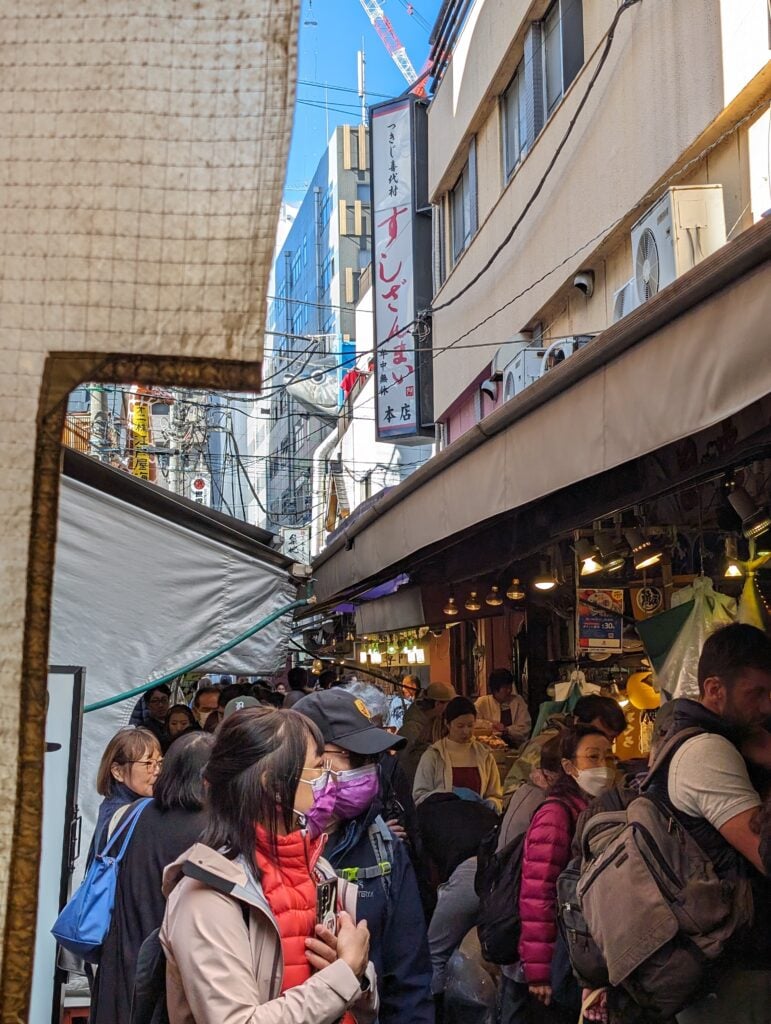
When to go: Everyone says go early. I say go at lunchtime, between 11 AM and 1 PM. Yes, it's more crowded. But you're hungrier, which means you eat more and enjoy it more. Early morning is quieter if you prefer space, but some stalls are still setting up. Either way, don't arrive past 1 PM. Many stalls close by early afternoon.
Cash only: Most stalls don't take cards. Bring at least ¥5,000 (~$33). You'll probably spend more.
No eating while walking: You'll see signs everywhere, and they mean it. In Japan, tabearuki (eating while walking) is considered rude. Buy your food, step to the side or stand near the stall's counter, finish it, then move on. This is not a boardwalk. It's a progressive tasting, just a stationary one.
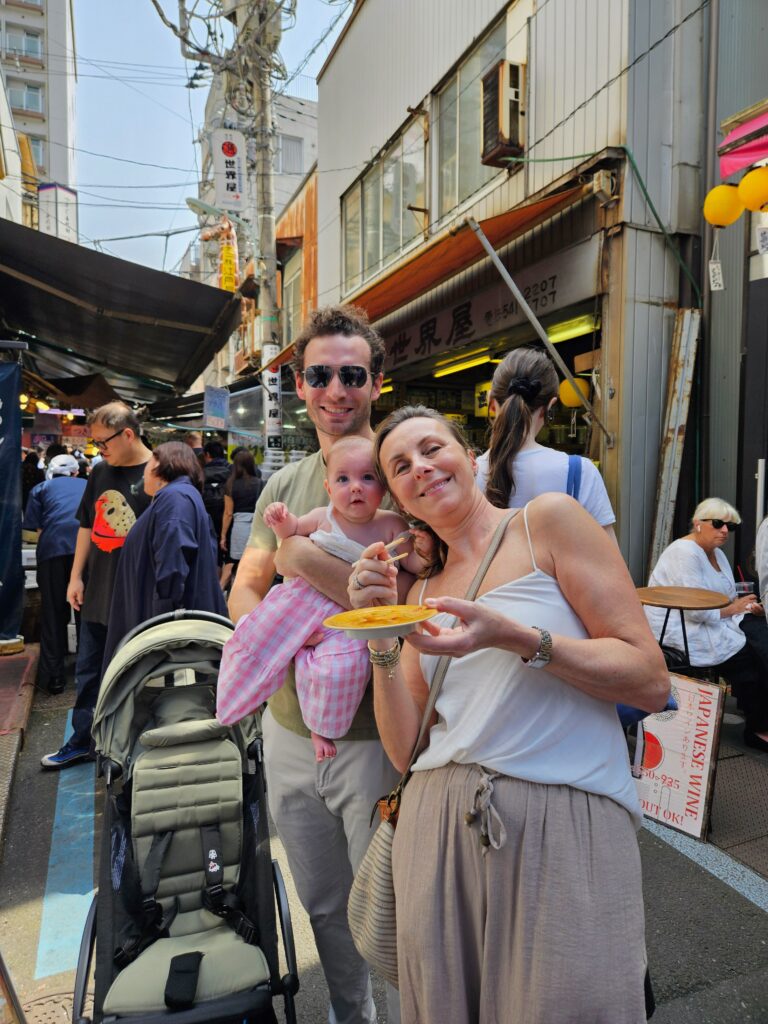
Stroller-friendly? Surprisingly, yes. The alleys are tight and the crowds are thick, but it's doable. I pushed a stroller through on my second visit and I wasn't the only one. My baby was overwhelmed within twenty minutes and fell asleep, which was honestly the best outcome for everyone involved. If you're traveling with little ones, go for it. Just know it's a lot of stimulation.
Is it sanitary? Some people look at the open-air stalls and hesitate. Don't. Like all things Japanese, everything is meticulously clean and safe to eat. The vendors are precise, the turnover is constant, and the fish is fresher than anything you'll find in a restaurant back home. This is one of the most food-safe countries on earth.


Pair it with: teamLab Planets is right next door in Toyosu, making a morning art experience followed by a Tsukiji lunch one of the best half-days in Tokyo. If you're an early riser, the tuna auction at Toyosu Market runs at 5:30 AM and is worth seeing at least once. For getting to Tsukiji, the Hibiya Line drops you at Tsukiji Station, or you can walk from Ginza in about 10 minutes. If you need a refresher on navigating Tokyo's train system, I wrote a full guide on how to use trains and subways in Japan.
The Best Street Food Stalls in Tsukiji Outer Market: The Essentials
If you're short on time, these are the street food stalls in Tsukiji Outer Market you build your visit around. Limited stomach? Start here.
1. Kitsuneya
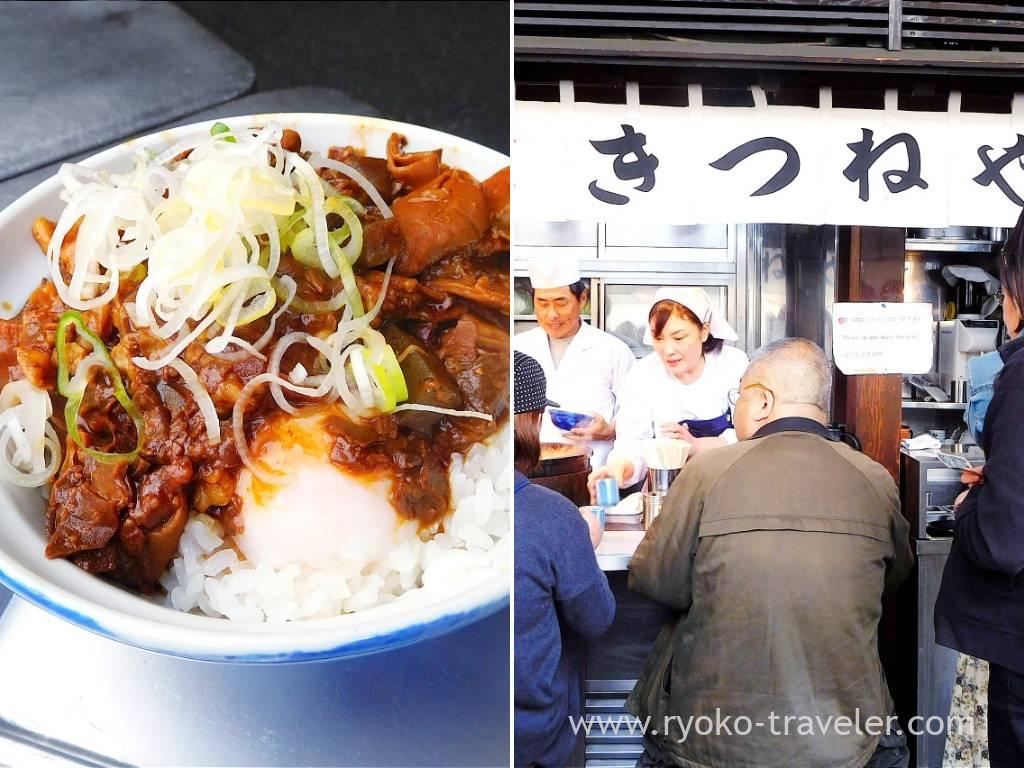
What to eat: Horumon-don (¥870)
A bowl of rice topped with horumon (organ meats), specifically beef offal simmered in a rich, sweet miso-based sauce with leeks. The word "hormone" in Japanese actually comes from the Osaka dialect "horu mono," meaning "things to throw away," because these cuts were historically discarded by butchers. Tsukiji workers turned them into one of the market's most beloved dishes. The texture is tender and slightly chewy, the sauce deeply savory-sweet. This is not delicate eating. This is fuel.
Svadore Tip
Kitsuneya has only three seats right at the hotpot, but they're cramped and hot. Skip those. The standing tables along the roadside are more comfortable, and you can actually enjoy your food without someone's elbow in your side.
2. Shouro Honten
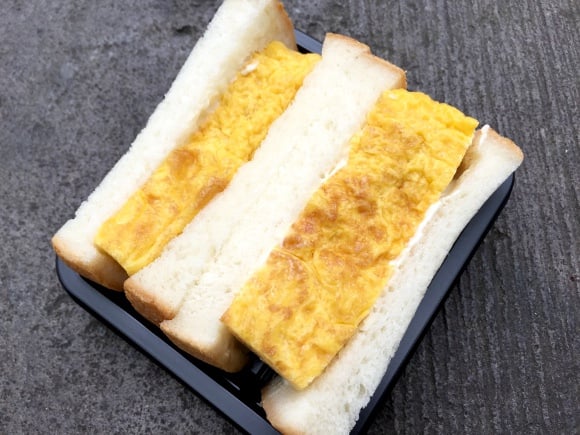
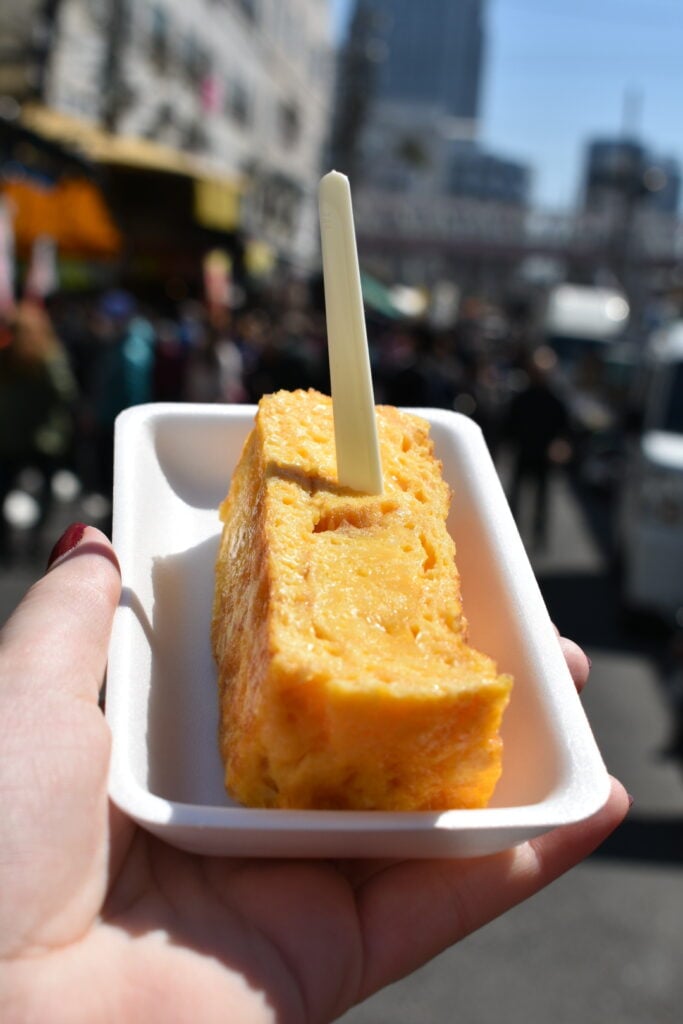
What to eat: Tamagoyaki sando
Tamagoyaki is a Japanese rolled omelette made by layering thin sheets of sweetened egg in a rectangular pan, folding each layer over the last to create a dense, custard-like block. It's a staple of sushi counters and bento boxes across Japan, and Tsukiji's tamagoyaki vendors have been perfecting it for decades. You can get it on a stick, but the sando is the move: juicy omelette with Japanese mayo in fresh shokupan (pillowy white bread). It might be the best egg sandwich you ever eat.
Watch the vendors making them. Layer after layer, folded with surgical rhythm on massive rectangular grills. It's mesmerizing, and the whole thing costs about ¥150.
3. Kakigoya
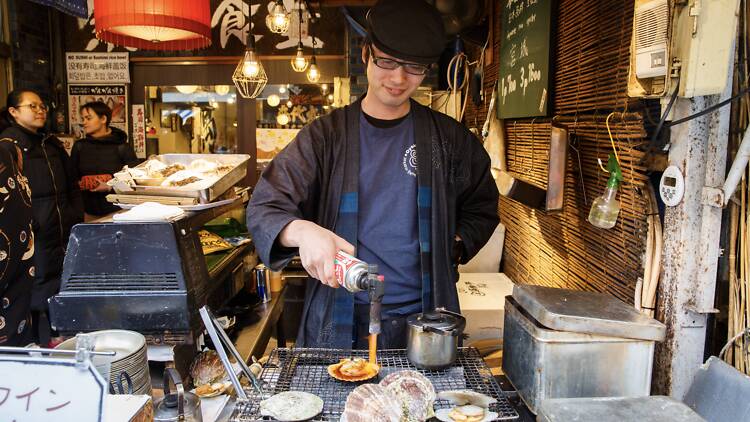
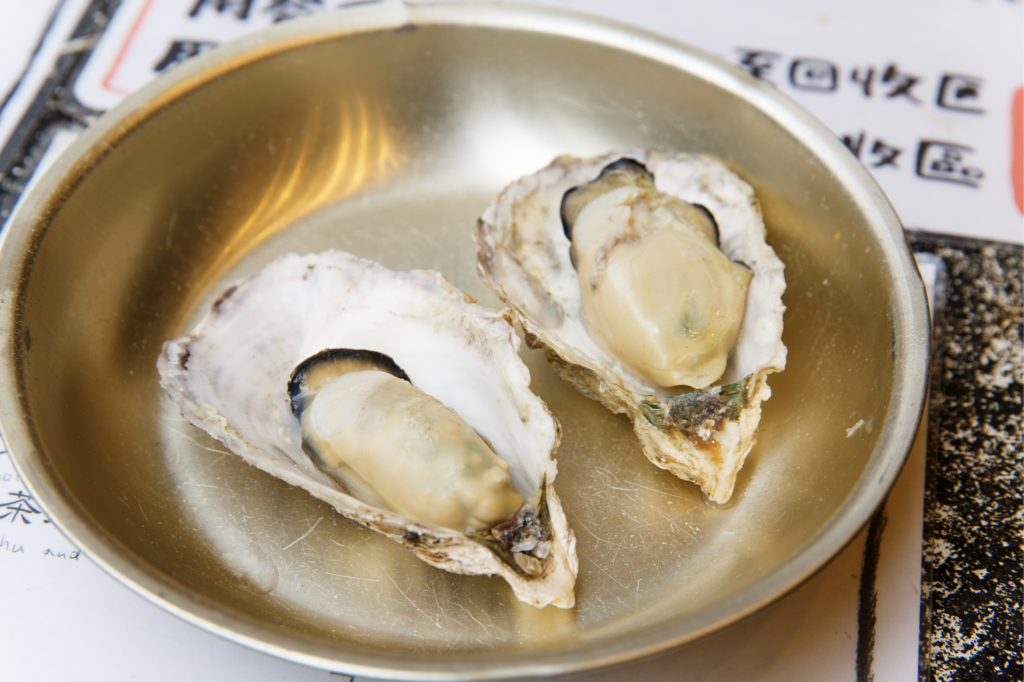
What to eat: Steamed oysters (kaki) and grilled scallops (hotate)
The scallops are Hokkaido jumbos, harvested from the cold, nutrient-rich waters off Japan's northernmost island where frigid temperatures produce larger, sweeter shellfish than anywhere else in the country. Grilled in their shell with butter and soy sauce until the edges caramelize. The oysters are steamed open, plump and briny. Japan's relationship with shellfish goes back to the Jomon period (14,000 BC), where massive shell mounds called kaizuka are among the earliest evidence of organized food culture in the archipelago. You're participating in a 16,000-year tradition. For about ¥500.
Beyond Fish: The Stalls Most Guides Don't Tell You About
This is where Tsukiji Outer Market surprises people. Some of the best street food stalls here have nothing to do with fish.
4. The Fruit Stands & Juice Bars
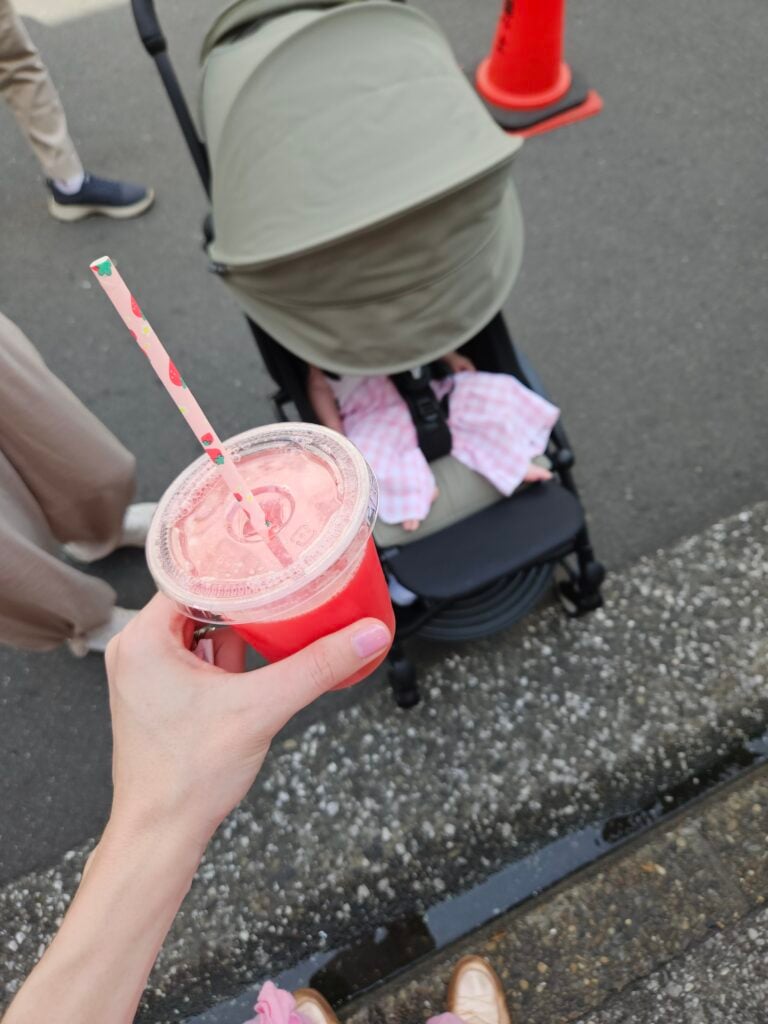
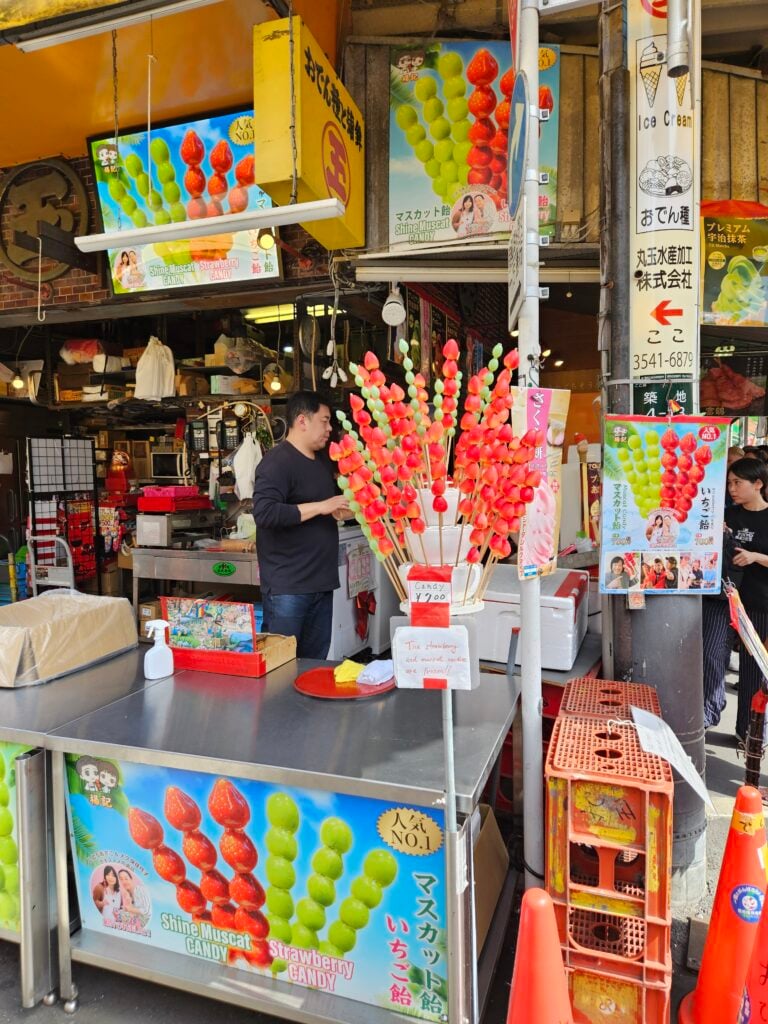
What to eat: Fresh fruit on sticks, watermelon juice
Japanese fruit is treated as a luxury, not a commodity. The fruit-on-a-stick stands sell perfectly ripe mango, strawberries, melon, and seasonal citrus, each piece cut with surgical precision. But the real discovery is the fresh watermelon juice, cold, sweet, and nothing like what you get back home. The quality of the fruit means the juice is on another level entirely. Any fresh juice from the fruit stands is worth trying.
5. Yoshizawa Shoten
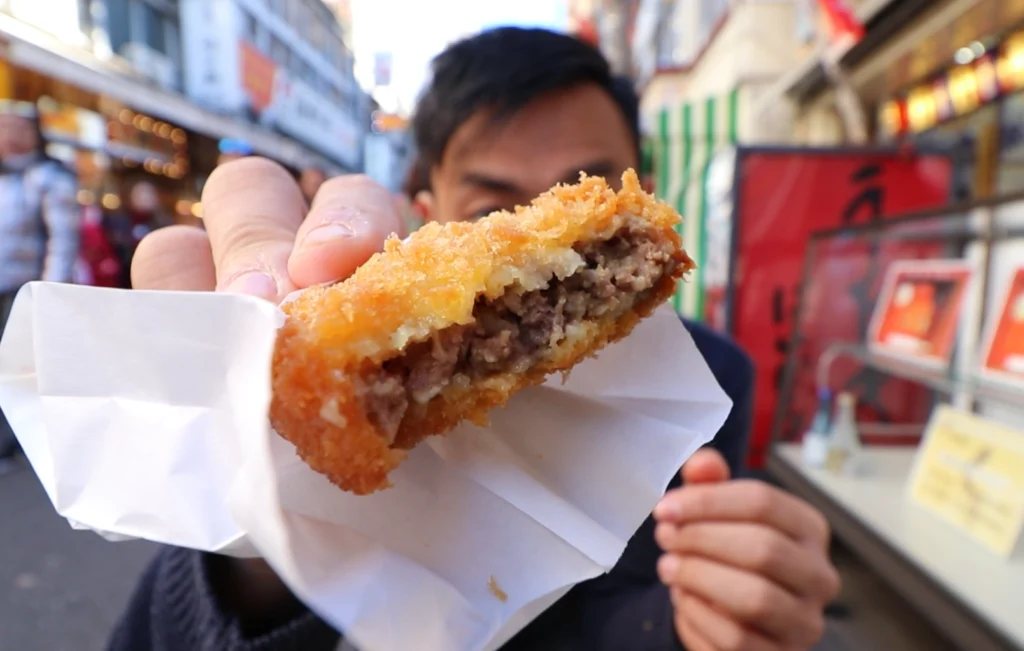
What to eat: Wagyu menchi-katsu
Menchi-katsu is a deep-fried minced meat cutlet that arrived in Japan during the Meiji era (1868-1912) when the country opened to Western influence. The Japanese took the European croquette and perfected it with panko breadcrumbs, which are coarser, crunchier, and lighter than Western breadcrumbs, invented in Japan using an electrical current to bake the bread. Yoshizawa makes theirs with Japanese black beef (kuroge wagyu) or Matsuzaka beef, raised in Mie Prefecture, sometimes fed beer and massaged. The cutlet is crispy outside, juicy and marbled inside. One of the best bites in the market.

6. Suga Shoten
What to eat: Kurobuta pork dumplings
Chinese-style dim sum cooked in traditional bamboo steamers. The star is the kurobuta (black pork) dumplings made with pork from Kagoshima Prefecture, the southernmost point of mainland Japan. Kagoshima's kurobuta is Japan's answer to Iberico, raised on sweet potato feed that gives the meat a distinctive sweetness. Also try the pork shoulder roast bun.
7. Wine Stand 88
What to eat: Wagyu on a stick + a glass of wine
Wagyu beef skewers paired with a glass of wine. At 9 AM. In a fish market. This is peak Tokyo. The wagyu is seared quickly over high heat, still pink in the center, seasoned simply with salt. No judgment, you're on vacation.
The Best Seafood Stalls in Tsukiji Outer Market
Now for what Tsukiji is famous for. If you're going to eat fish anywhere in Tokyo, this is where you do it.
8. Higashi Indo Maguro Shokai
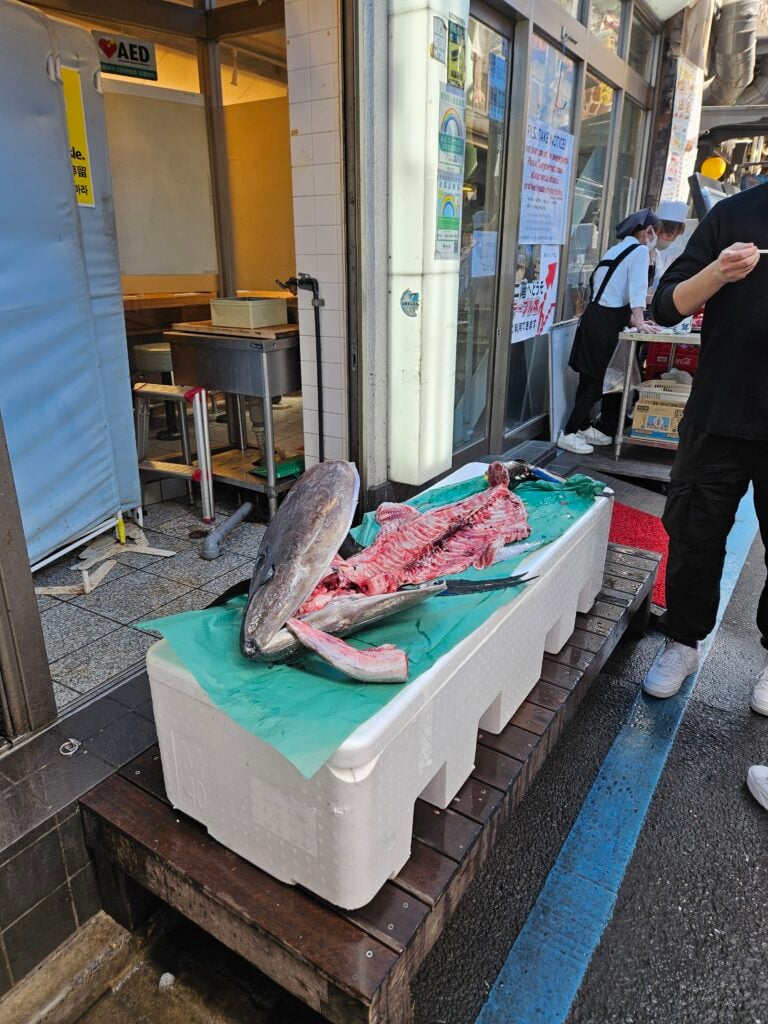
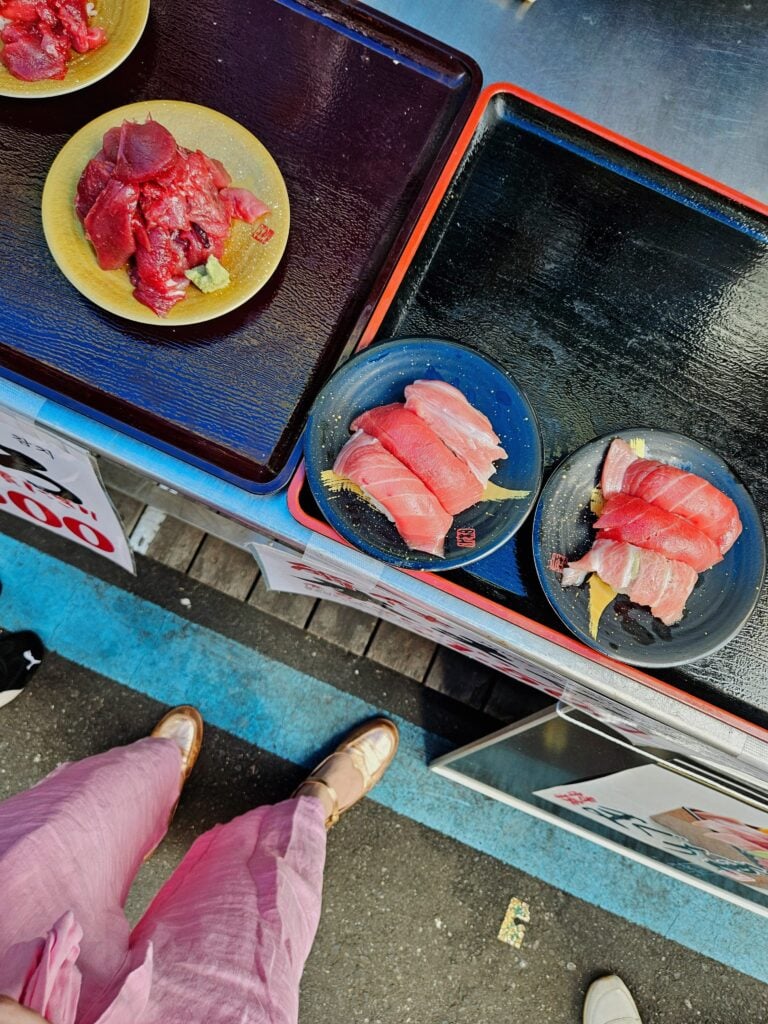
What to eat: Grilled tuna (maguro)
Grilled tuna seasoned simply with sake, salt, and pepper. This is the stall where you'll see it: a massive slab of bluefin, laid open on the counter, the vendor carving chunks off it and grilling them to order. No display case, no pretense. Japan consumes roughly 80% of the world's bluefin tuna, and the relationship between this country and this fish runs centuries deep. Quick primer on tuna grades: akami is lean, deep red, clean flavor. Chutoro is medium fatty, the sweet spot for most people. Otoro is fatty belly, melts on contact. This stall keeps it simple and lets the fish speak.
9. Sushizanmai
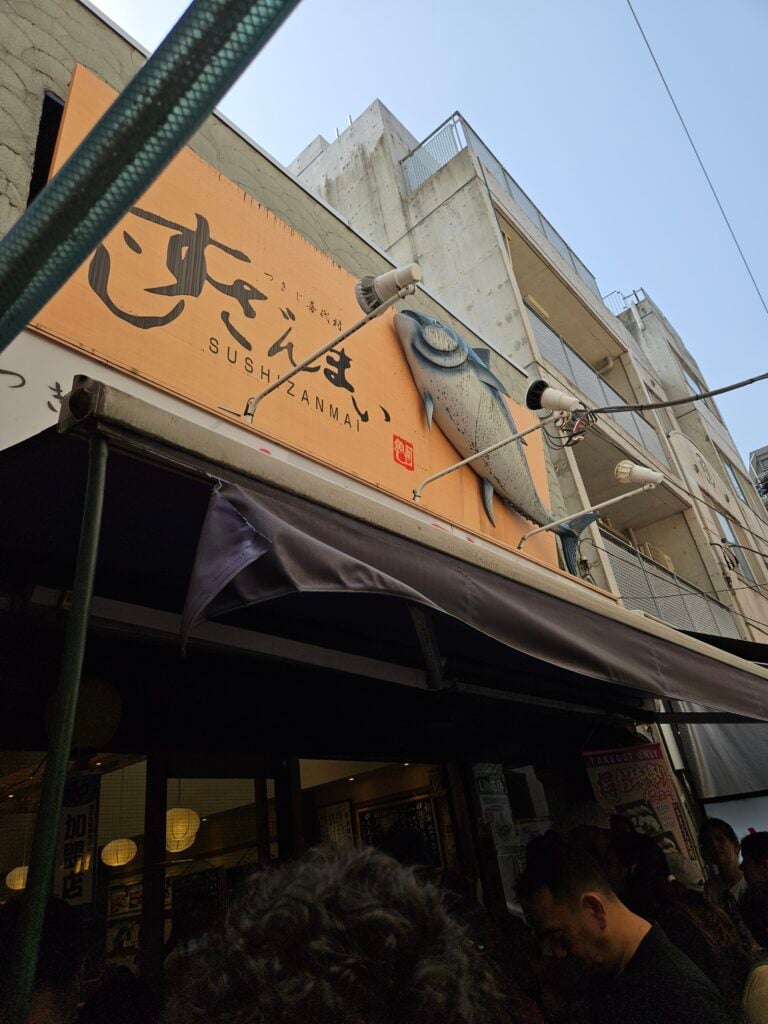
What to eat: Conveyor belt sushi (kaiten sushi)
A Tsukiji institution and the best option if you want a proper sit-down sushi meal instead of grazing. The company's CEO is famous for paying record-breaking prices at the annual New Year tuna auction, over $3 million for a single bluefin in 2019. The quality here is a step above typical conveyor belt sushi because of their direct sourcing from the market.
10. Itadori Bekkan
What to eat: Nigiri sushi
Your pick for the best nigiri in the market. Counter-style, each piece made to order, fish sourced from the same suppliers who served the old wholesale market. Nigiri sushi was invented right here in Edo in the early 1800s by a street vendor named Hanaya Yohei, who placed fresh fish on vinegared rice and turned a preservation method into fast food. If you eat one sit-down thing at Tsukiji, this is it.
11. Tsukiji Nisshin Tasuke
What to eat: Unagi (freshwater eel)
Unagi is one of Japan's great delicacies, traditionally eaten during the hottest days of summer for stamina. The tradition dates back to the 18th century when a struggling eel shop owner asked a scholar for marketing advice. The scholar suggested promoting eel as a stamina food for summer, and the custom stuck for 250 years. The eel is butterflied, skewered, grilled over charcoal, and glazed with tare (a sweet soy reduction) multiple times. Smoky, sweet, slightly charred, impossibly tender. Available as unagi-don (eel over rice) or as grilled skewers. Fun fact: Tokyo-style splits the eel from the back, because in the old samurai capital, cutting the belly was considered bad luck.
12. Ajino Hamato Tsukiji Honten
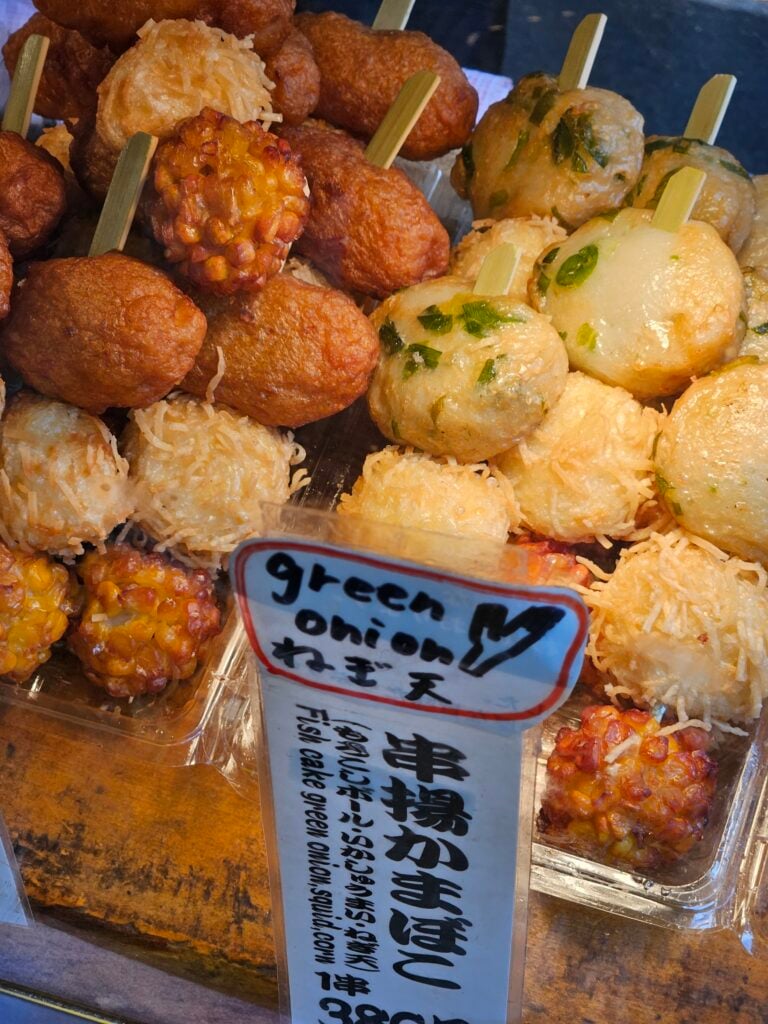
What to eat: Ika dango (squid dumplings) and corn kakiage
Bouncy, savory balls of minced squid, deep-fried until golden. The corn fritters (corn kakiage) are light, crispy tempura-style fritters made with sweet corn kernels bound in a thin batter. Both are classic Tsukiji street snacks, designed to eat in three bites while standing.
End on a Sweet Note
Save room. The dessert stalls at Tsukiji are not an afterthought.
13. Tsukiji Sanokiya
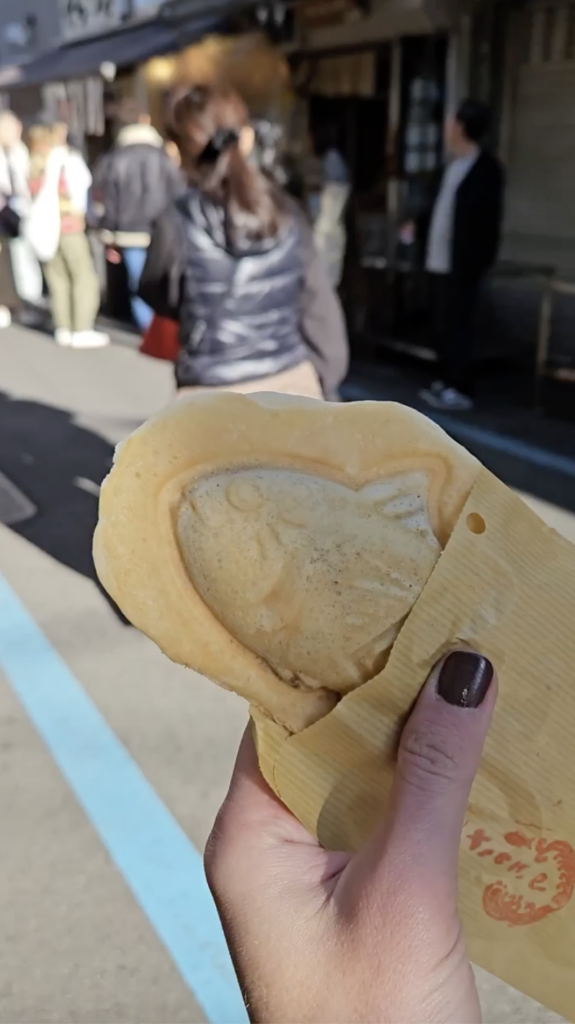
What to eat: Maguro-yaki (tuna-shaped taiyaki)
Taiyaki is a fish-shaped pastry filled with sweet red bean paste. But why fish-shaped? The word tai (sea bream) sounds like "medetai," meaning celebratory or fortunate. Sea bream has been the fish of celebrations in Japan for centuries. When taiyaki was invented around 1909, the vendor shaped it like tai because real sea bream was expensive, and the pastry became a way for ordinary people to enjoy the "lucky fish" for a few yen. Sanokiya puts a Tsukiji twist on it: their version is shaped like tuna (maguro-yaki), a cheeky nod to the market's most famous resident. Get the "Chutoro" version with a chewy, mochi-like crust filled with red bean and a tangy pop of apricot.
14. Solatsuki
What to eat: Fruit daifuku
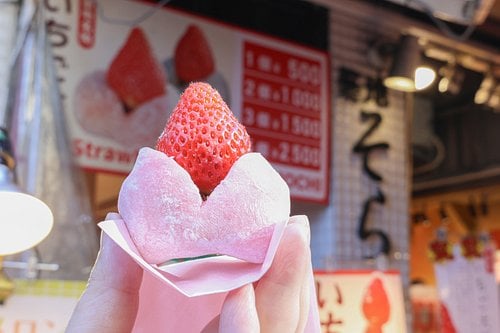
Mochi stuffed with a whole piece of fresh seasonal fruit, usually a strawberry, wrapped in a thin layer of sweet white bean paste. Daifuku literally means "great luck," and these have been made since the 18th century. The Tsukiji versions use market-fresh fruit at peak ripeness, which makes them noticeably better than what you'll find elsewhere in Tokyo. Beautiful, photogenic, and gone in two bites.
15. Le Pain
What to eat: Croissants and pastries
Sometimes you just want a buttery croissant and that's fine. Freshly baked, flaky, and a welcome palate reset if you've been going hard on soy sauce and charcoal smoke all morning.
16. Matcha Stand Maruni
What to eat: Matcha latte
The ultimate palate cleanser. Premium Uji matcha whisked in front of you, poured over milk for a layered latte. Uji, in Kyoto Prefecture, has been growing tea since the 12th century when a monk brought seeds back from China. The region's misty climate and mineral-rich soil produce what is widely considered the finest matcha in the world. You can customize your sweetness level, which is rare for a traditional matcha spot.
17. Turret Coffee
What to drink: Turret Latte
Named after the iconic three-wheeled turret trucks that have been zipping through Tsukiji for decades, this tiny coffee stand has become a market institution. The latte is darker and grittier than your typical Tokyo pour, built to match the energy of the market. It's the perfect punctuation mark at the end of a Tsukiji morning, standing outside with a cup in hand, watching the turret trucks weave past vendors closing up shop.
Quick Glossary: What Am I Looking At?
Tsukiji moves fast and most stalls don't have English menus. Here's a cheat sheet so you know what to point at.
Seafood:
- Maguro — Tuna. The king of Tsukiji.
- Akami — Lean tuna. Deep red, clean flavor.
- Chutoro — Medium-fatty tuna. The sweet spot.
- Otoro — Fatty tuna belly. Melts on contact.
- Uni — Sea urchin. Creamy, briny, polarizing. Try it once.
- Hotate — Scallop. Hokkaido jumbo, grilled in the shell.
- Kaki — Oyster. Steamed open, plump and briny.
- Unagi — Freshwater eel. Grilled with sweet soy glaze.
- Ikura — Salmon roe. Bright orange, pops in your mouth.
- Ebi — Shrimp or prawn.
Everything else:
- Tamagoyaki — Rolled omelette. Sweet or savory.
- Horumon — Organ meats. Simmered in miso sauce over rice.
- Wagyu — Japanese beef, graded A1-A5. A5 is the highest.
- Menchi-katsu — Deep-fried minced meat cutlet.
- Kakiage — Tempura fritter, mixed veg or seafood.
- Taiyaki — Fish-shaped pastry with sweet filling.
- Daifuku — Mochi stuffed with fruit or red bean. "Great luck."
- Nigiri — Fish on a mound of vinegared rice.
- Don / Donburi — A bowl of rice with toppings.
- Tare — Sweet soy glaze used on grilled foods.
- Shokupan — Pillowy Japanese white bread.
Svadore Tip
Point and say "kore kudasai" (this one please). Hold up fingers for quantity. Smile. That's genuinely all you need. If a stall has no English menu, it usually means the food is better.
Want the Full Tokyo Experience?
This article gives you the best street food stalls in Tsukiji Outer Market. The Svadore Tokyo 4-Day Travel Guide gives you the full day around it, from teamLab Planets in the morning to a jazz speakeasy hidden behind a vending machine at night. Seventy-plus pages of neighborhood guides, every restaurant and bar pinned, detailed walking routes, and the kind of cultural context that turns a trip into an experience. There's also a companion Japan Google Map with every spot from this itinerary pinned and organized by category.
Planning more than Tokyo? The Japan 7-Day Guide combines 4 days in Tokyo with 3 days in Kyoto for the complete trip.
And if you're looking for more Tokyo deep dives, check out my stall-by-stall experience at Tokyo Head Spa Ebisu, or start with the full 4 Days in Tokyo itinerary to see how Tsukiji fits into the bigger picture.

1 comment
Thank you! this is a torough and incredibly complete guide of tsukiji, i can’t imagine the writing process and once again thank you, it helped me planning my family visit to japan next month