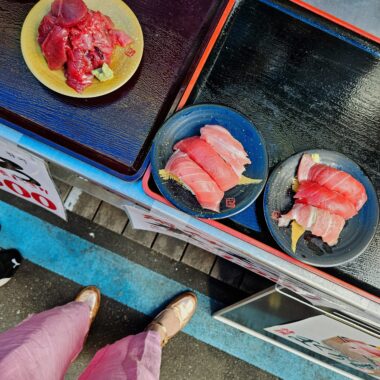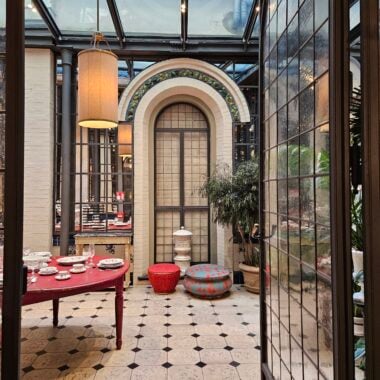
The Oltrarno is a labyrinth of workbenches. If you look at the official registries, there are over 50 traditional artisan workshops in Florence tucked into the ground floors of San Frediano and Santo Spirito that are technically open to the public. But let’s be real: you don’t have time to visit fifty studios, and frankly, you shouldn't. I’ve spent my summers in Italy since the day I was born, and if there’s one thing I can’t stand, it’s the "artisanal" trap, shops that put a spinning wheel in the window, but sell goods made in a factory outside Prato. I went behind the heavy doors of the Oltrarno in Florence to find the families who decided to stand their ground on the last 200 years of "innovation." I’ve filtered through the noise to give you The Maker’s Itinerary: the 3 essential artisan workshops in Florence that tell the full story of Florentine craft, from the gateway of the center to the deepest corners of the "Other Side." It’s the perfect mini-itinerary designed for the traveler who wants soul, not a souvenir.
| Workshop | Best For... | Entry-Level Buy | The Investment Piece |
|---|---|---|---|
| Alberto Cozzi | Stationery Nerds & Families | €20 (Marbled Sheet) | €165 (Refillable Leather Journal) |
| Il Torchio | Minimalists & Modern Gritty | €15 (Pencil Set) | €170+ (Canson Paper Notebook) |
| Setifico | Collectors & Historians | €100+ (Silk Tassels) | Anything else! |
Stop 1: The Gateway to Florentine Paper Marbling: Rilegatori di Libri A. Cozzi
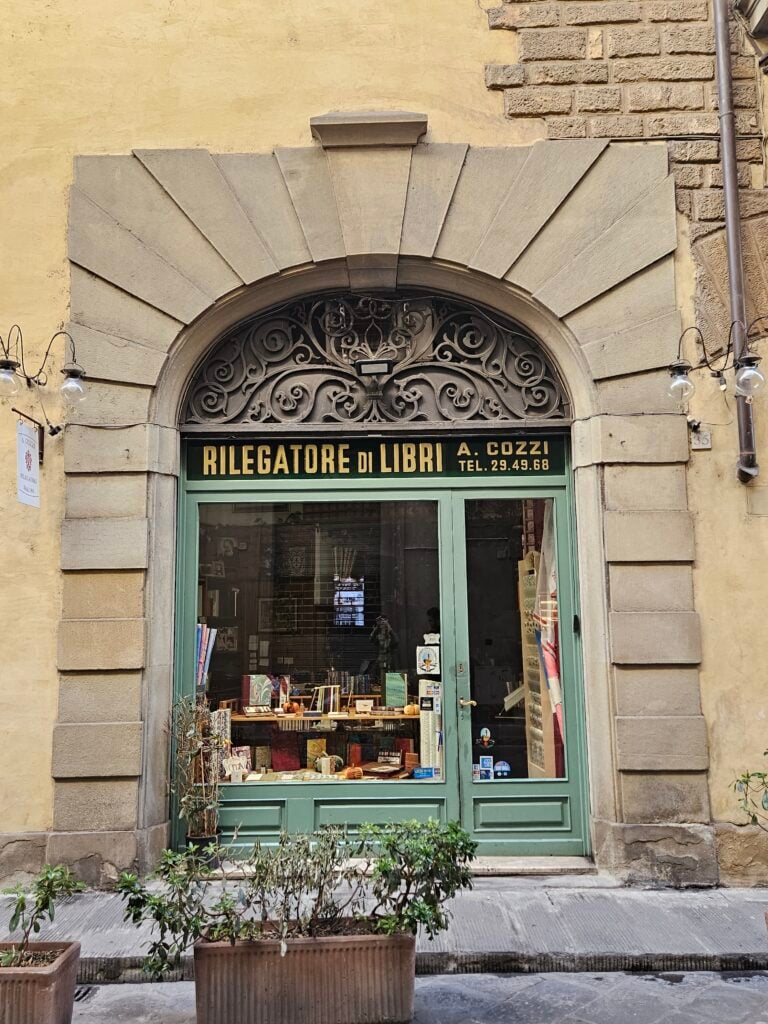
Location: Via del Parione (The "Edge of the Center")
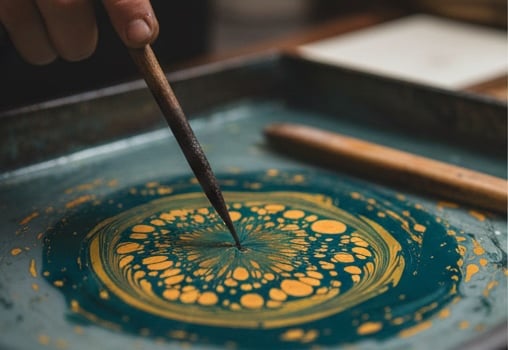
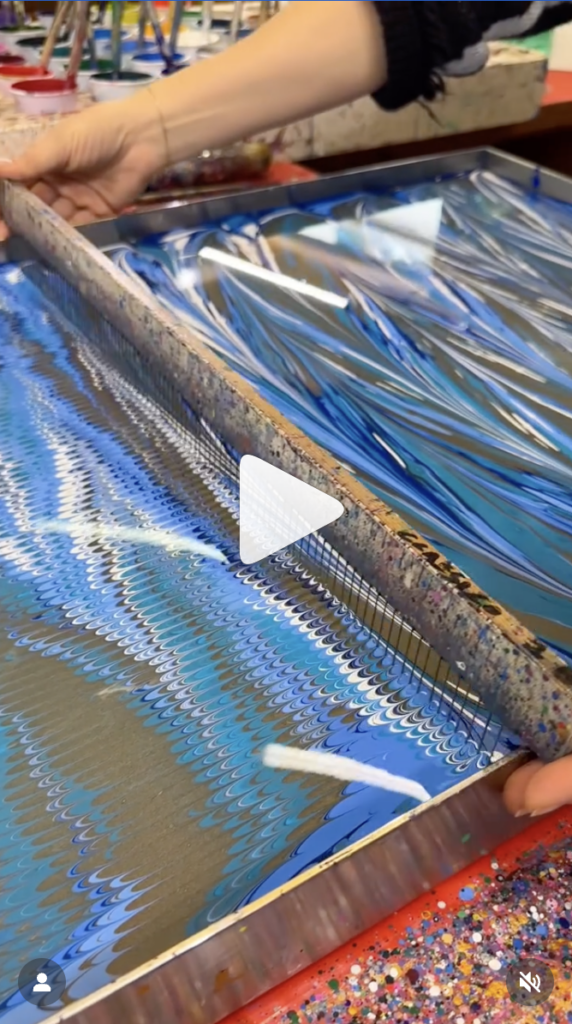
Technically, you haven't crossed the bridge into Oltrarno yet. Think of Rilegatori di Libri A. Cozzi as the decompression chamber between the tourist chaos of the Duomo and the grit of the Oltrarno. It is one of the few artisan workshops in Florence where you can watch pigments dance on seaweed gel. Here, they specialize in historic bookbinding and paper marbling.
Stepping inside, you are greeted by the smell of aged paper and leather. Yes, the paper looks pretty...but do you know how it's actually made? That's what we're actually here to behold: the science of the swirl. Consider this the quiet version of a museum. Instead of staring at a painting from ten feet away behind a velvet rope, you are six inches away from a master creating a one-of-a-kind pattern. It is a silent, sensory experience that rewards the observant. It feels like a meditation watching them create patterns on repeat.
The Technical Science of Florentine Paper Marbling
Most people think "marbling" is just a print. It’s actually a liquid dance. The artisans use a tray filled with lichene marino (seaweed gel). Because the gel is denser than water, oil-based paints sit suspended on the surface rather than sinking.
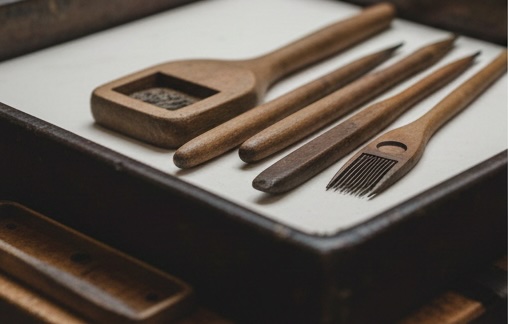
They use horsehair brushes to drop the color and hand-made combs to "rake" the paint into peacock tails or ripples. They’ve been preserving these Renaissance-era techniques virtually unchanged since the 18th century. Once a sheet of paper touches that gel, it captures a "one-of-one" moment that can never be replicated.
Fun Fact: Many of the tools used in these workshops are themselves antiques, preserved for generations to ensure the "bones" of the craft remain unspoiled.
You can walk out with a single sheet of marbled paper for about €20. It’s the most affordable way to own a piece of the Renaissance.
Local Tip: Don't just buy the first notebook you see. Ask to see the individual sheets of marbled paper. If you’re traveling with your own little one, this is a great place to show them the "magic" without the stress of a museum guard yelling about touching the frames. It’s tactile, it’s real, and it’s much more memorable than a postcard.
Stop 2: Authentic Leather Workshops in Oltrarno: Il Torchio di Erin Ciulla
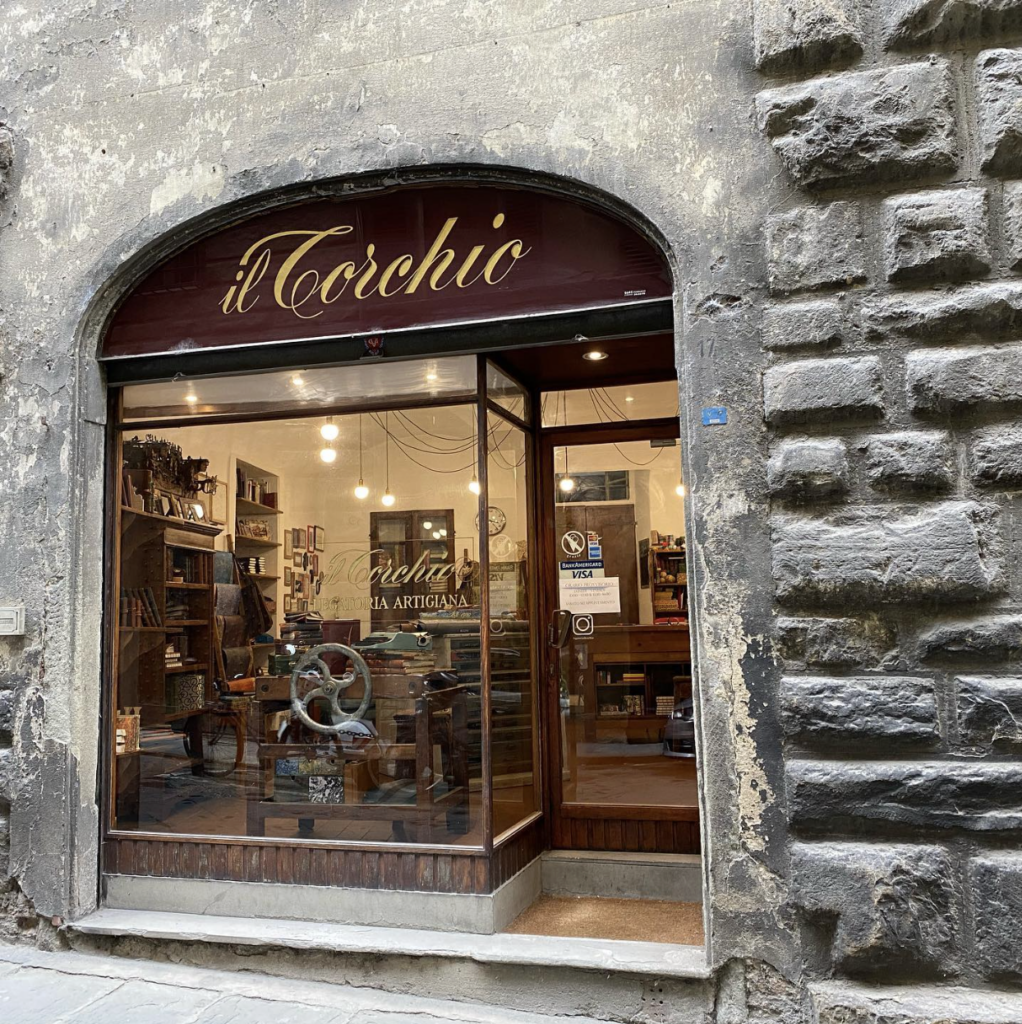
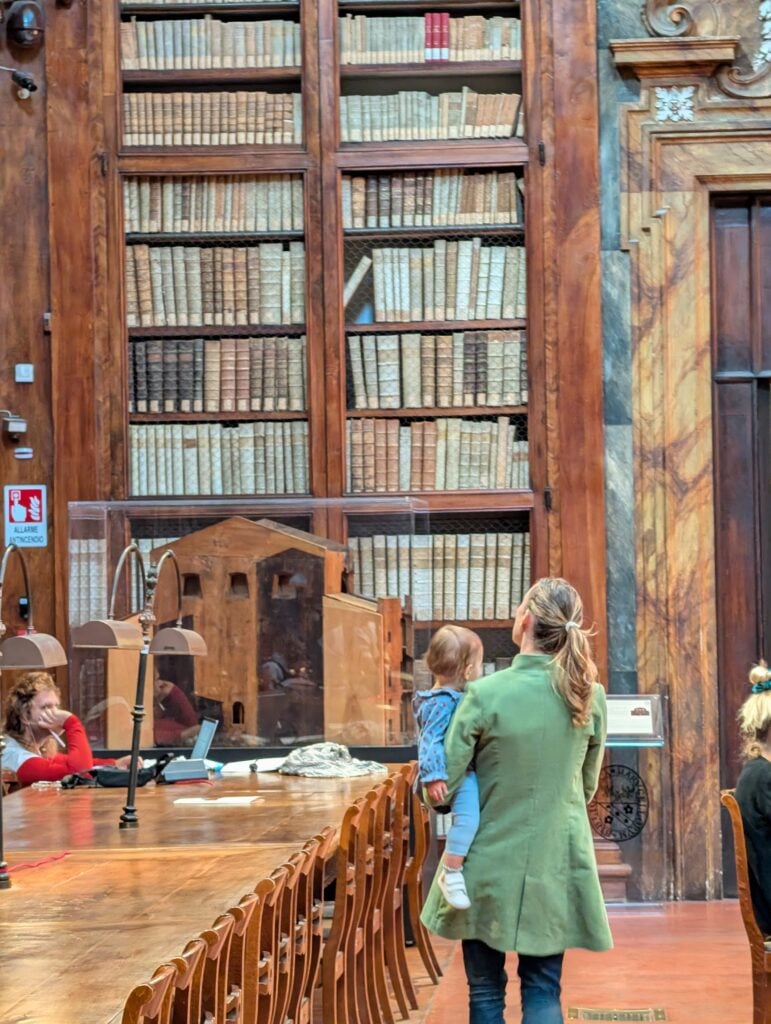
Location: Via de' Bardi (Oltrarno)
Cross the Ponte Santa Trinita, avoid the Ponte Vecchio unless you enjoy being a human sardine, and head to Via de' Bardi. This is where the paper from Cozzi gets its "armor." At Il Torchio, the atmosphere shifts and the smell changes from vanilla (fun fact, paper smells like vanilla when it ages and breaks down) to the sharp scent of genuine goatskin. We move from the delicate soul of paper to the "armor" of the book: leather. Erin Ciulla’s work bridges the gap between traditional Florentine technique and modern grit. This is the heart of Slow Travel. In an age of digital notes, a hand-bound journal from Il Torchio is a demand to slow down.
Witnessing Traditional Leather Hand-Tooling Techniques
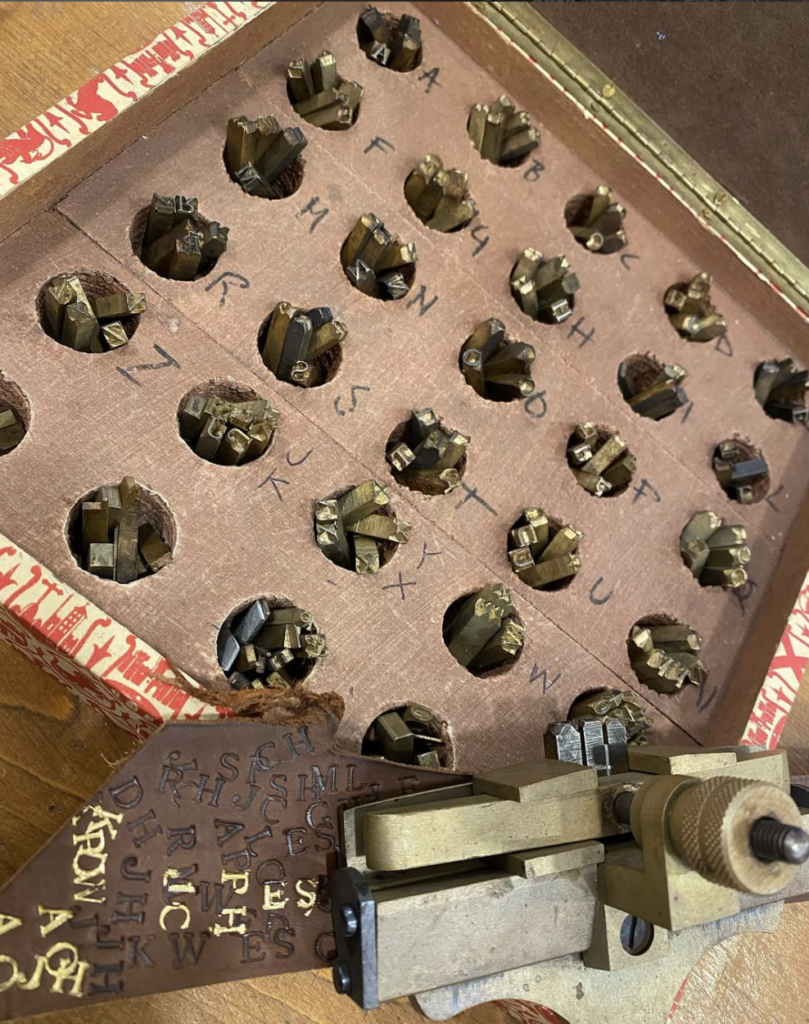
This isn’t a pristine boutique; it’s a working workshop. You’ll hear the constant, heavy strike of a mallet hitting brass stamps. This is a process called hand-tooling. In the Renaissance, books were the ultimate status symbol, and gold was used to make them glow under candlelight. Today, Erin carries on that tradition. She lays thin-as-air sheets of 22-karat gold leaf over the leather and then strikes it with a heated brass stamp. The heat and the pressure of the strike "fix" the gold into the grain of the goatskin forever. It’s not painted on; it’s fused. Over time, as the leather softens and patinas, the gold stays bright.
If you’re carrying a child (as I often do with Sibby in the carrier), this shop is surprisingly navigable and the artisans are used to the "controlled chaos" of a working life.
A Local's Warning
If the "marble" paper has a barcode printed on the back, it’s a fake. If the leather smells like chemicals or plastic, it was tanned in a factory, not a vat. If the shopkeeper says "Special price for you, my friend," run. True Florentine artisans don't bargain; their time is the fixed cost.
Local Tip: Look at the edges. Real Florentine bookbinding isn't "perfect," it has character. If a leather journal looks like it was cut by a laser then walk away. When looking for authentic artisan workshops in Florence, smell is also your best indicator. This shop smells of tannery and old-world labor, not chemicals.

Stop 3: The Holy Grail of Silk Weaving: Antico Setificio Fiorentino
Location: San Frediano (The Deep Oltrarno)
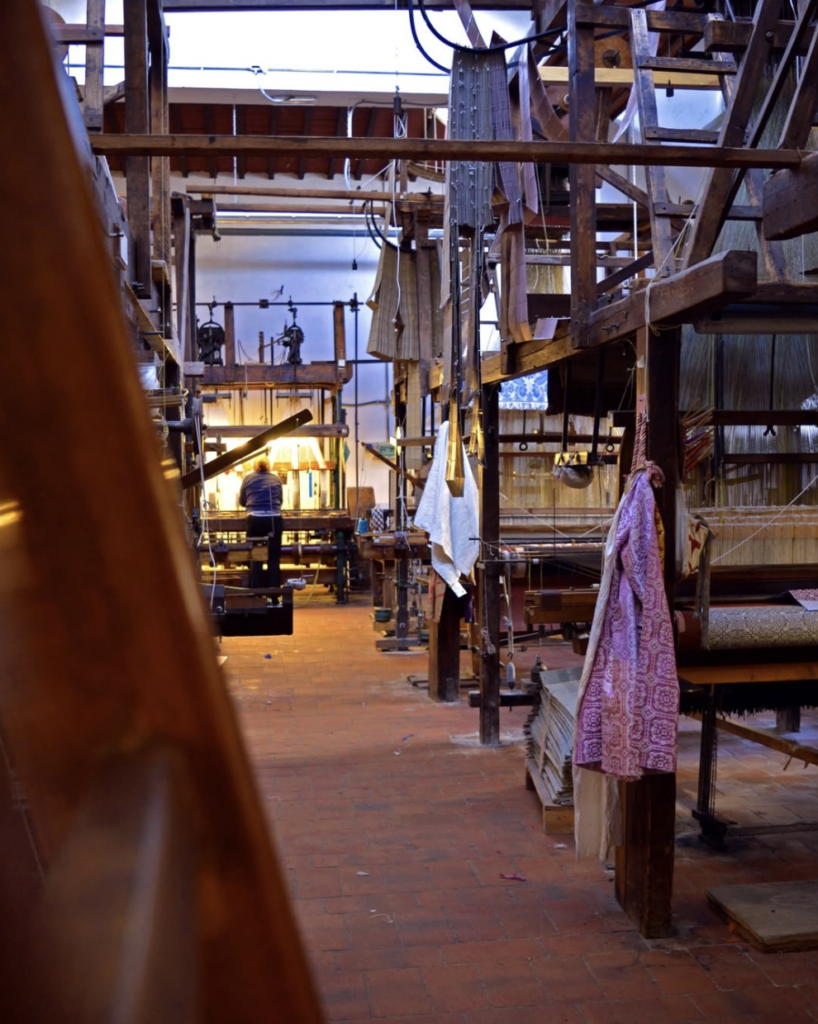
This is the ultimate "if you know, you know." Look for a yellow villa with a distinct red door. Many visitors don’t even know this place exists because it doesn't bother with a storefront. Located in the San Frediano district, the Antico Setificio Fiorentino is the holy grail of artisan workshops in Florence. It is one of the last remaining silk workshops in the world.
Discovering Leonardo da Vinci's Looms in an Active Workshop
It is elevated, slightly intimidating, and expensive. If you have to ask, you probably aren't buying the yardage...but expect to pay hundreds to thousands of dollars per yard. This is the fabric of kings. The fabrics produced here, featuring soft powder-blue and pearl-gray tones, have adorned palaces for centuries. Visiting this site allows you to see a side of the city that is rarely found in standard tourism brochures.
Fun Fact
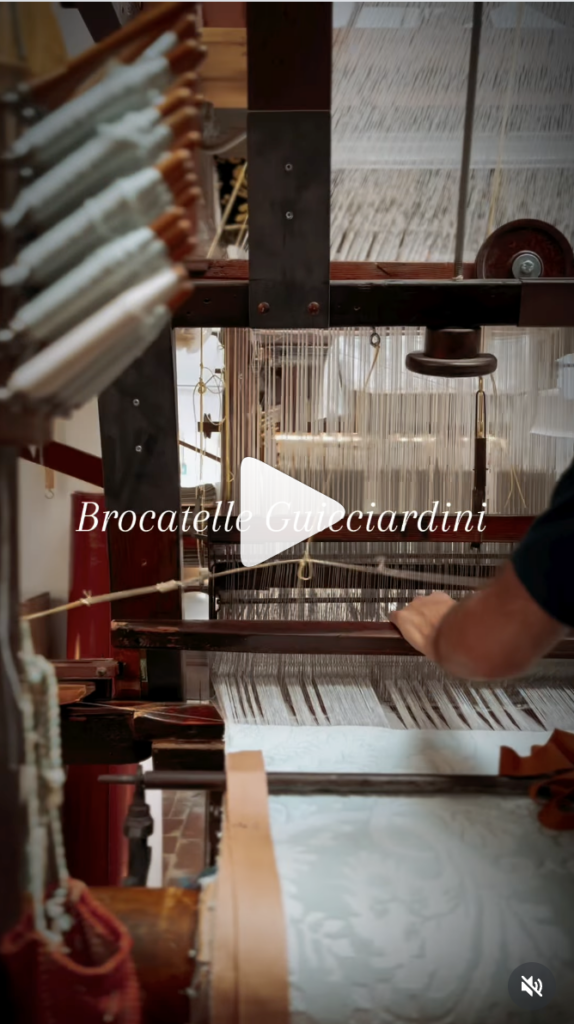
They use 18th-century looms, including a vertical warping machine designed by Leonardo da Vinci, and they are actively weaving silk for the world’s elite, from European royalty to the Kremlin.
I first visited places like this with my parents, who were born and raised in Italy. They taught me that the "Setificio" is the ultimate "If you know, you know" location. You don't come to Florence for a keychain; you come here to see how the Medici lived.
Local Tip: This is a "by appointment" or "serious inquiry" kind of vibe. Don't walk in wearing your workout gear. Treat it with the respect you’d give a cathedral.
How to Navigate the Hidden Artisan Shops of Florence
Most guides treat these workshops as mere photo opportunities, but to truly "unlock the real Florence," you must understand the rhythm of the artisan.
- Timing: Like many high-end experiences in Italy, these workshops are best visited in the shoulder seasons of May or September to avoid the peak summer crowds.
- Engagement: Don't just take a photo and keep walking. Many artisans appreciate guests who show a genuine interest in the genealogy of their craft.
- Practicality: While Florence is a walkable city, ensure you have a curated map to find these "hidden gems" tucked away in narrow stone alleys
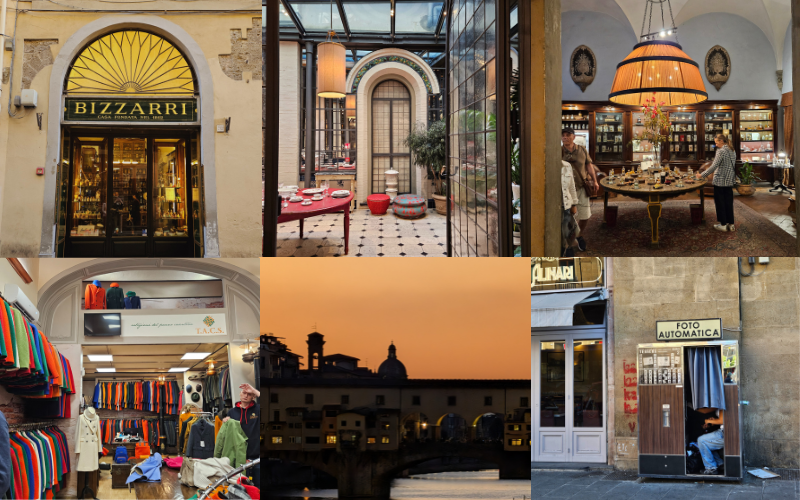
I’m only sharing three today. The Oltrarno is full of jewelry boxes, perfume labs, and hidden glove-makers who can size your hand at a glance. If you want my curated list of artisan workshops in Florence, you're going to need the full map. Discovering the artisans of the Oltrarno is like finding a vintage photo booth in a hidden corner of the city: it takes exactly 4.5 minutes to realize you’ve captured a memory that is raw, chemical, and entirely real.
Exploring the Oltrarno's workshops is like opening a hand-restored antique jewelry box. The outside is beautiful, but the true value lies in the intricate, specialized mechanisms, the artisans, hidden within, which keep the city’s history ticking like clockwork.
Related articles: