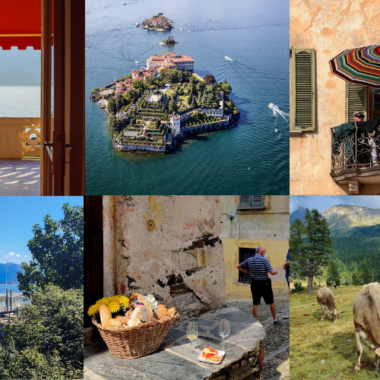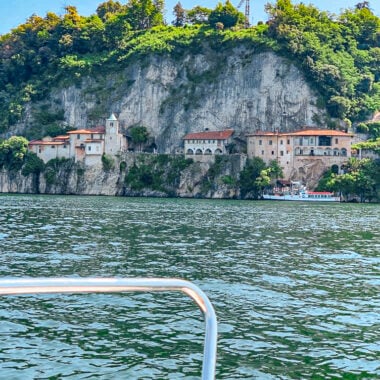
My parents and grandparents are from Milano and Lago Maggiore, and I myself visit Italy at least once a year. Being Italian and having visited Sicily over 3+ times now, I have an affinity for finding the real Italy, the authentic and local Italy. I know the culture, language, nuances, and true local experiences of the country. That’s why I’m the perfect person to shed light on local places that most international travelers wouldn’t consider when visiting Italy, such as the Aeolian islands.
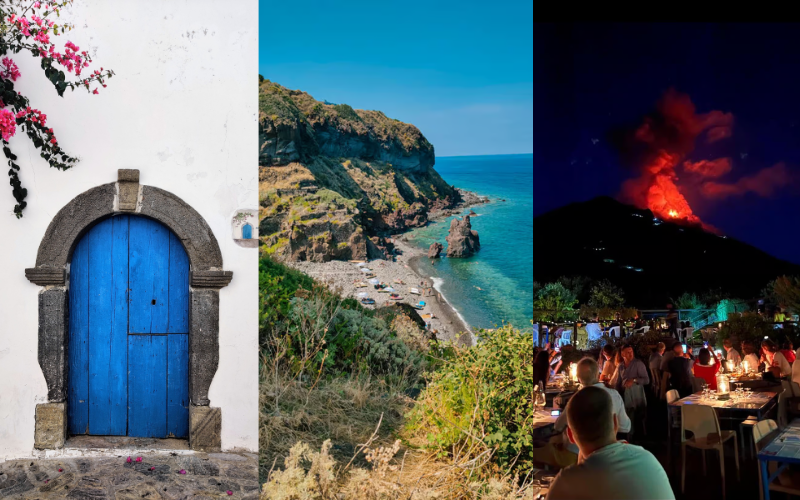
The Aeolian Islands were once fiery submarine volcanoes that rose from the sea some 700,000 years ago. Today, they’re a chain of 7 dramatically different volcanic islands—Alicudi, Filicudi, Vulcano, Lipari, Panarea, Stromboli, and Salina—each with its own vibe, rhythm, and personality.
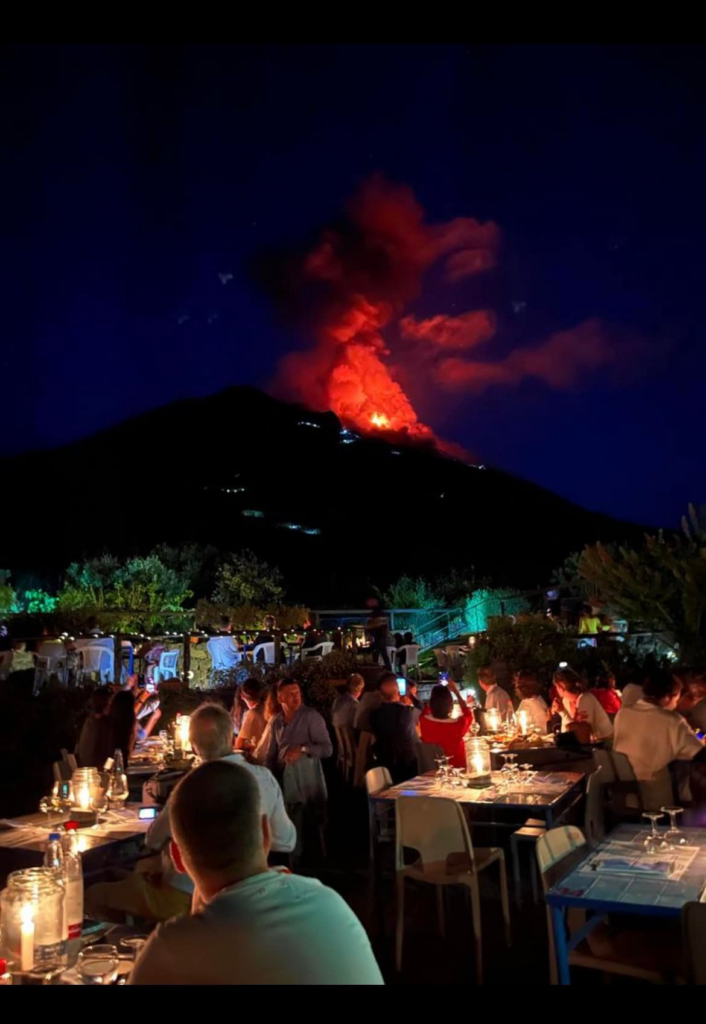
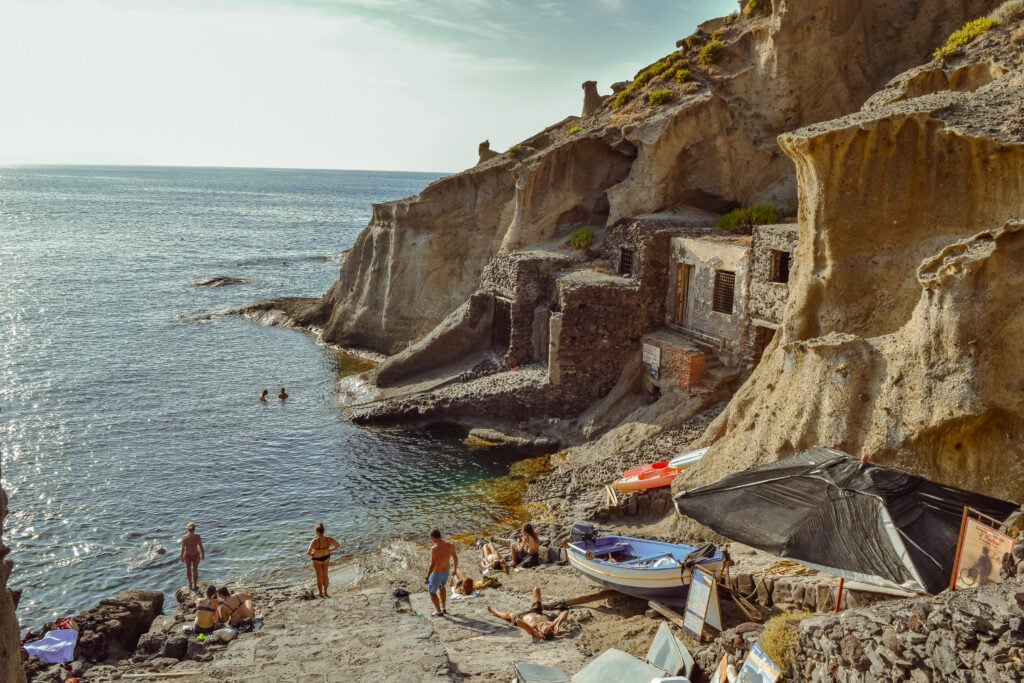
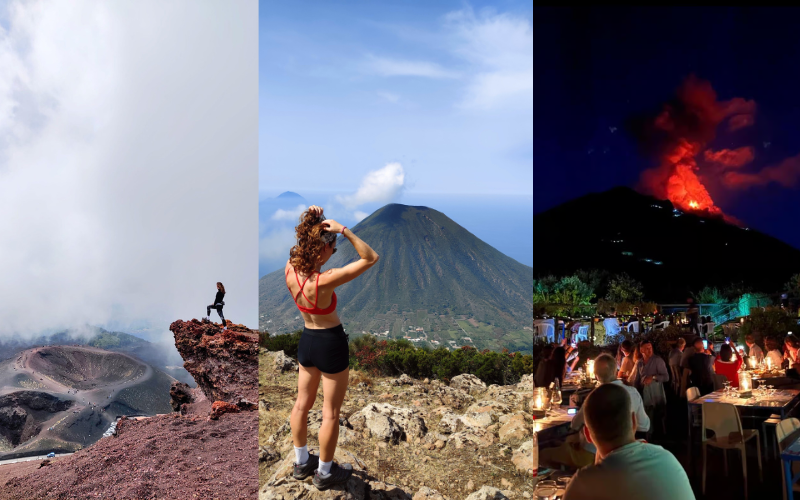
What makes this archipelago so magical is that no two islands feel the same. Want to dip your toes into the Aeolian experience without overloading your itinerary? My forever favorites are Salina and Panarea, with a dash of Stromboli if you’ve got the energy (or love a good lava show at sunset). Together, they strike the perfect balance: Salina grounds you, Panarea elevates you. You get the nature, the wine, the people, the views—and then you get the glitz, the energy, the snap-a-photo-everywhere beauty. Hit both and you’ll walk away feeling like you really did the Aeolians—without needing to zigzag through all the other islands.
Got more time? Lipari and Vulcano make for easy day trips, and if you're craving raw, off-grid beauty, Alicudi and Filicudi are where time actually slows down.
But if you’ve only got 5 days? Stick with Salina and Panarea—they give you the perfect taste of everything this wild little corner of Italy has to offer.
Fun Facts about the Aeolian Islands
- Only 5% of all volcanos of the Aeolians are over water, meaning they are visible to us as the islands. The majority of the volcanos, i.e. 95%, are underwater.
- The only 2 active volcanoes are the islands of Vulcano and Stromboli.
- Up until the early 1990s, many of the Aeolian islands had no electricity, and residents kept up with events on the mainland by wiring radios to car batteries.
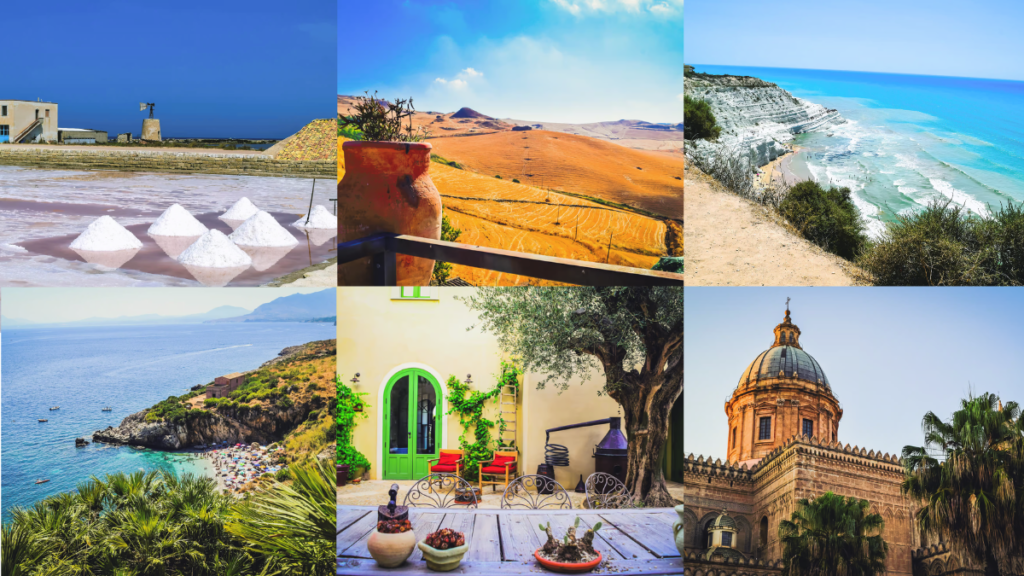
- Day 1 - 3: Salina -
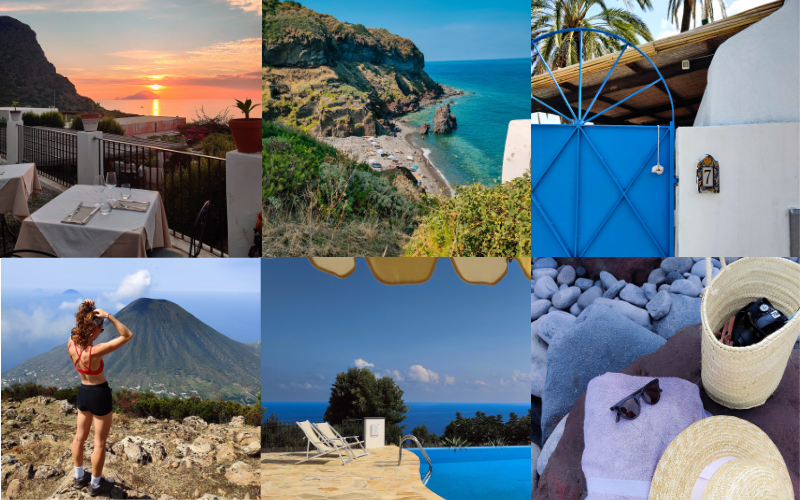
What to Do in Salina, Sicily: A 3 Day Itinerary
Salina is a slower kind of beautiful. It doesn’t shout for your attention like its flashier neighbors; it whispers it. Think: twin volcano peaks blanketed in green, pastel fishing villages that look like film stills, caper bushes clinging to the hillsides, and malvasia vines soaking in the Mediterranean sun. This is where you come to breathe a little deeper, eat like a local, and find that sweet, slow rhythm most travelers miss. Salina is my favorite of all the Aeolian islands.
Start your day like a true Salinaro—with a granità and warm brioche from a seaside café—before heading off to explore the island’s quiet corners. You’ll hike to a hidden lookout on Monte Fossa delle Felci (the highest point in the Aeolian Islands), stroll through Lingua’s salt flats and sample the island’s legendary pane cunzato, and soak in the vibes of sleepy Santa Marina with a glass of malvasia in hand. We’ll stop at boutique farms for caper tastings (yes, capers have terroir) and swim in tucked-away coves you’d never find on Google Maps. There’s also a boat day, of course—with a lunch stop at Pollara, that dreamy cliffside village made famous by Il Postino, and plenty of time to float, sip, snack, and do absolutely nothing at all.
- Day 4 - 5: Panarea -
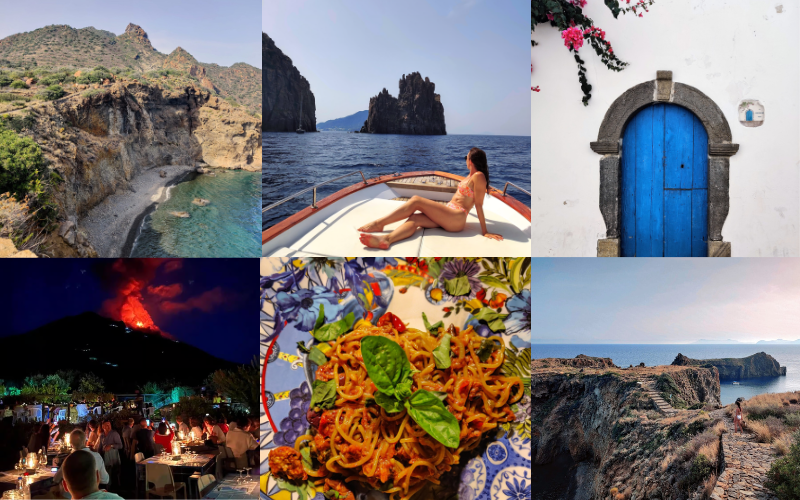
What to Do in Panarea, Sicily: A 2 Day Itinerary
Just 30 minutes via ferry from the island of Salina is Panarea, the smallest and oldest of the Aeolian islands, where whitewashed villas tumble down volcanic cliffs, bougainvillea spills over stone walls, and thermal springs bubble up from the sea. It’s a place that’s equal parts raw and refined, with a quiet allure that draws in everyone from the Viscontis to Beyoncé—especially outside the flashy peak season.
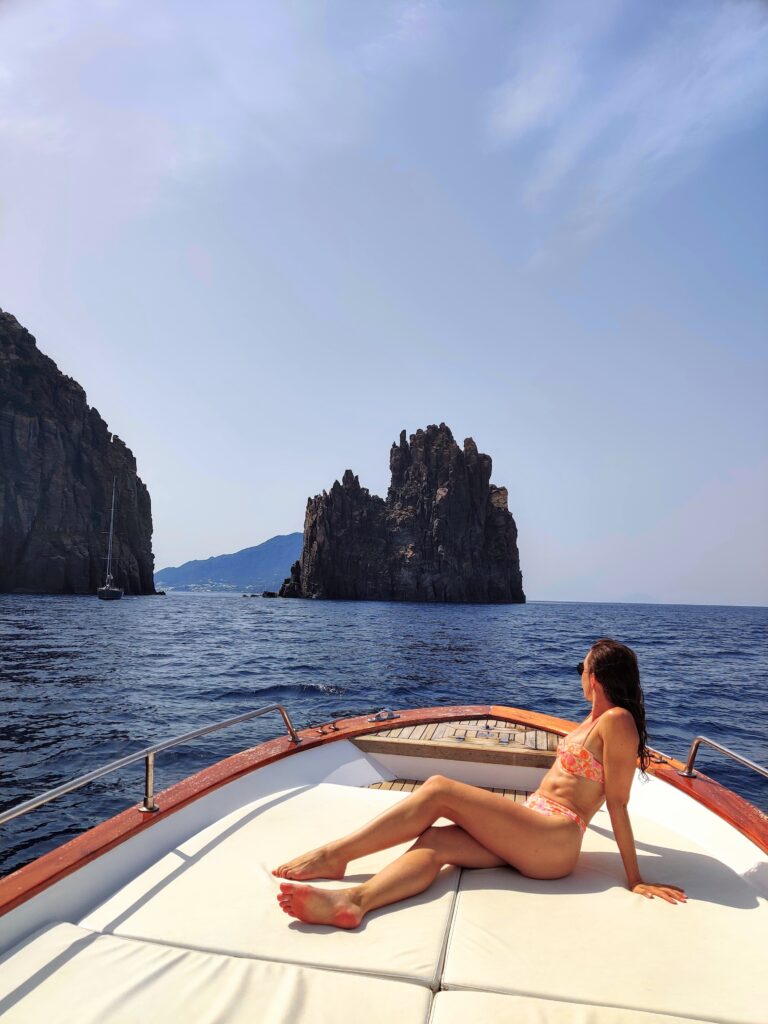
Spend two days in Panarea wandering cobblestoned lanes through San Pietro and Ditella, lounging on Panarea’s only sandy beach, and hiking to Bronze Age ruins above a hidden cove. There’s a boat day, of course—gliding past uninhabited islets, snorkeling in sapphire waters, and stealing a kiss in the Lovers’ Grotto (legend has it you’ll be bonded for life). And if you’re craving something volcanic, a sunset cruise to fiery Stromboli delivers pure cinematic magic. You’ll also eat ridiculously well—from granità and arancini to scorpionfish pasta and the Aeolian Islands’ best steak (yes, really). Consider this your insider's pass to experiencing Panarea the way the locals (and the lucky few) do.
- How to Get Around the Aeolian Islands -
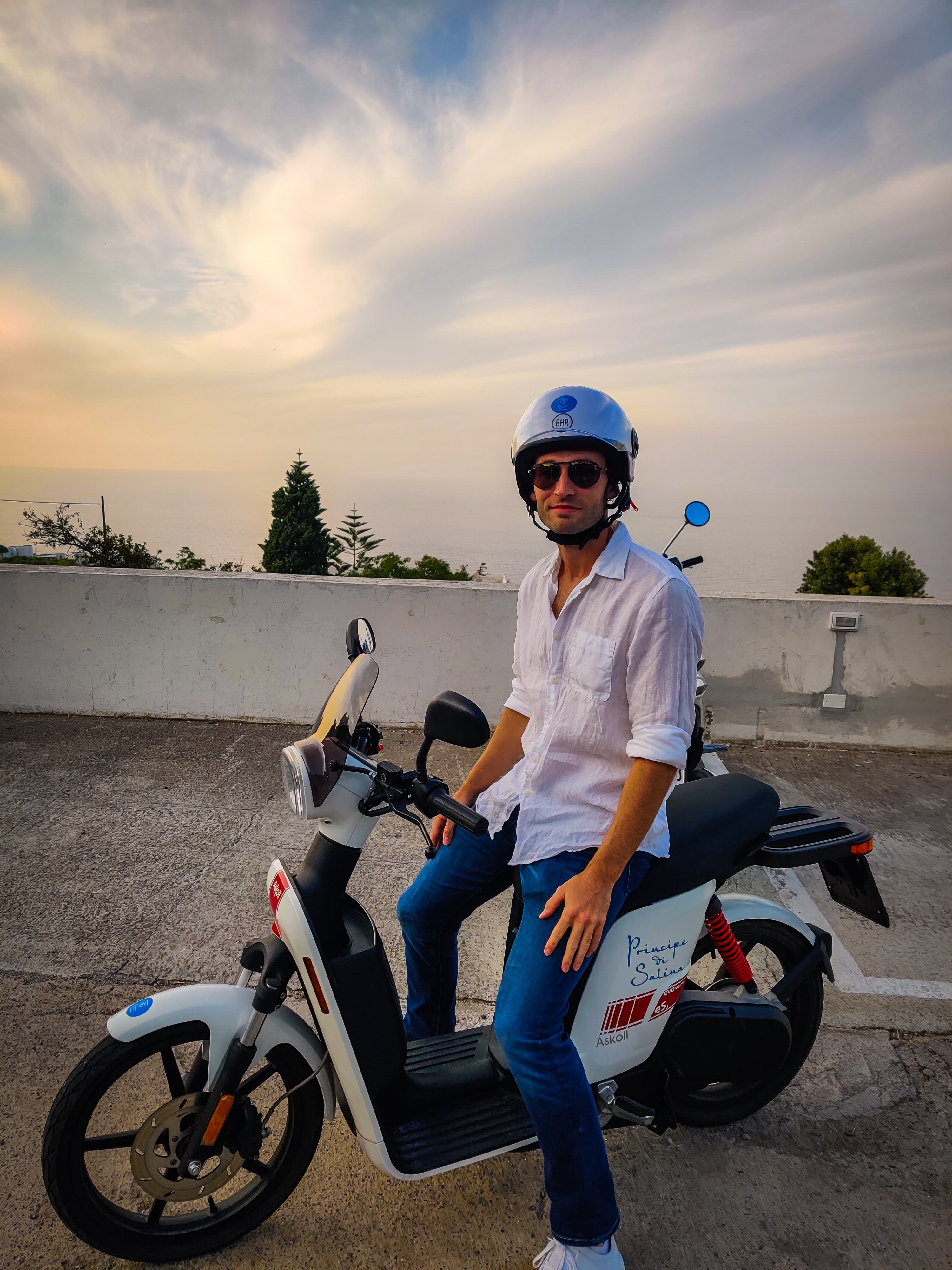
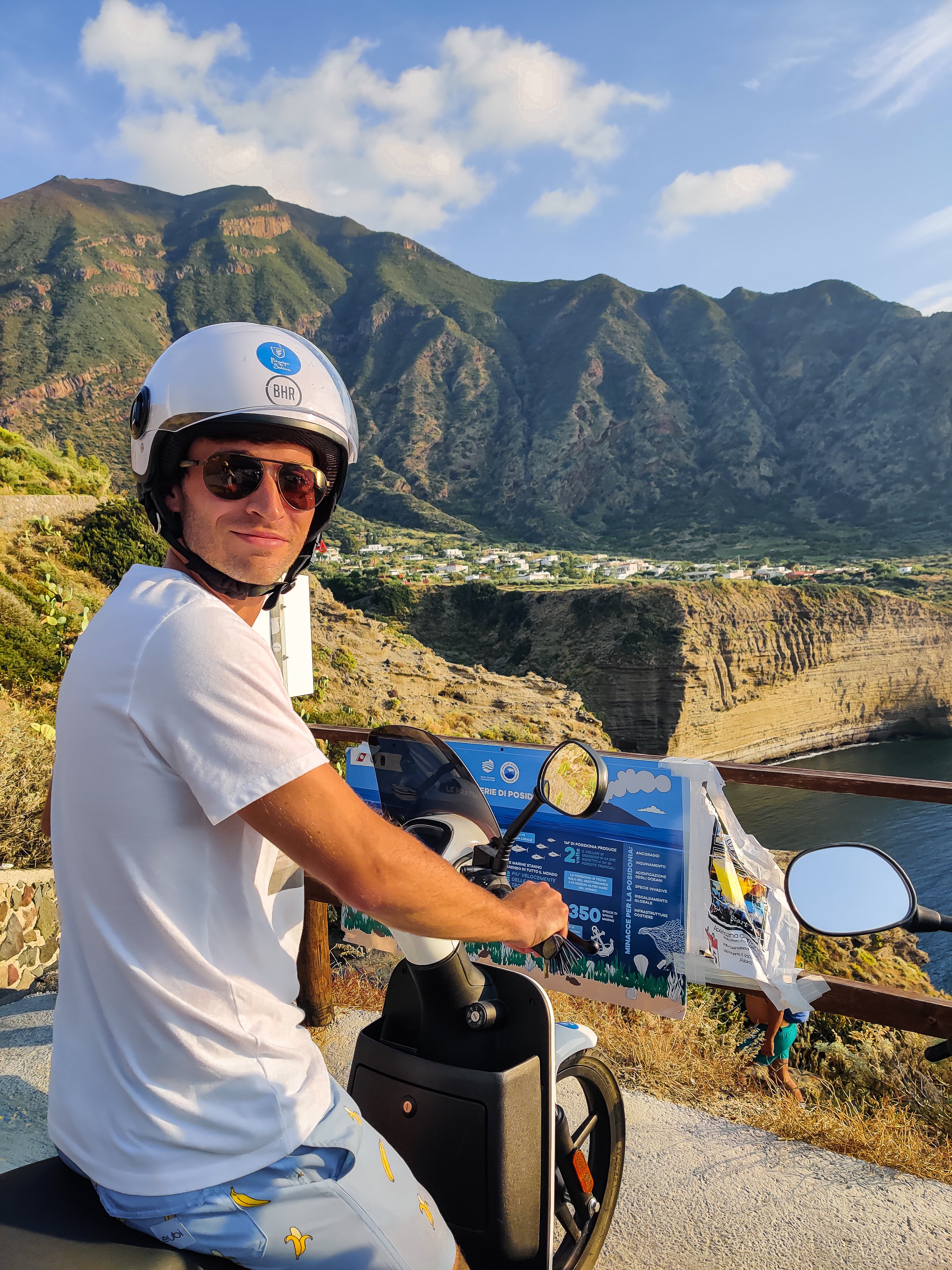
You can island hop the Aeolian Islands by ferry (and you absolutely should), but once you’re on land, you’ll want wheels—especially on the larger islands like Salina. Just a heads up: you won’t find a Hertz or Avis waiting for you. The car rental spots here are small, local operations with names you’ve never heard of, renting out tiny, slightly beat-up cars that have definitely seen some things. But honestly? Who cares. You’re not here for horsepower—you just need something to get you from granità in Lingua to aperitivo in Malfa.
If you’re feeling a little more adventurous (and the roads aren’t too steep), go for an electric Vespa. It’s quiet, eco-friendly, and way more fun to zip around on. That said, not every island needs a vehicle. Panarea, for example, is completely car-free, so your best bet there is a good pair of sandals and a loose agenda. Some islands are made for driving, others for wandering.
- What to Eat on the Aeolian Islands -
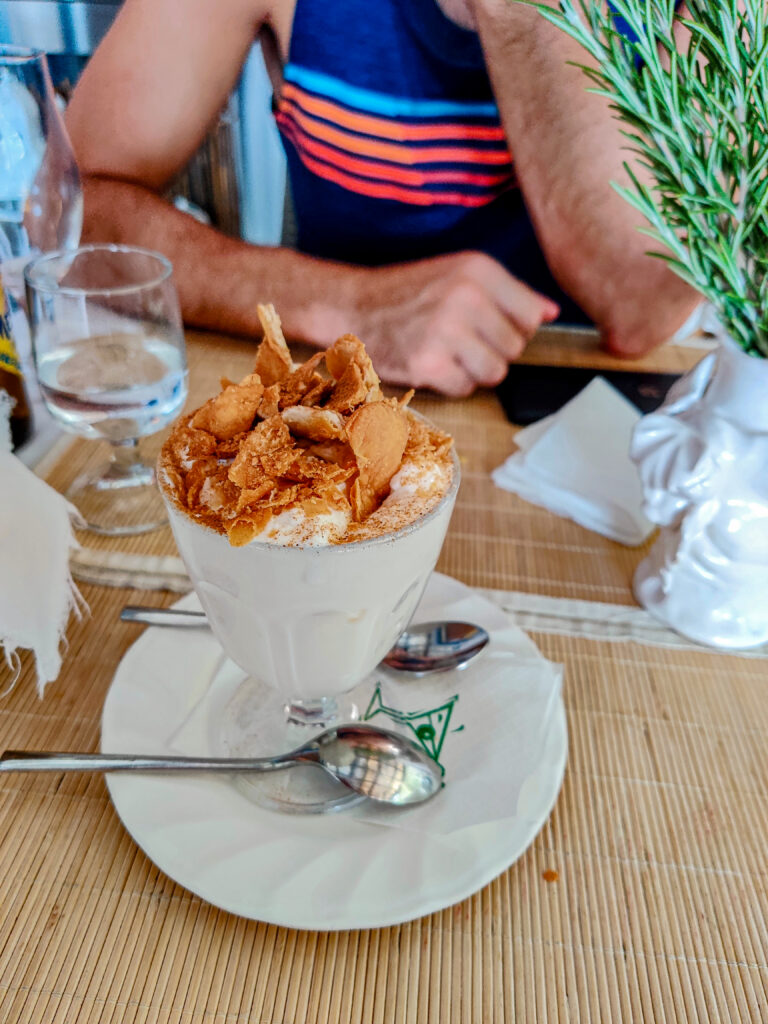
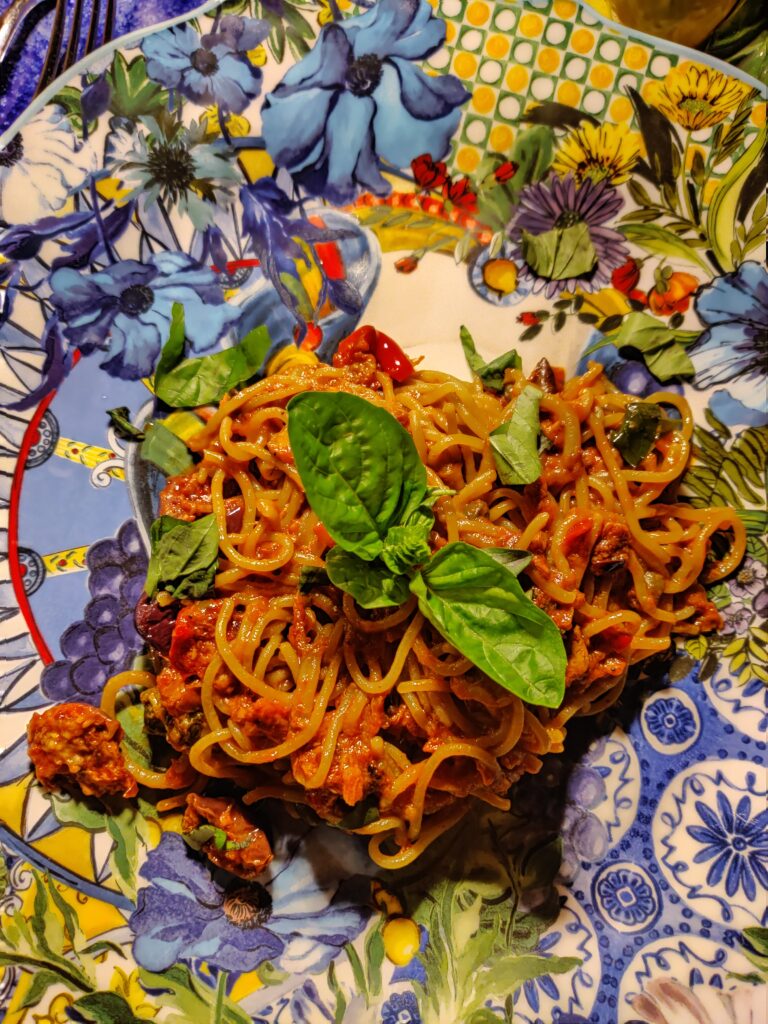
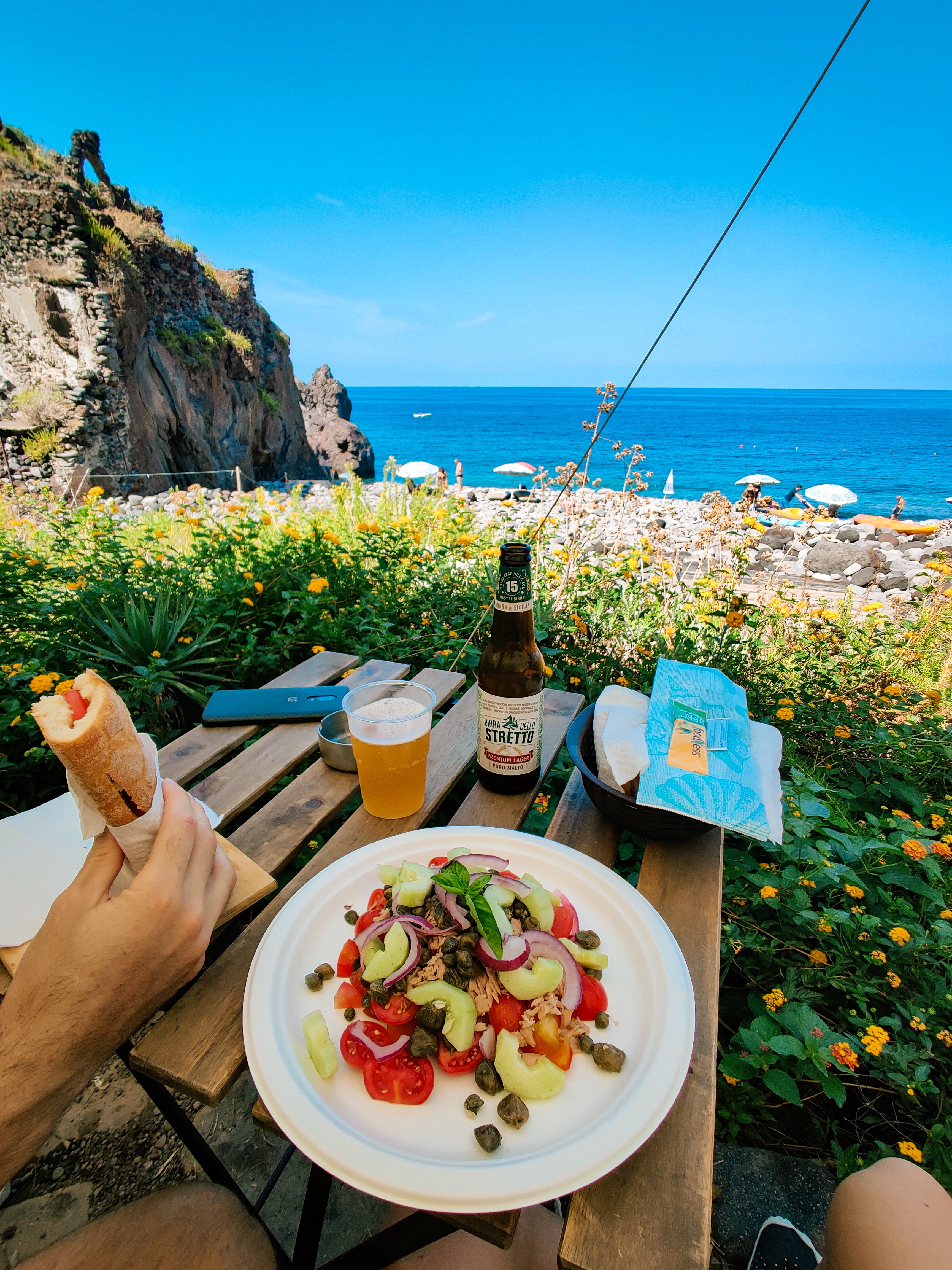
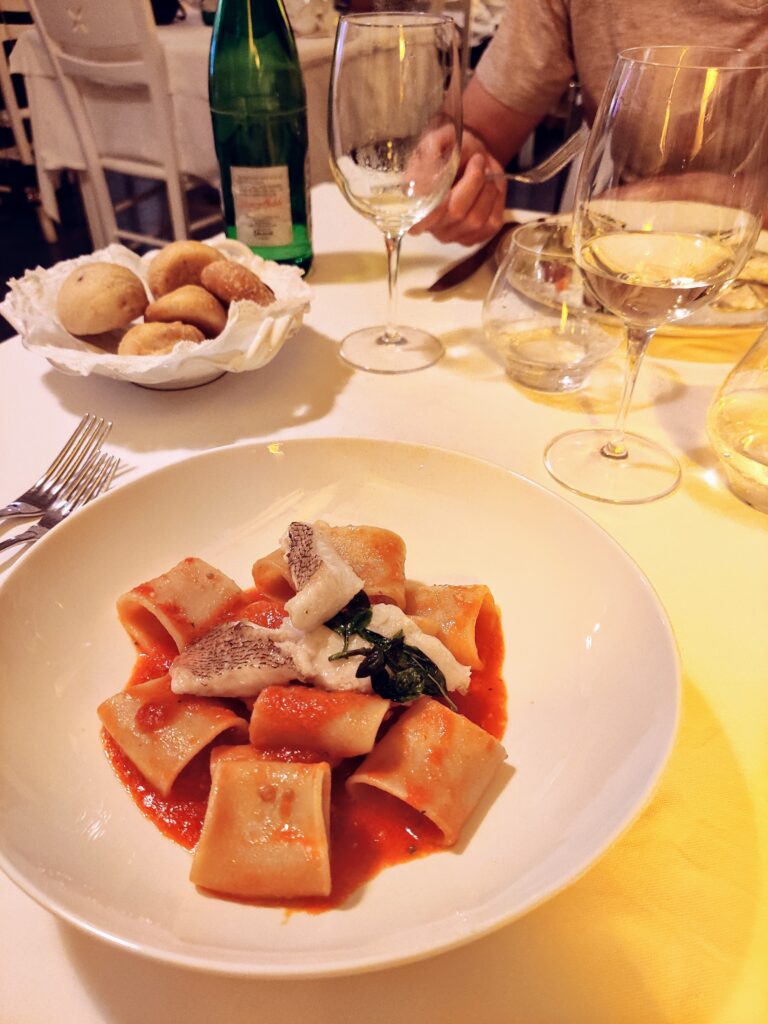
- Scorpionfish: A local delicacy and a bit of a daredevil dish on the island of Panarea
- Anything Ricotta: The most famous of Sicily’s cheeses, Ricotta, is traditionally made from sheep’s milk but also cow’s or goat’s milk. Its mild flavor makes it a good accompaniment for a variety of dishes.
- Arancino: A classic Sicilian street food, arancina is a round, hollowed-out ball of rice that’s typically stuffed with ragù sauce.
- Cassata Siciliana: Cassata is a classic, beloved dessert in Sicily. The base of cassata is sponge cake covered with ricotta cream, topped with candied fruit and chocolate shavings. It’s one of Italy’s most celebrated sweets.
- Capers: Aeolian Islands’ capers are famous and feature in local cuisine, from first course to dessert. Salina produces the finest.
- Cannoli: Sicily’s most iconic dish is the cannoli, are cylindrical tubes of fried pastry dough that are filled with a sweet ricotta-based filling.
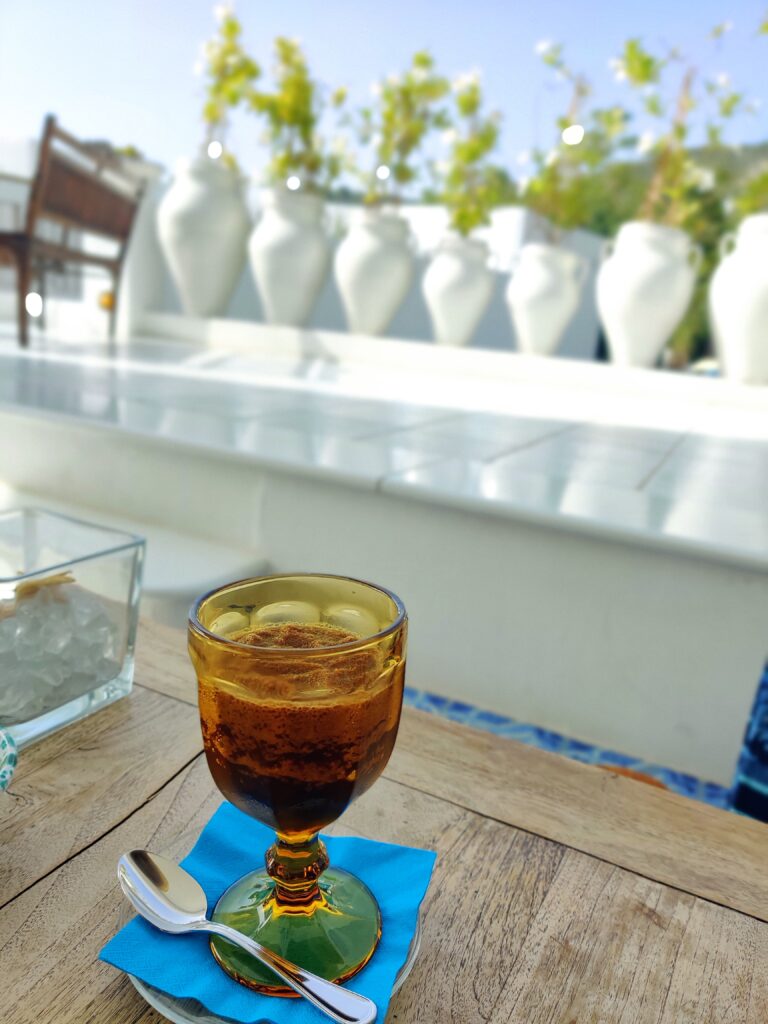
- Granità con Brioche: Granità, a quintessential Sicilian treat made from water, sugar, and fresh fruit, offers refreshing flavors like lemon, pistachio, and coffee. Often enjoyed for breakfast with a soft brioche bun, it can be eaten as a sandwich or dipped.
- Malvasia Wine: A naturally sweet raisin wine and produced exclusively in the Aeolian Islands.
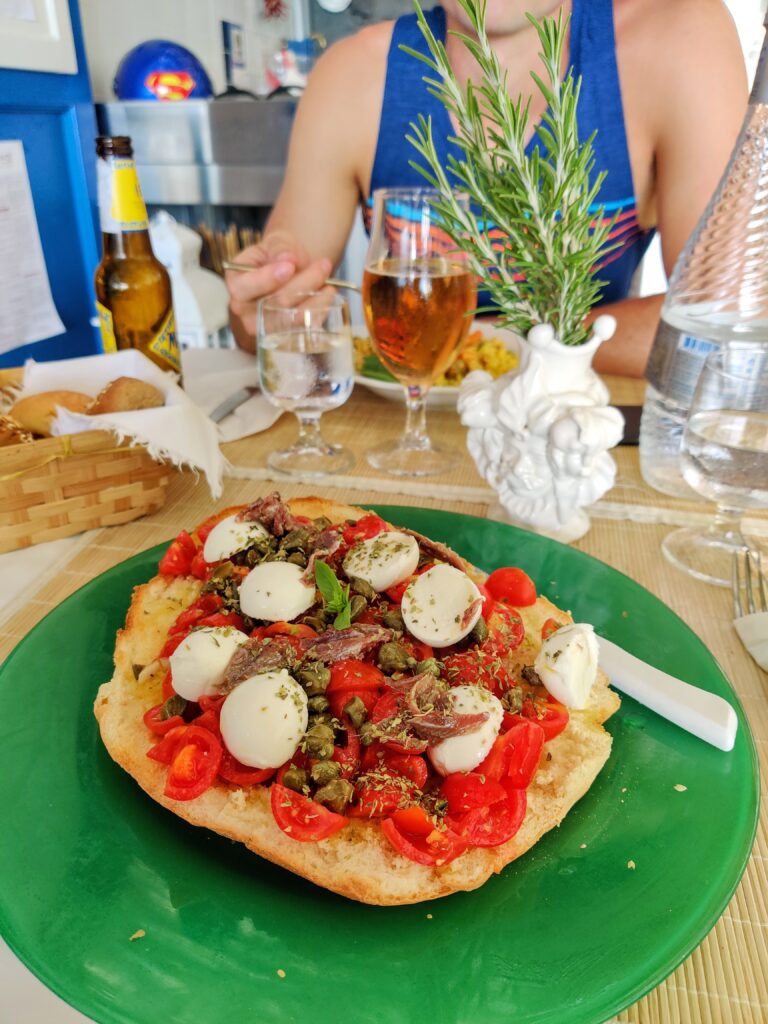
- Pane Cunzato: A typical Aeolian dish that comprises a bread base (similar to pizza) topped with savory ingredients, for example: capers, basil, mozzarella, ciliegino tomato, dried tomato, giant green olives, anchovies and, sometimes, tuna.
~ Important Things to Know ~
- A lot of places in Italy accept credit card. As a rule of thumb, if you’re purchasing something small like a coffee, gelato, or even panino, you can use cash. For all other dinners, attractions, or big expenses, credit is fine. When it comes to experiences, most vendors will ask you to bring cash on hand so make sure you withdraw from an ATM beforehand.
- Avoid August: Italians, and most Europeans, all go on holiday at the same time—August. Italians migrate to the coast en masse, leaving humid cities half empty. In August, many businesses in the cities are closed, prices rise significantly outside the city, and large crowds are the norm on popular beaches. If you choose to travel in the high season, make sure to book your accommodation well in advance.
- During high season (summer), always make a reservation for lunch and dinner or you won't find a table
- Sicilian beaches are rocky, not sandy. Bring water shoes so that you can enjoy the beach to the fullest without tiptoeing over painful rocks.
- In Italy, tips are already included in your final bill. If you choose to go beyond that, it is not expected, but appreciated.
- The Sitting Tax: This applies all over Italy: Anytime you take a seat, even if it’s just for an espresso or gelato, you will be charge a coperto, or cover or table service charge, of about 1-2 euros per person. You can’t avoid it for dinner, but you can for something as simple as a coffee or a panino. Just eat it standing at the bar or take it to go like a true Italian.
- In Italy, breakfast is typically a small pastry and coffee, unlike the hearty American breakfast. The term “bar” in Italy refers to a coffee bar, lunch bar, aperitivo bar, and cocktail bar, not just a place for alcohol.
- In your hotel room, you’ll likely see the bidet, a key feature in Italian bathrooms. Italians take pride in their cleanliness, using the bidet to clean intimate areas after using the restroom. It’s usually next to the toilet.
- This is optional. Boat rental companies will offer you to rent gear, but you may want to bring your own so you can use it at public beaches as well.
- Remember to buy a plug converter. Voltage in Italy is 200 volts AC (50 cycles) and the plug is the typical European plug with two round prongs. Many stores in North America sell the appropriate transformers and adapters, and they can also be purchased in Sicily.
- If you didn’t pay for an international plan, Italy’s cities have Internet access available in internet cafes, hotel lobbies and in some public places. Internet access in rural areas may be available, but it varies widely. Cellular phone coverage is generally very good in Italy’s cities and metropolitan areas, although expect limited coverage in remote or mountainous areas. All hotels will have WiFi Internet available for their guests. TIP: WhatsApp is a popular way to communicate with local businesses, restaurants and vendors in Italy.
- There are a few ways you can go about having cell service in Italy. The first is to pay for an international plan through your cell service provider during your time in Italy. However, that can get expensive. The other is to purchase European SIM Cards through Amazon that last us anywhere from 14 days to 30 days and have free internet, calls and messaging within all of Europe.
- By law, guests in Italy must be registered with local authorities, so expect to provide a copy of your passport or photo ID before arrival or at check-in.
- If you ask for a latte, you will be given milk, the right word is caffe latte. Ice coffee isn’t a thing in Italy, ask for a caffè shakerato, which is the closest thing to it.
- In Italy, pharmacies are marked by a green cross. Unlike in America, most medications can be purchased without a prescription, and pharmacists often act as “doctors.”
- Always ask for a tax-free form when shopping in Italy. As a foreigner, you can get a significant tax refund. At the airport, present your forms at the tax-free cubicle near check-in to receive your refund in cash.