As someone who’s Italian by blood, by culture, and by summer tradition—my roots stretch from Milano to Lago Maggiore, and I grew up spending every July and August soaking in the rhythms of life here—I’ve always had an affinity for the real Italy. The one that isn’t wrapped up in souvenir shops or tour group itineraries. The Italy of local cafés where the owner knows your name, of unmarked beaches you find by accident, of wine that tastes like the land it came from. That’s why I’m always chasing places that feel personal, untouched, and deeply rooted in local life. And few corners of Italy deliver that magic quite like Sicily—specifically, the volcanic slopes of Mount Etna and the Aeolian Islands scattered just off its coast. This itinerary is for those who want to sip wine from volcanic soil, swim in crater-shadowed coves, and experience Sicily in all its raw, refined glory.
Quick Navigation
Arrive in Sicily
Day 1: Mount Etna
Day 2: Taormina & Pistachios
Day 3: Canyons & Natural Pools
- Morning: Gole dell'Alcantara
- Lunch: Le Mamme del Borgo Motta Camastra
- Afternoon: Milazzo, Laghetti di Venere
- Afternoon: Ferry to Salina
- Evening: Sunset
- Evening: Check-in
- Dinner: Boutique Hotel
Day 4: Salina Island
Day 5: Salina Island
- Morning: Hike Monte Fosse delle Felci Volcano
- Lunch: Paperò Glicine
- Afternoon: Rinella Beach
- Afternoon: Chill at Boutique Hotel
- Afternoon: Explore Santa Marina
- Dinner: Villa Carla
Day 6: Panarea Island
- Morning: Ferry to Panarea
- Morning: San Pietro
- Morning: Ditella
- Lunch
- Afternoon: Cala degli Zimmari
- Afternoon: Cala Junco
- Dinner: Cusiritati
Day 7: Panarea & Stromboli
Day 8: Savoca
8 Day Sicily's Volcanoes: Etna + Aeolian Islands Itinerary Map
How To Get Around Sicily
What to Eat in Sicily
Important Things to Know
~ Arrive in Sicily ~
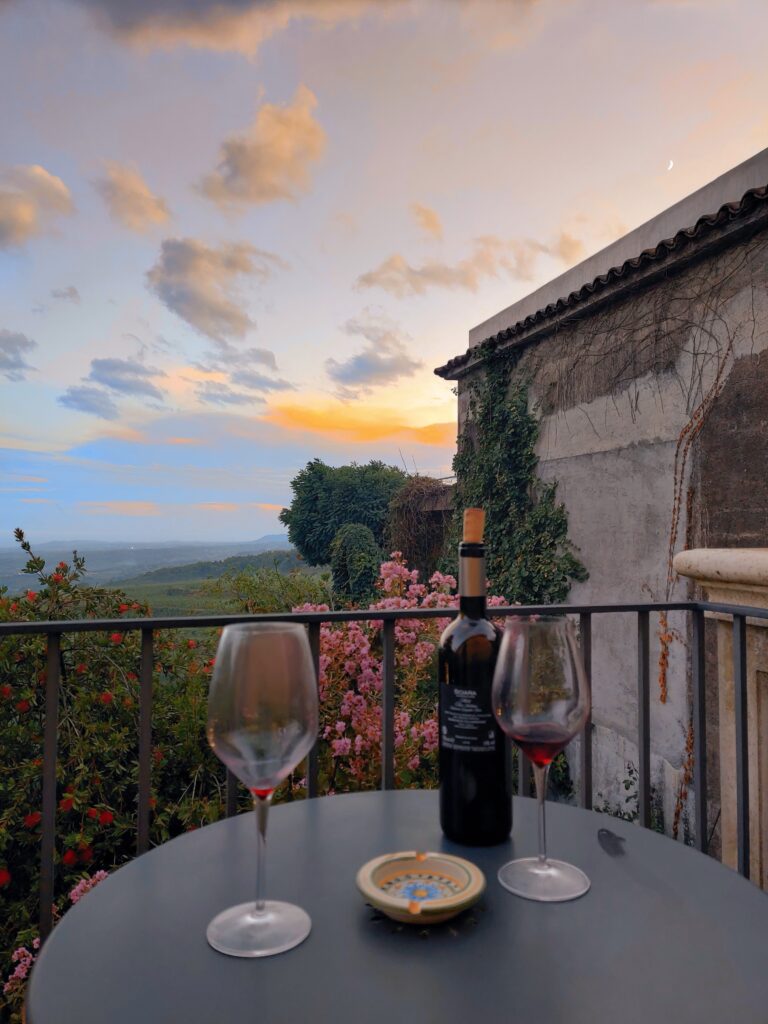
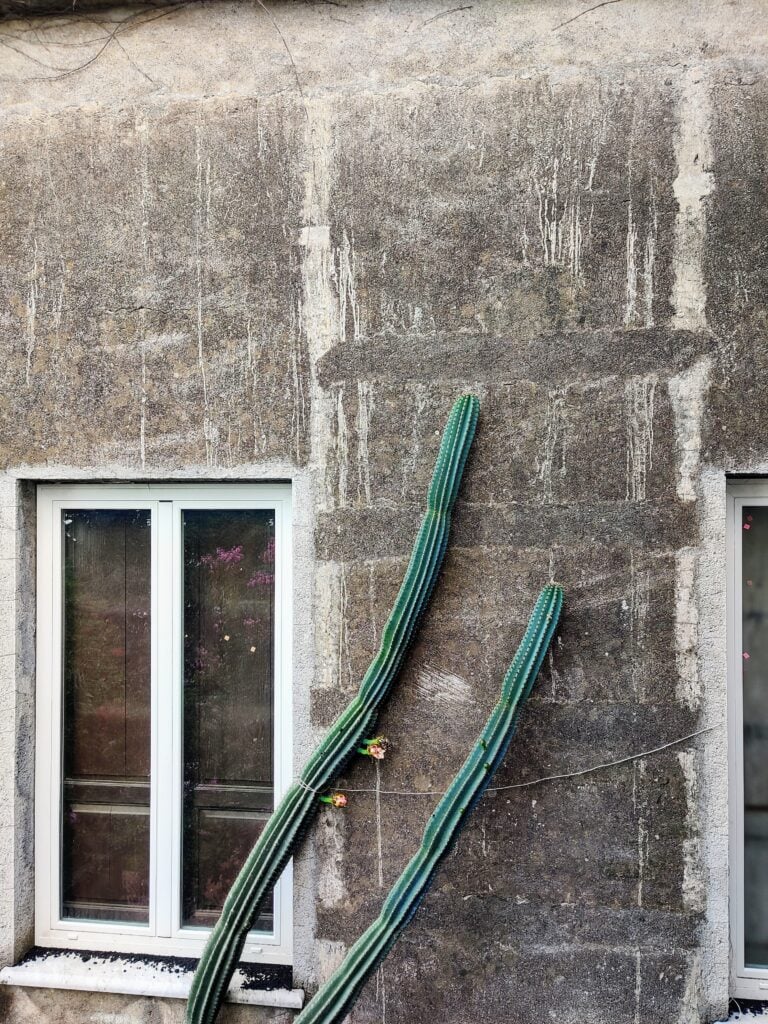
We land in Catania under an unusual Sicilian sky—gray, rainy, and heavy with atmosphere. It feels like the island is setting the mood, pulling us into its mystery from the very start. We grab our rental car and head straight for Mt. Etna, one of the world’s most active volcanoes. The clouds cling low, adding an eerie beauty to the black lava fields and winding roads. But Etna isn’t just fire and smoke—it’s flavor. Few travelers know that its slopes are home to some of Italy’s most exciting wineries, where ancient lava enriches the vines and wine resorts pour glasses as dramatic as the landscape itself.
Fun Facts...
Check-In: Wine Resort
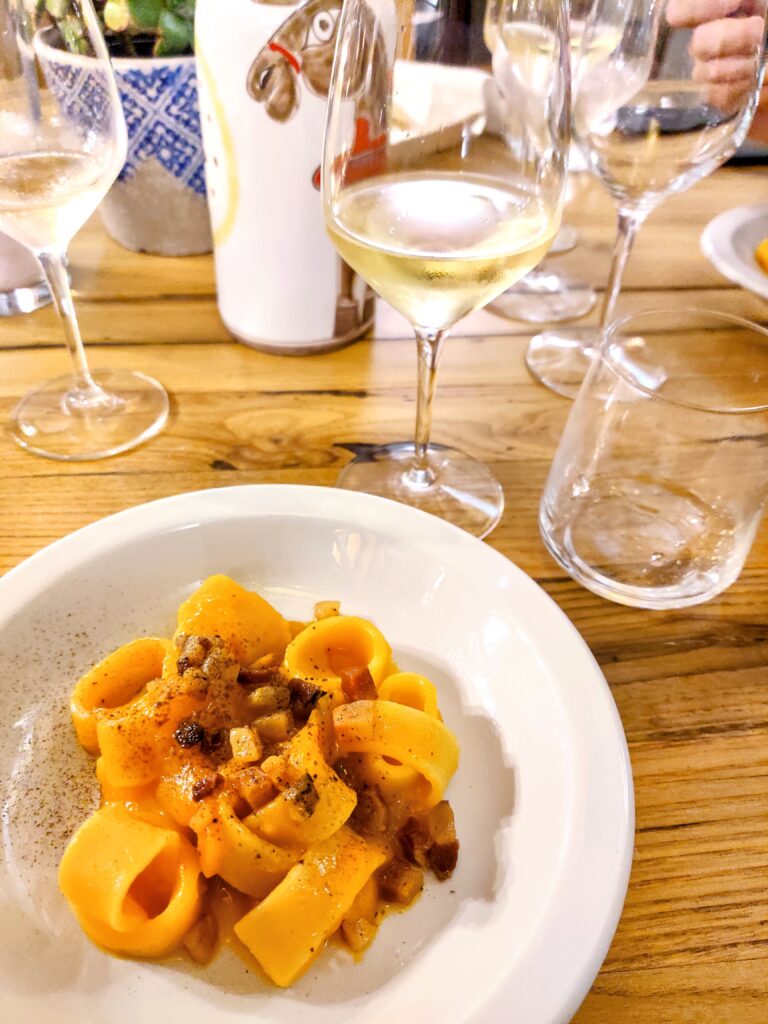
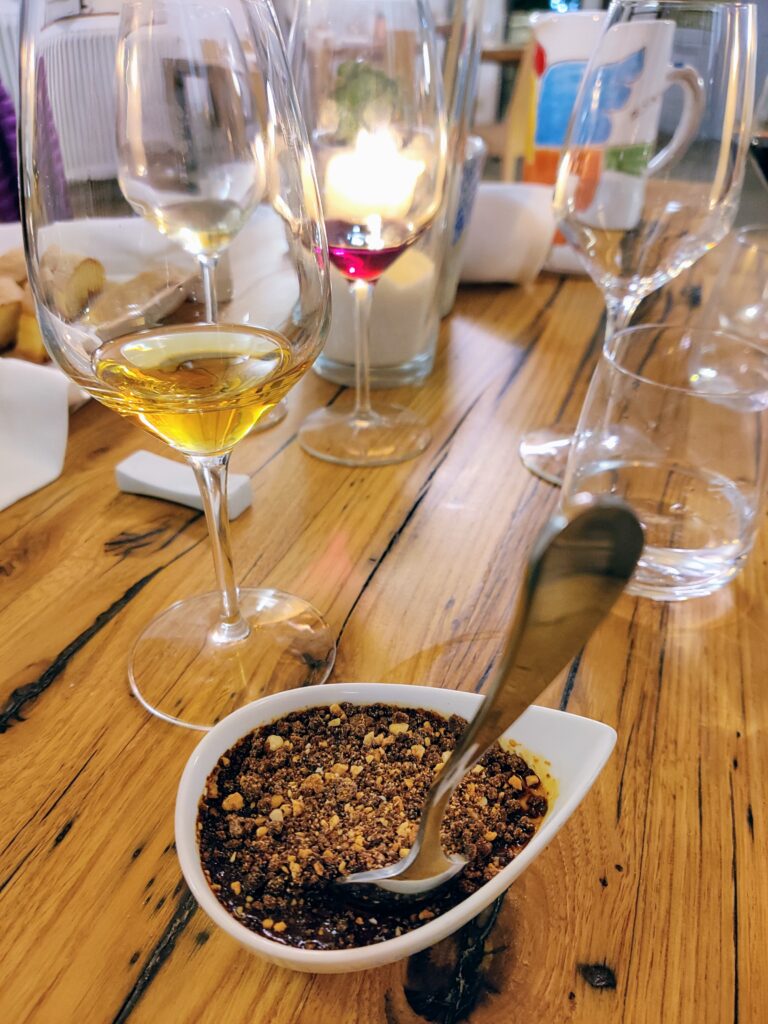
We pull up to one of my favorite wine resorts on the slopes of Mt. Etna—a place I’ve actually returned to, which says a lot. With just four rooms tucked into a quiet Sicilian town, it’s the kind of spot where time slows and silence feels golden. The estate stretches across volcanic soil, and from the infinity pool, the vineyards tumble down toward the Ionian Sea like waves of green lava.
Even if you don’t stay overnight, the multi-course meals alone are worth the stop—some of the best I’ve had in Sicily. We sip their house red, bold and earthy, before heading to dinner, where every bite tells a story. By the time we hit the sheets, Etna hums softly in the background like a lullaby.
Interested in Staying Here?
Purchase my private Google Maps locations below and get the name of this accommodation alongside additional accommodations, things to do, restaurants, activities, natural pools, volcanoes, attractions, and more. You'll have access to all my coveted locations and spots, straight to your phone.
~ Day 1: Mount Etna ~
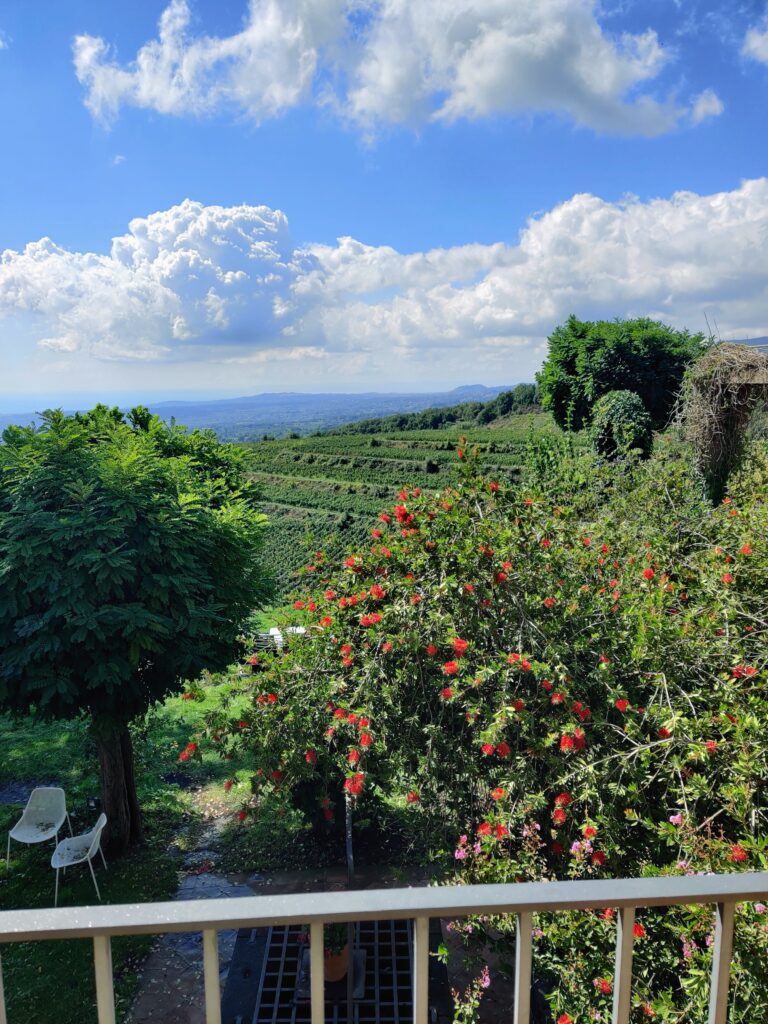
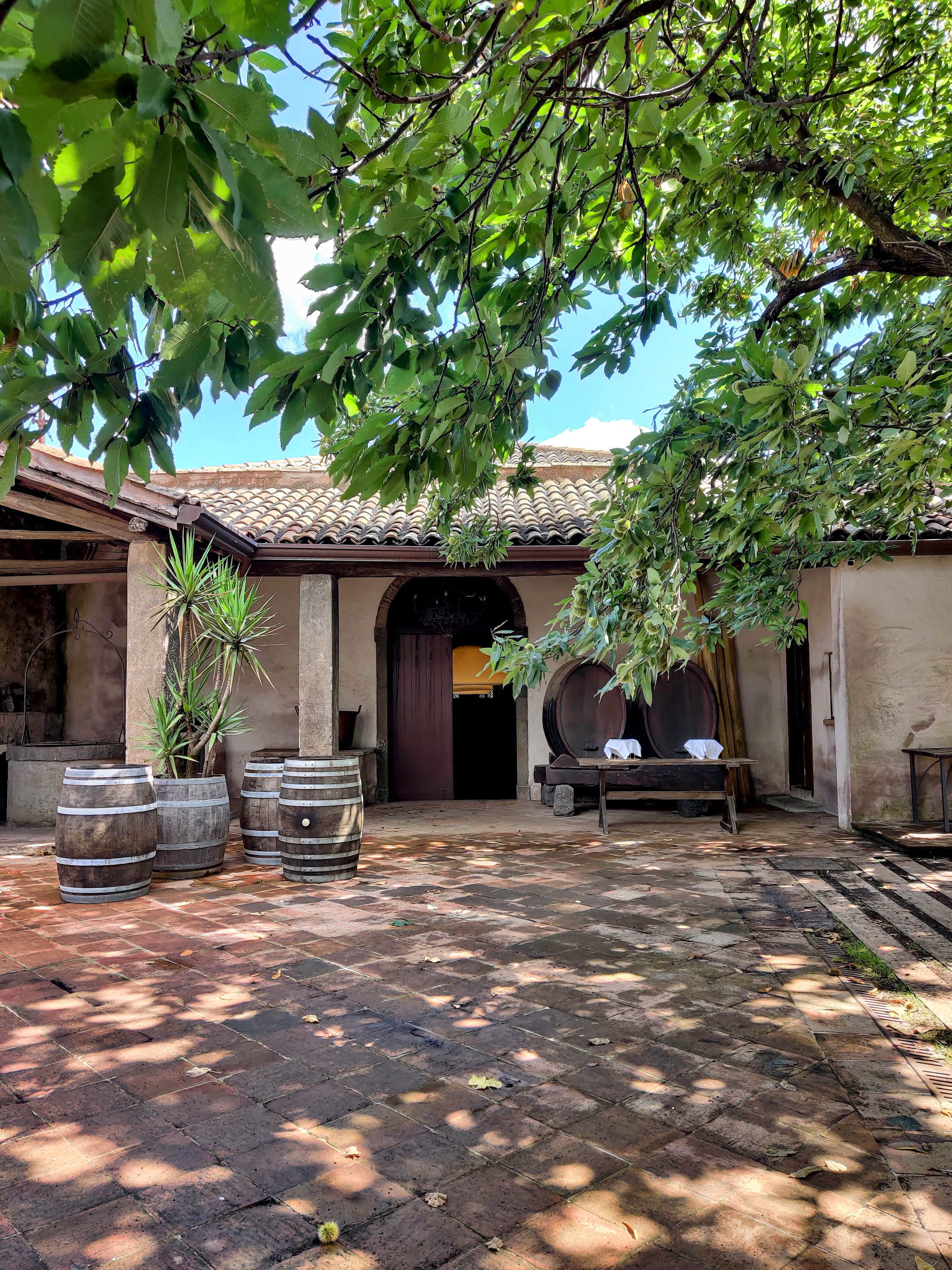
We woke to a gentler Etna—storms gone, light pouring in, and the infinity pool gleaming like glass. Breakfast was simple but perfect: fruit, Sicilian jams, and the croissant (or brioche, as they say down here)—still the best I’ve had to this day. Hot, buttery, and worth every crumb. I always have two.
Fueled by flaky pastry and sunshine, we set off for our morning trek up the volcano. The pool could wait. That view wasn’t going anywhere.
Morning: Hike Mount Etna
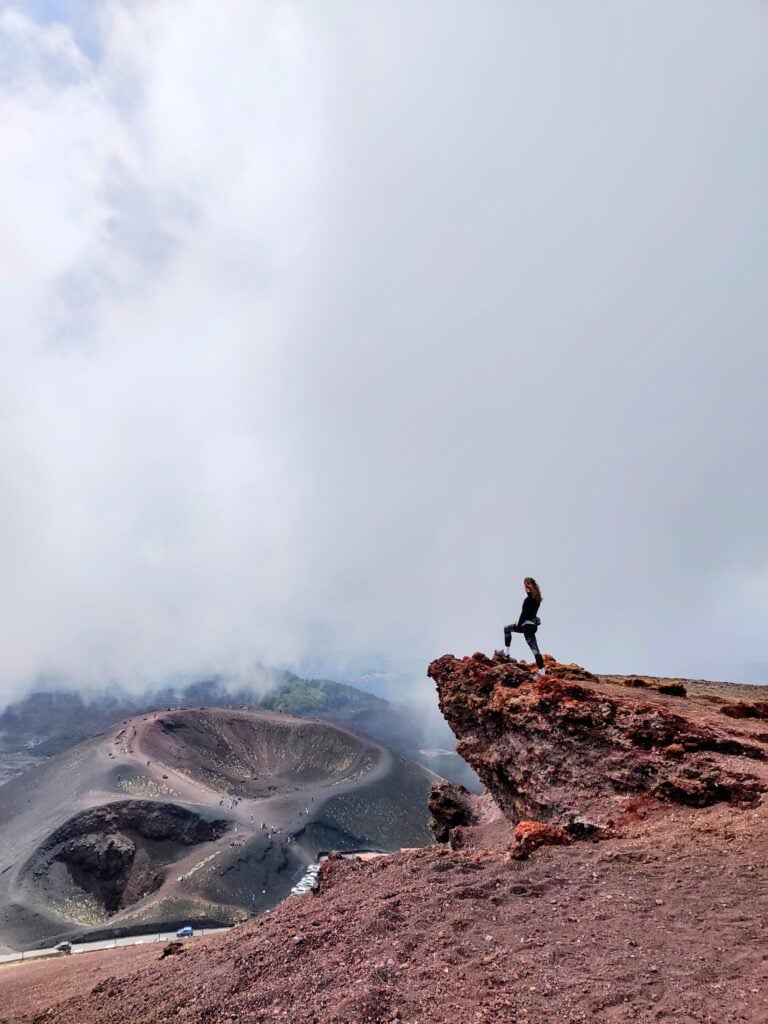
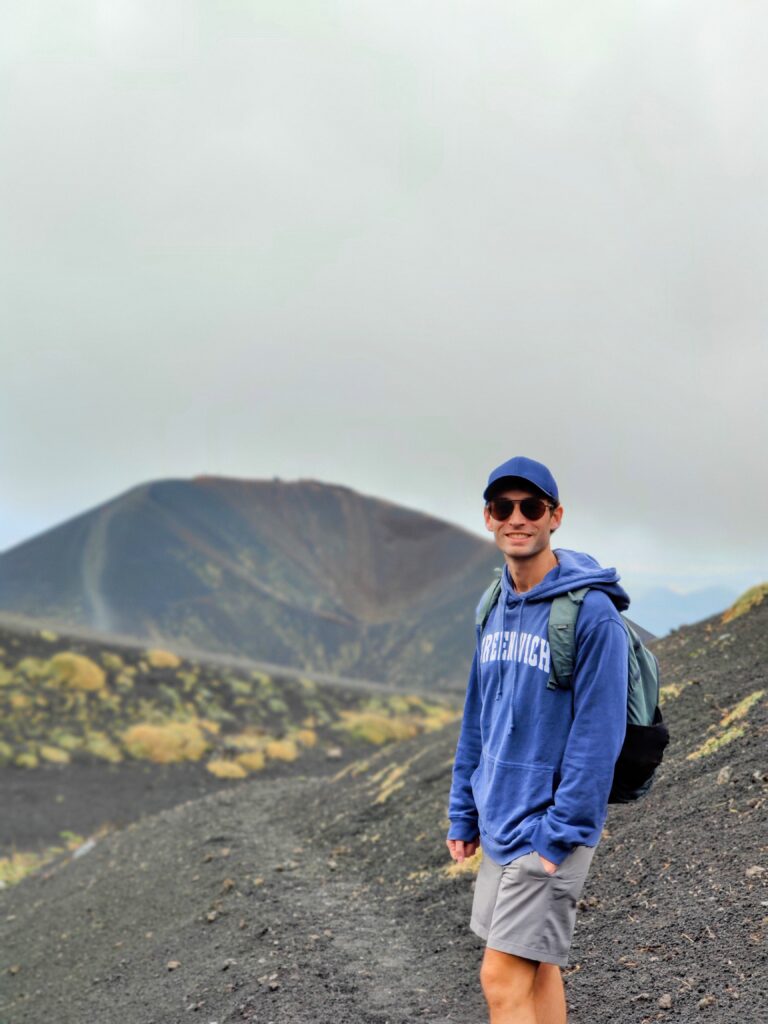
My Experience Hiking Mount Etna and the Silvester Craters (Without A Guide)
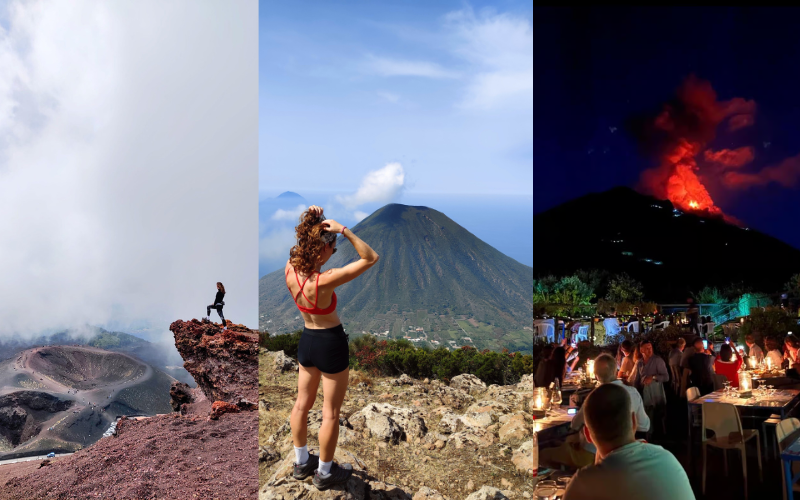
Climbing one of the world’s most active volcanoes with no guide and no real plan? Bold. That’s exactly what we did on Mount Etna. We started at the Silvestri Craters—Etna’s “ground floor”—and hiked up into the ash-covered unknown. The weather shifted fast: sunny and warm at the base, icy wind and thick fog up top. The higher we climbed, the more primal it felt—like the volcano was reminding us who’s in charge. We didn’t make it to the summit (fog and volcanic quicksand will do that), but the otherworldly landscape made every step worth it. Thinking of going? There’s also a cable car—if you’re not in the mood to channel your inner survivalist.
Lunch: Zafferana Etna
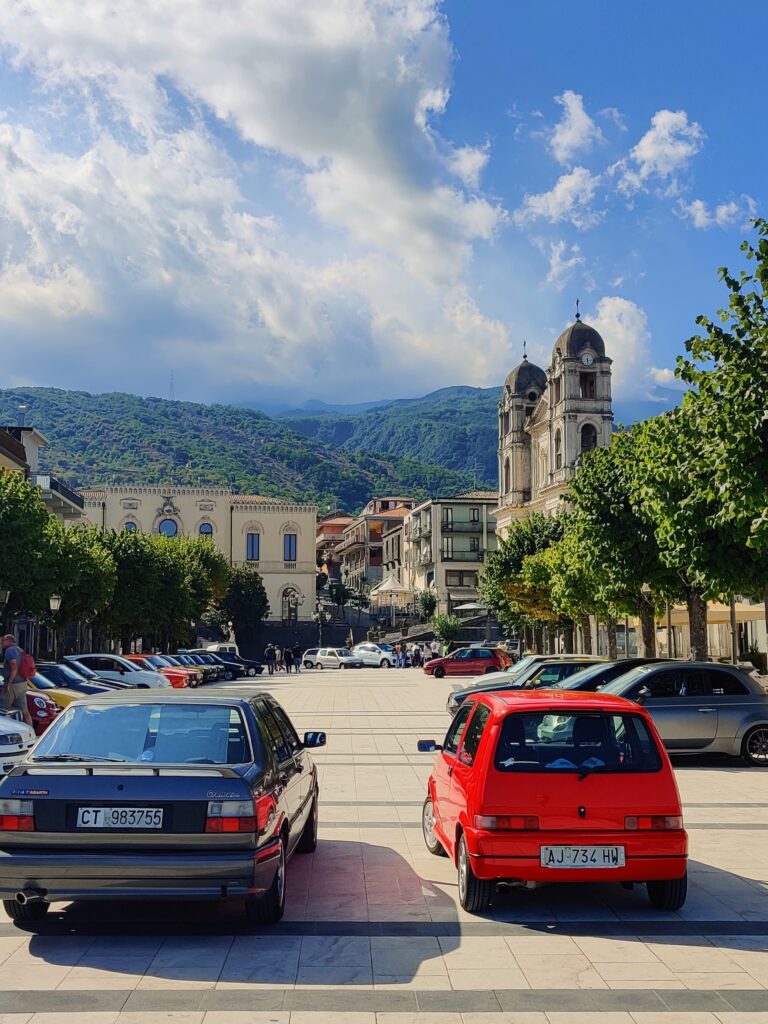
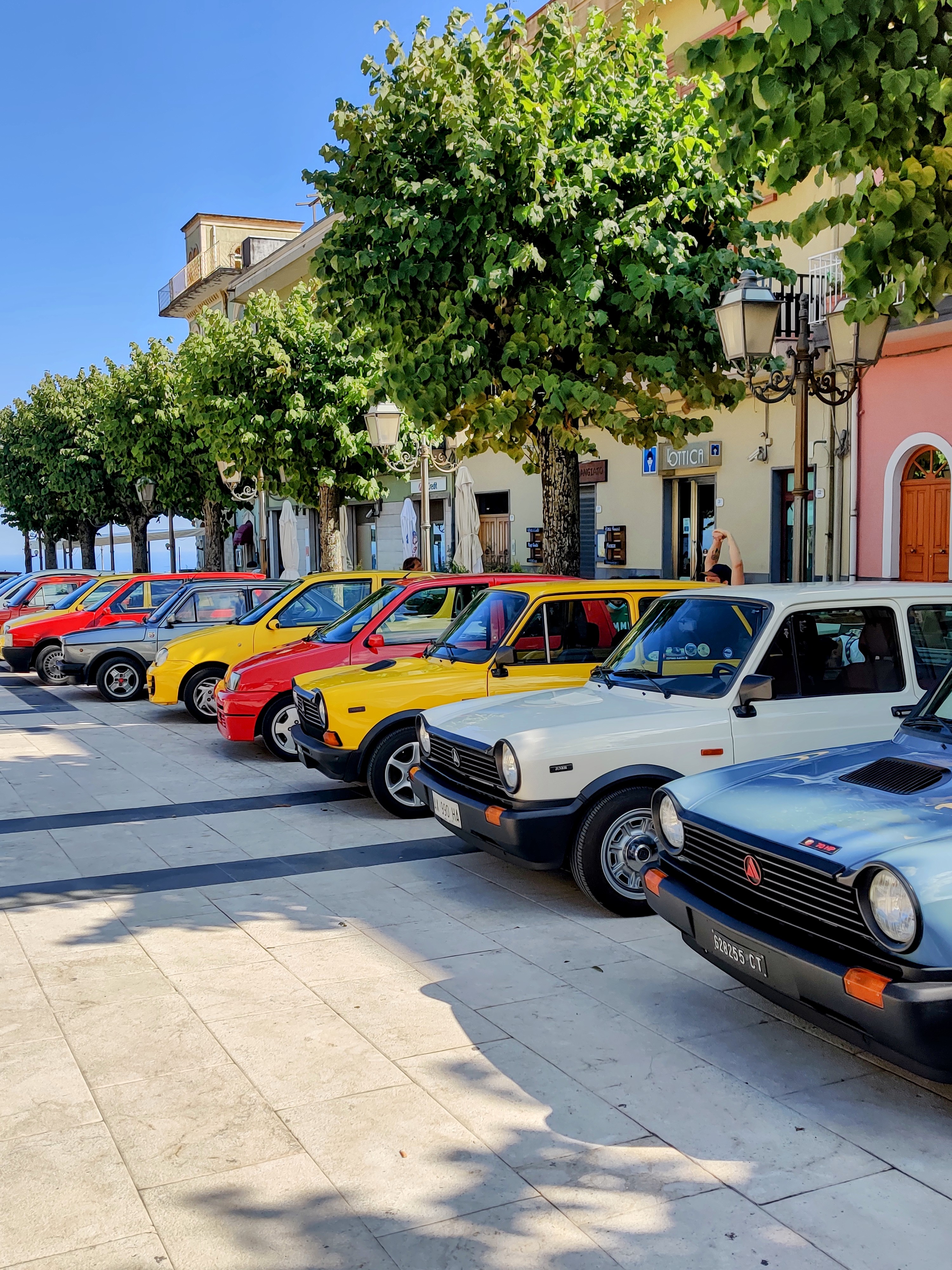
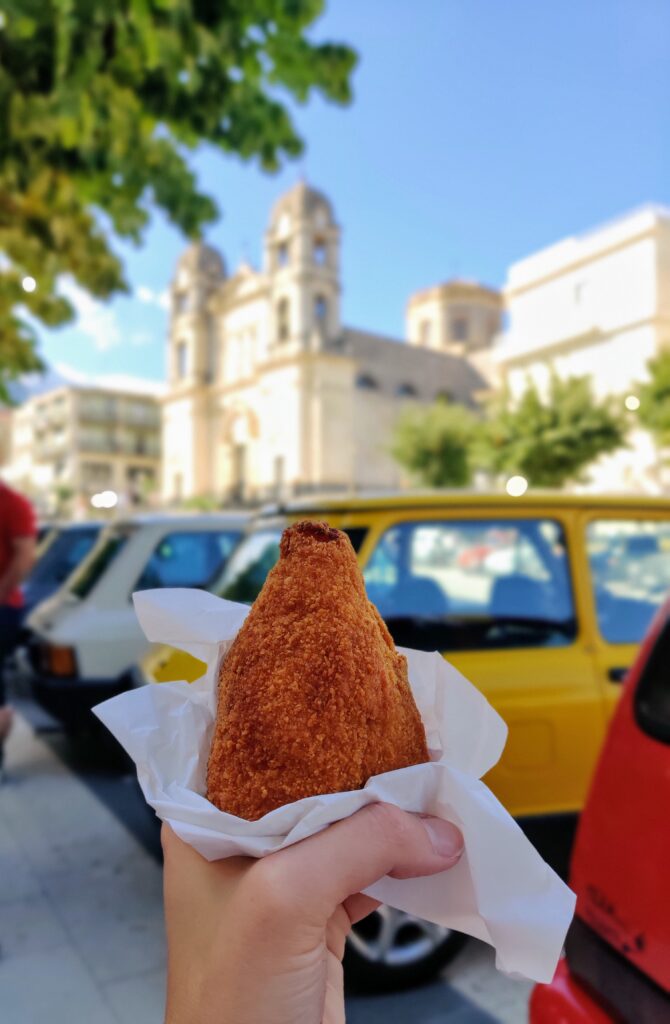
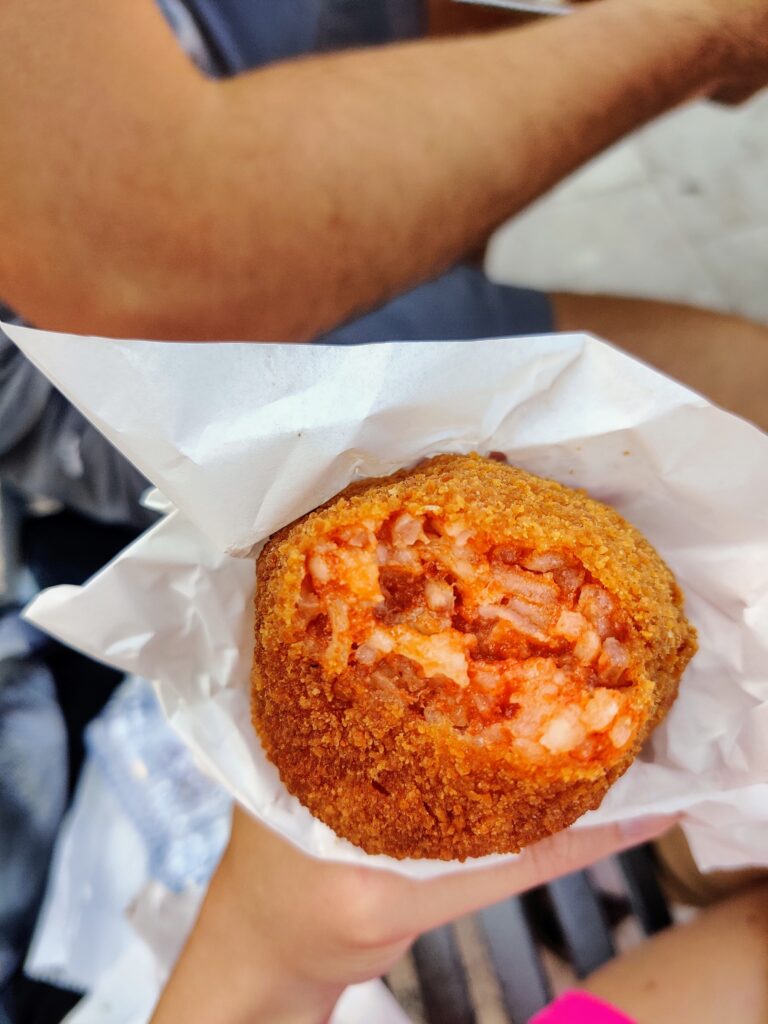
We hadn’t planned on stopping in Zafferana Etnea, but a hunger-driven detour led us to Donna Peppina, a charming pastry shop since 1924. The town’s main square feels like a scene from a film, with a grand church, sun-warmed piazza, and Mount Etna looming in the background. Tiny vintage cars line the square—old Fiats and VWs that are just part of daily life here. We came for a quick bite and ended up in a slice of old-world Sicily. Though we passed on the fried pizza, we couldn’t resist the arancini—crispy rice balls stuffed with ragù and gooey cheese. Street food, sure, but with soul.
Afternoon: Chill at Wine Resort
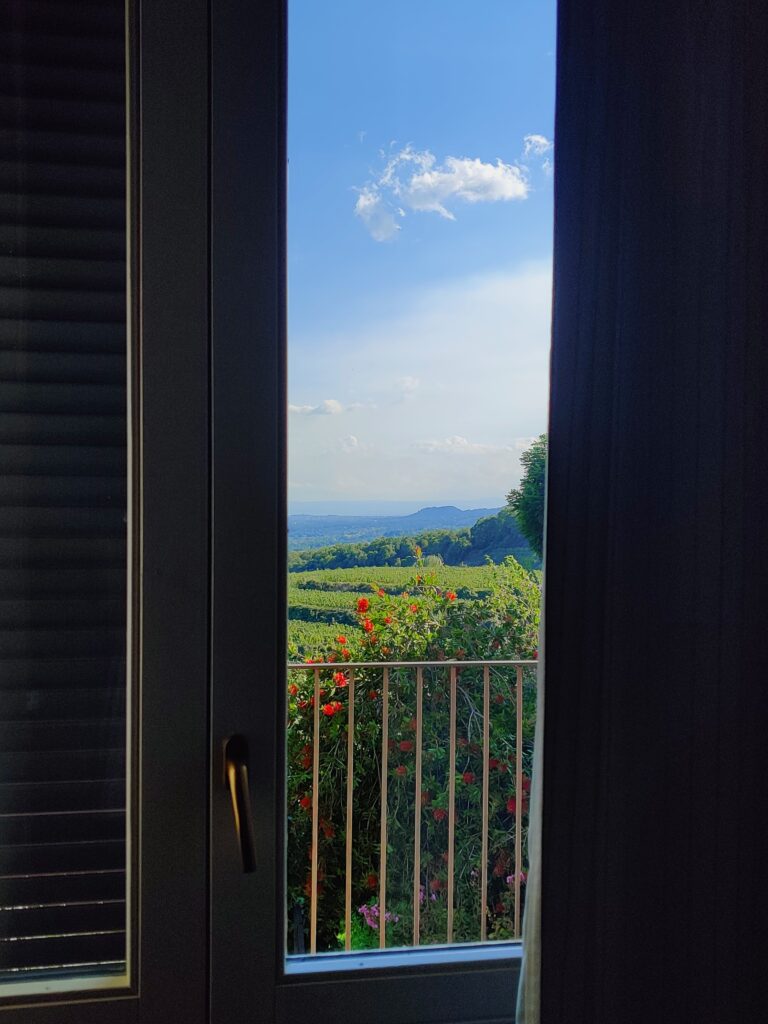
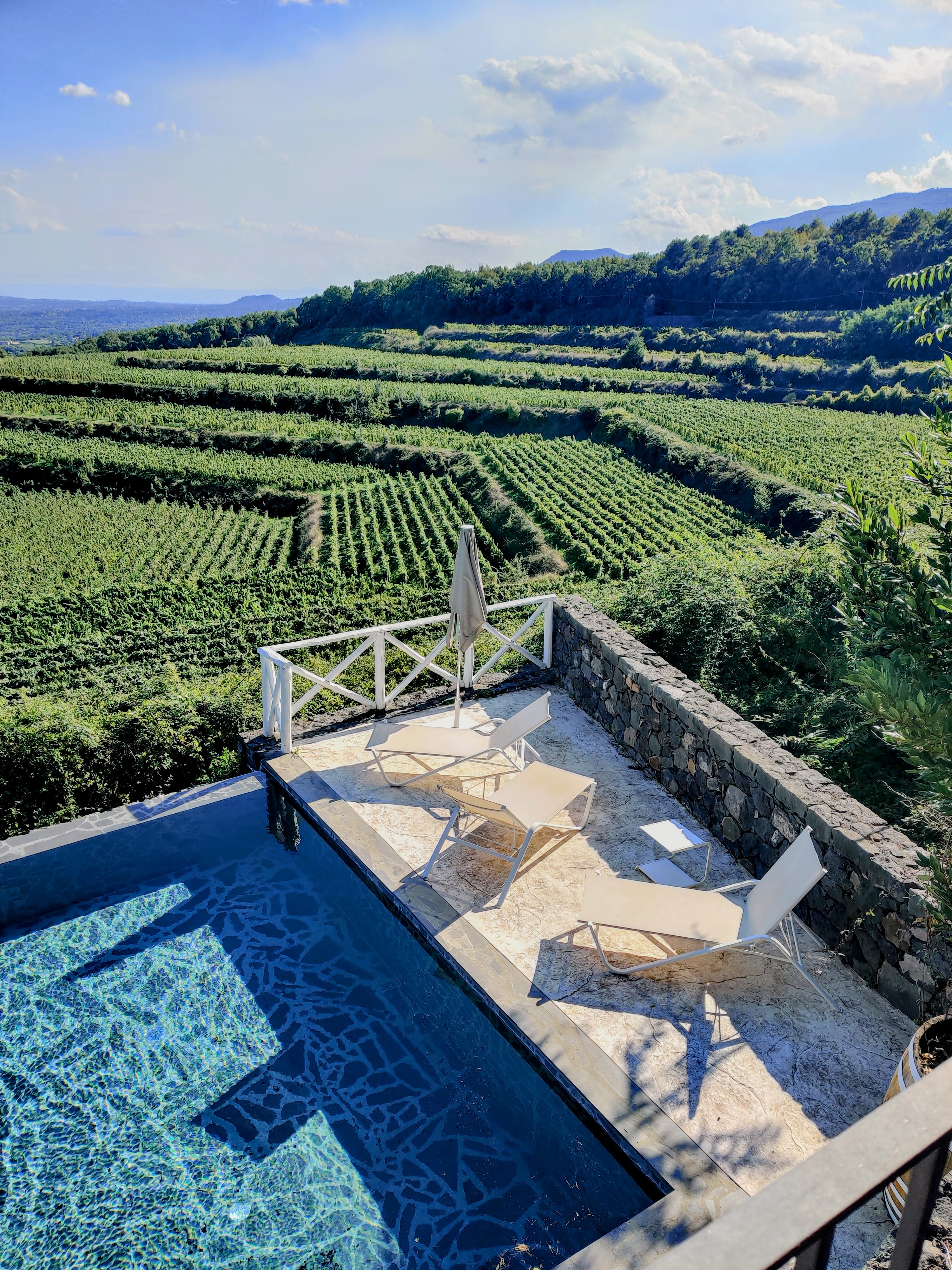
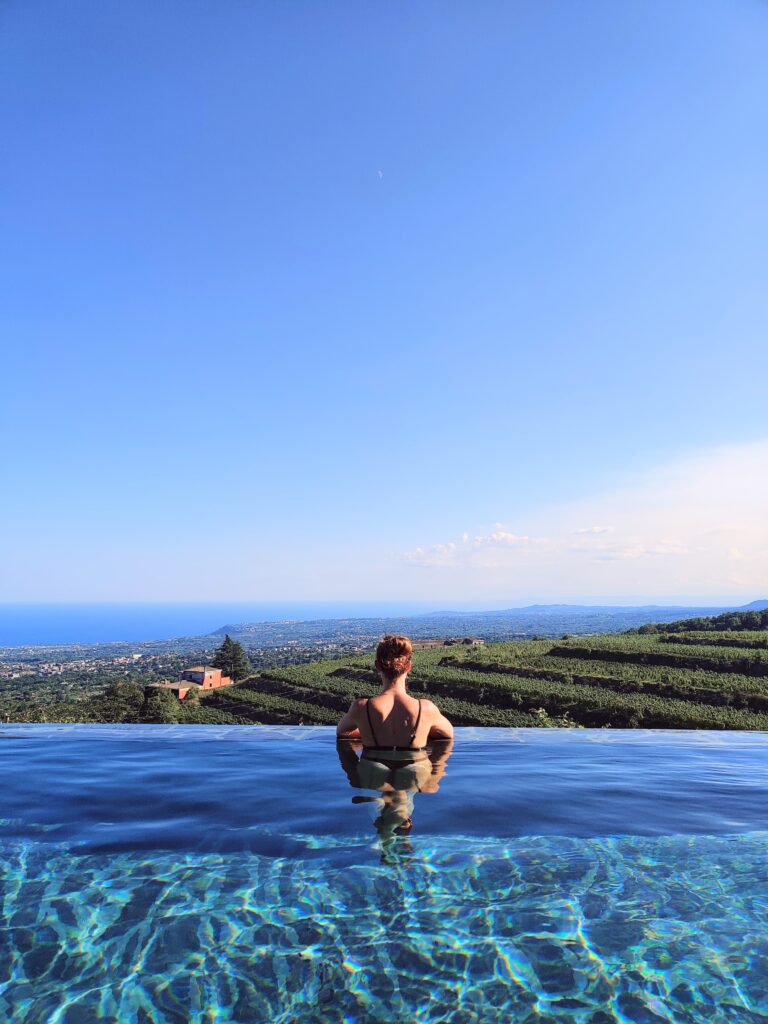
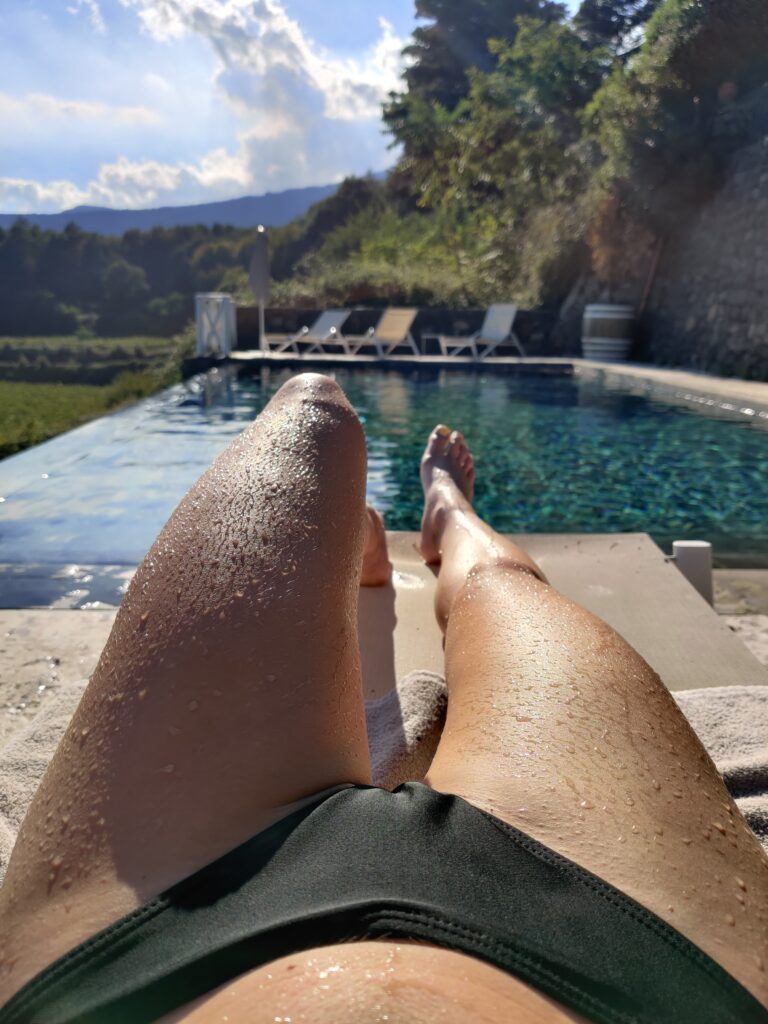
After our morning hike, we returned to the resort and sank into one of those naps only Sicily can offer—the kind where the breeze carries wild herbs and sea salt, and time seems to fade away. When we finally stirred, still pleasantly groggy, we headed to the infinity pool, glass of the resort's wine in hand. The view stretched out before us—vineyards tumbling toward the Ionian Sea. As we settled into the stillness, Etna gave her signature murmur—a soft rumble and a gentle shower of ash drifting down like volcanic snowflakes. Not a threat, just a reminder that we were resting on the slopes of a living, breathing giant.
Interested in Staying Here?
Purchase my private Google Maps locations below and get the name of this accommodation alongside additional accommodations, things to do, restaurants, activities, natural pools, volcanoes, attractions, and more. You'll have access to all my coveted locations and spots, straight to your phone.
Dinner: Wine Resort
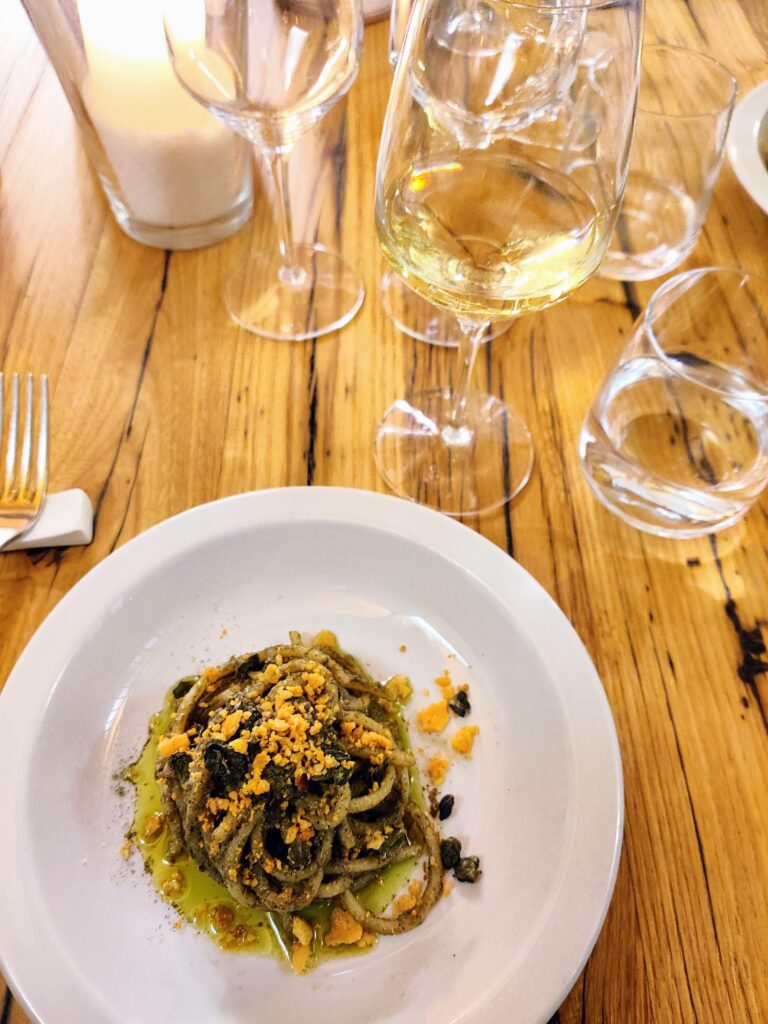
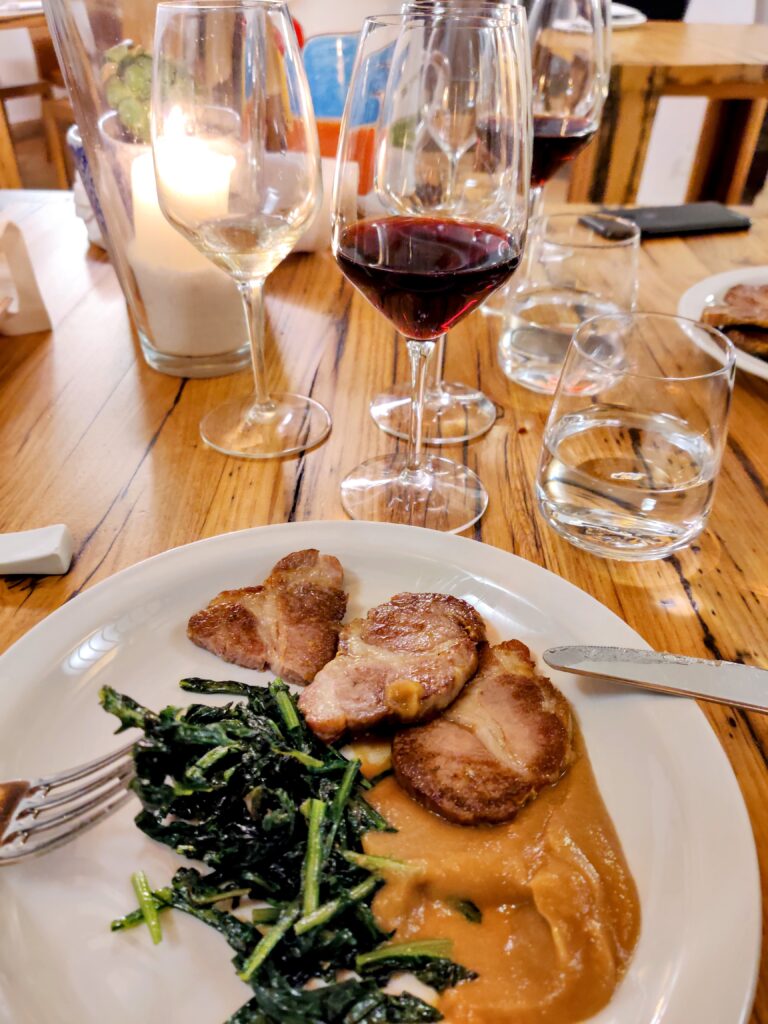
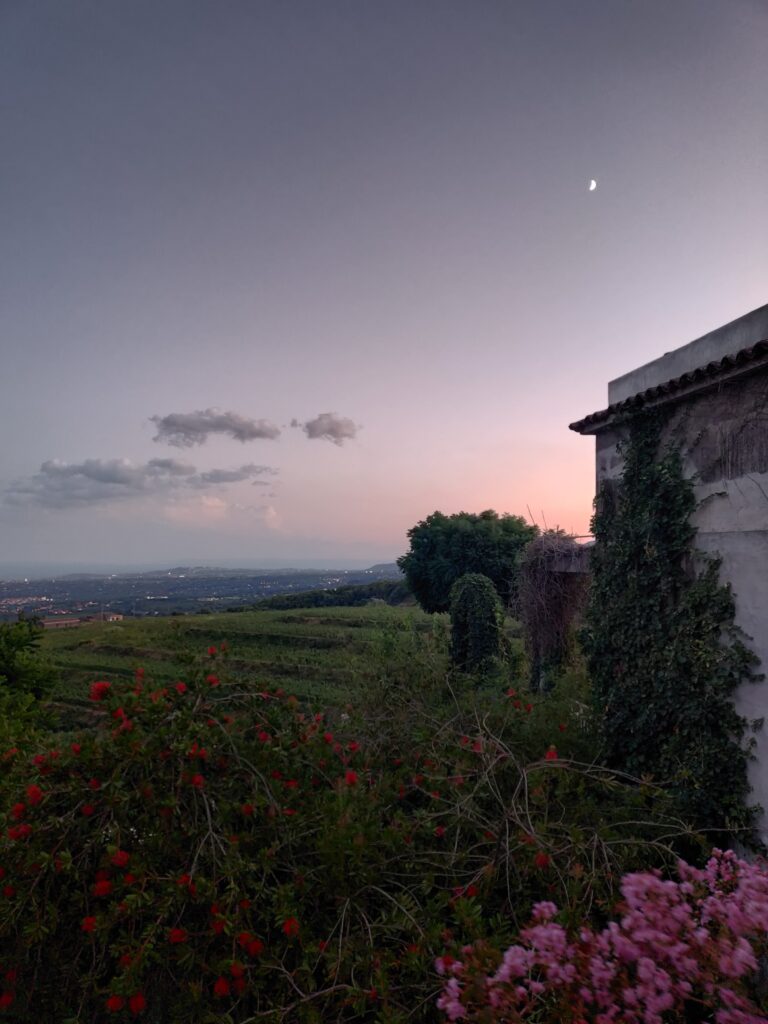
Dinner is at the boutique hotel again for their delicious multi-course menu with wine pairings. It's so good, you'll want to eat here for breakfast, lunch...and dinner.
~ Day 2: Taormina & Pistachios ~
Morning: Taormina
Here’s the thing—Taormina is stunning, no doubt about it. It’s perched high above the sea with views that could make your heart skip a beat, and yes, the ancient theater is jaw-dropping. But as an Italian, I have to say…it doesn’t feel like Sicily. It’s more of a beautiful stage set, dressed up for an audience of wide-eyed tourists. Think Amalfi vibes in Sicilian clothing. The streets are spotless, the boutiques are polished, and the prices are eye-watering. It’s the kind of place where you’ll hear more English than Italian. I always recommend a quick visit—wander through, soak up the views, maybe sip a spritz overlooking the coastline—but don’t stay the night. There’s so much more of Sicily that feels raw, real, and deliciously imperfect. That’s where the magic is.
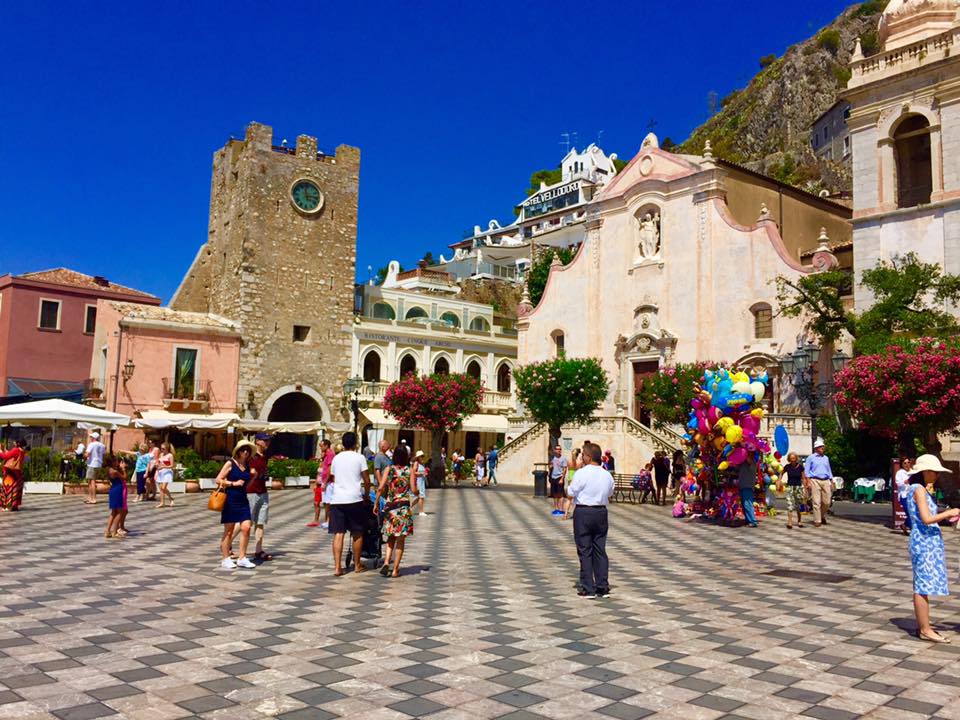
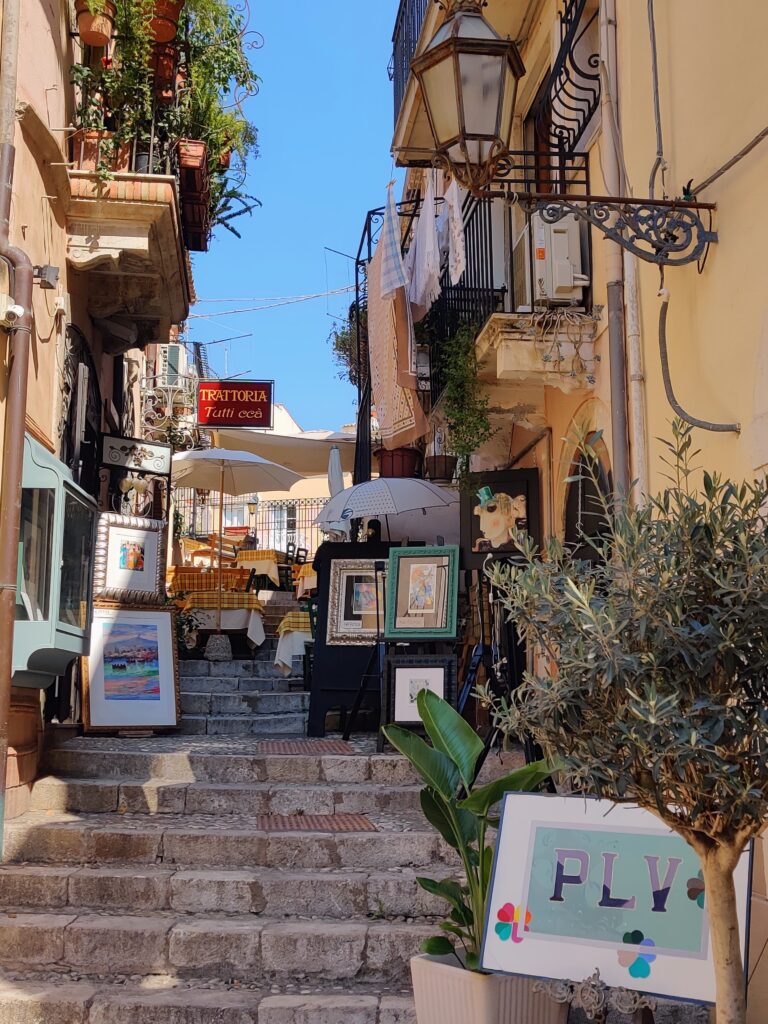
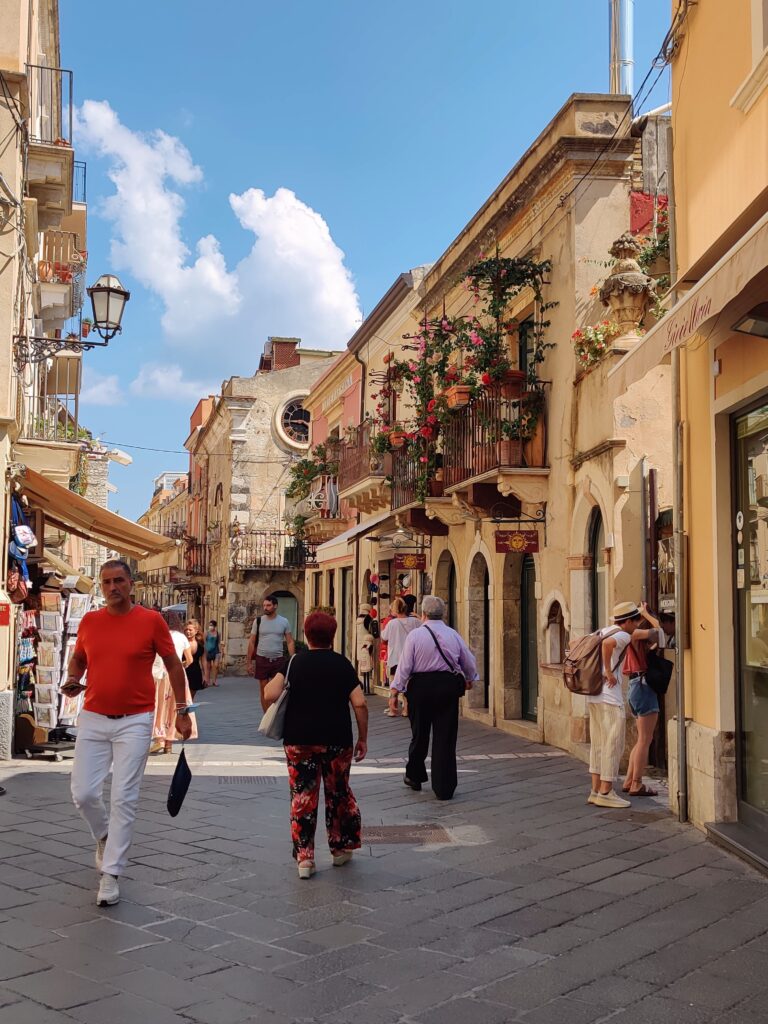
6 Iconic Things to Do in Taormina, Sicily
Taormina, perched above the Mediterranean Sea near Mount Etna, is renowned for its breathtaking views and historical significance. While its beauty is undeniable, the town has become a popular tourist destination, which some feel has diminished its authentic Sicilian charm. Visitors can explore the main square, Piazza IX Aprile, known as the "good living room" of Taormina, offering panoramic sea views and rich history. Nearby, the public park Parco Colonna, originally a private retreat for Lady Florence Trevelyan Cacciola, provides a serene escape with classical statues and lush flora. The ancient Greek Theatre, Teatro Antico di Taormina, stands as a testament to the town's historical depth. While Taormina may not capture the raw essence of Sicily, its picturesque landscapes and cultural landmarks make it a noteworthy stop for travelers.
Afternoon: Linguaglossa
If Salina's "green gold" is the caper, then Mount Etna's is its vibrant pistachio—specifically the Pistacchio Verde di Bronte, a jewel of the island, and a DOP (Protected Designation of Origin) treasure. These emerald gems are woven through every corner of the local cuisine, from refreshing granita to the rich filling of cannoli, and even making their way into pastas and arancini. But for a true taste of Etna's pistachio magic, Bar Pasticceria Santo Musumeci in Linguaglossa is the place to be, where you’ll find some of the best pistachio pastries the volcano has to offer. And if you're lucky enough to be in Bronte during the festival, the "sagra" at Bar Conti Gallenti is an annual celebration where the pistachio takes center stage, as the town’s passion for this green gem is brought to life in every bite.
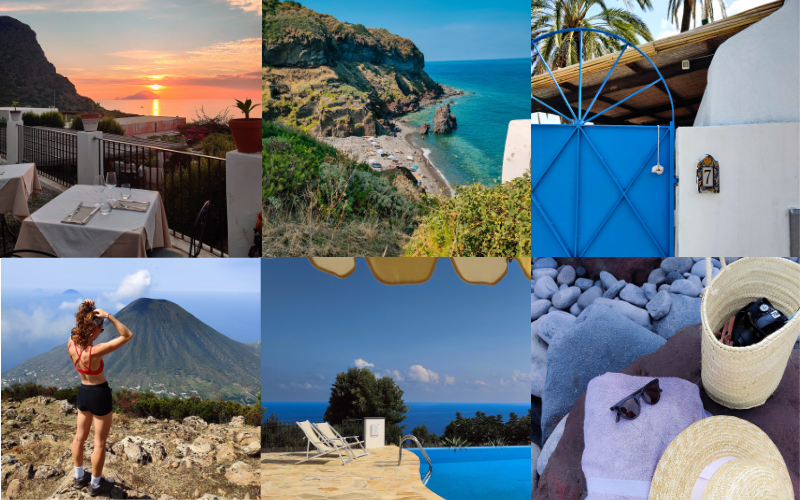
Afternoon: Wineries & Randazzo
If you’re craving a bit more action and aren’t in the mood to spend another afternoon by the pool, why not venture out to explore some of the other remarkable wineries in the area? Take a scenic drive along the Mareneve road to Palmento Costanzo, a winery nestled within the Parco dell’Etna. Here, grapes grow on terraces made from dry lava stones, a living testament to the region’s volcanic history. Alternatively, you could visit the Castiglione di Sicilia winery or the Winery Passopisciaro, a restored old farm and cellar perched high on Mount Etna’s slopes since 2010. Afterward, head to the charming village of Randazzo.
Randazzo, with its medieval walls and cobblestone streets, is a town that’s as much about its crafts as it is its wine. Famous for both, it's the perfect spot to pair a glass of local wine with traditional dishes like baked noodles with mushrooms, mushroom soup, or the rich "filet all’alpina." And let’s not forget the star of the show—Bronte pistachios, which appear in many regional specialties. As you wander through the town, begin your tour along Via Duca degli Abruzzi, passing the Benedictine nuns’ convent and making your way to the stunning Cathedral of Santa Maria. Be sure to stop by the Licari Palace, the Medieval Quarter of San Martino, and the Palazzo la Scala, once a royal summer residence rebuilt after the 1693 earthquake.
~ Day 3: Canyons & Natural Pools ~
Morning: Gole dell'Alcantara
Today you'll be traveling from Sicily's mainland volcano to Sicily's island volcanoes—the Aeolian islands. But before getting to the ferry port in Milazzo, there are some adventurous stops along the way for those interested. The first is Le Gole dell'Alcantara.
Gole dell’Alcantara is one of Sicily’s most jaw-dropping natural wonders—a volcanic canyon carved over thousands of years by lava flows from Mount Etna and sculpted by the icy Alcantara River. Towering basalt walls, some twisting in columnar formations, create a surreal, almost prehistoric landscape that feels like nature showing off. It’s the perfect stopover on your way from Etna to the Milazzo port—not just for a break, but to cool off (literally) in the glacial waters or hike through the black lava gorges. I dipped my toes in the river mid-summer and the shock of the cold water was like a jolt of espresso—instant energy.
Some musts when visiting Gole dell’Alcantara? Hit up Gorge Beach for a wild dip, walk the Gorge Trail for that epic bird’s-eye view (it’s a quick ¾ mile stroll), and if you're feeling adventurous, do the Alcantara Trail that winds between Gorge Beach and Saje Beach along the river—about ½ mile of jaw-dropping lava rock drama. Heads up though: you’ll need a guide to actually get down into the gorge on that one. Bring water shoes (or rent them there)—that volcanic rock doesn’t play.
Lunch: Le Mamme del Borgo Motta Camastra
Just 10 minutes up a winding road from Gole dell’Alcantara is the hidden gem of Motta Camastra—an ancient Sicilian village quite literally carved into the cliffs. It’s one of those blink-and-you’ll-miss-it places, but oh, you don’t want to miss it. But the real reason to make this detour? Le Mamme del Borgo or "Mothers of the Village." This restaurant is run by a group of local women—actual moms and grandmas from the village—who came together to preserve their culinary traditions and share them with the world. And when I say homemade, I mean everything from the pasta to the sauces is prepared right there, often with vegetables and herbs grown in their own gardens just steps away.
Every Sunday from late spring to early autumn, the “mamas,” as they are affectionately known, open up their homes, and kitchens, to anyone interested in learning about their town’s take on traditional Sicilian fare. There’s no menu here. They cook what’s in season, what’s growing in their gardens, and what they feel like sharing that day—pasta alla norma, braised meats, ricotta desserts, focaccia still warm from the oven. You dine al fresco in a stone courtyard overlooking the valley, and trust me, it feels like you’ve stepped into a postcard.
The best part? They come out, tell stories, and make you feel like family. It’s not just lunch—it’s a warm Sicilian hug. They also offer private cooking classes if you want to get hands-on.
Afternoon: Laghetti di Venere, Milazzo
Once you arrive in Milazzo, if you’ve got time to kill before catching your ferry to the Aeolian Islands, make a detour to the Laghetti di Venere—a little-known local treasure that even many Sicilians haven’t heard of. Tucked below the Capo Milazzo promontory, these "Venus Pools" are natural rock pools filled with crystal-clear seawater, surrounded by jagged volcanic cliffs and wild Mediterranean scrub. Legend has it that Venus herself used to bathe here—so yes, you're basically swimming in a myth.
To get there, park near the Capo Milazzo lighthouse and take a short 15-minute walk down a rocky trail. It’s a bit rugged, so wear good shoes and bring water. But once you reach the pools, it’s pure magic. The views, the quiet, the unreal shades of blue—it’s the perfect place to cool off, unwind, and soak up some last-minute Sicilian mainland magic before your island adventure begins.
Afternoon: Ferry to Salina
We dropped off our rental car at a car park garage near the ferry terminal and showed up for our ferry 30 minutes before boarding. There is no point in bringing the car on the Aeolian islands, especially if you're visiting a place like Panarea that doesn't allow cars on island. The ride is only 1 - 1.5 hours, but it can get a bit wavy so just don't have a huge meal before hopping onboard to avoid sea sickness.
Evening: Sunset
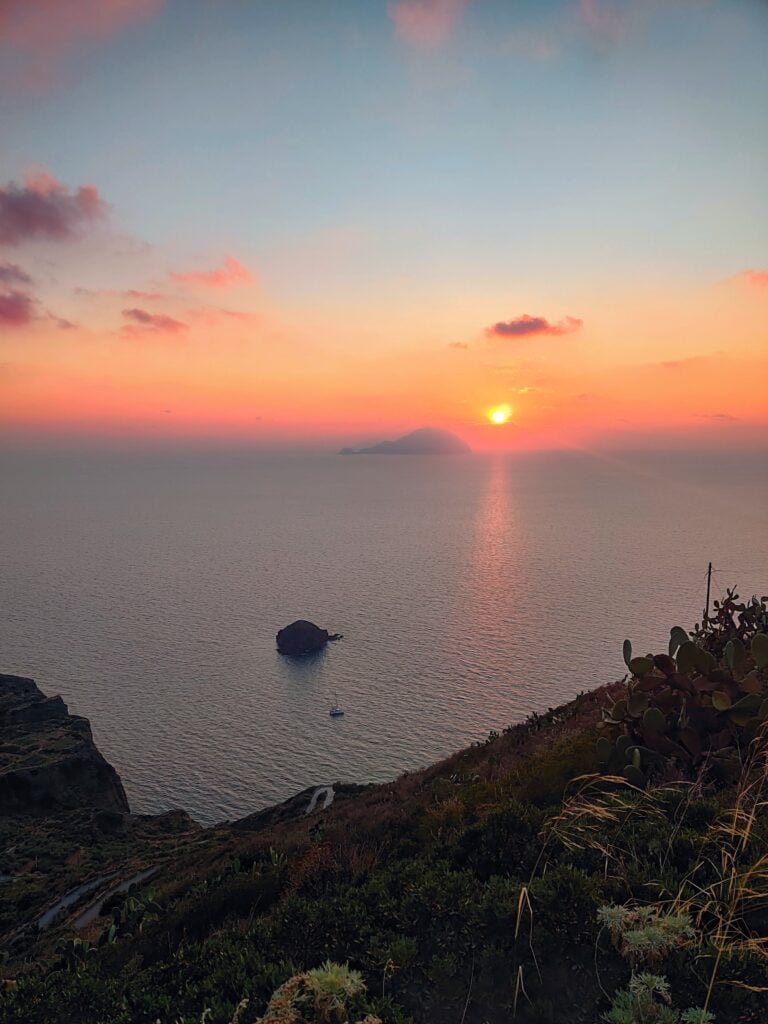
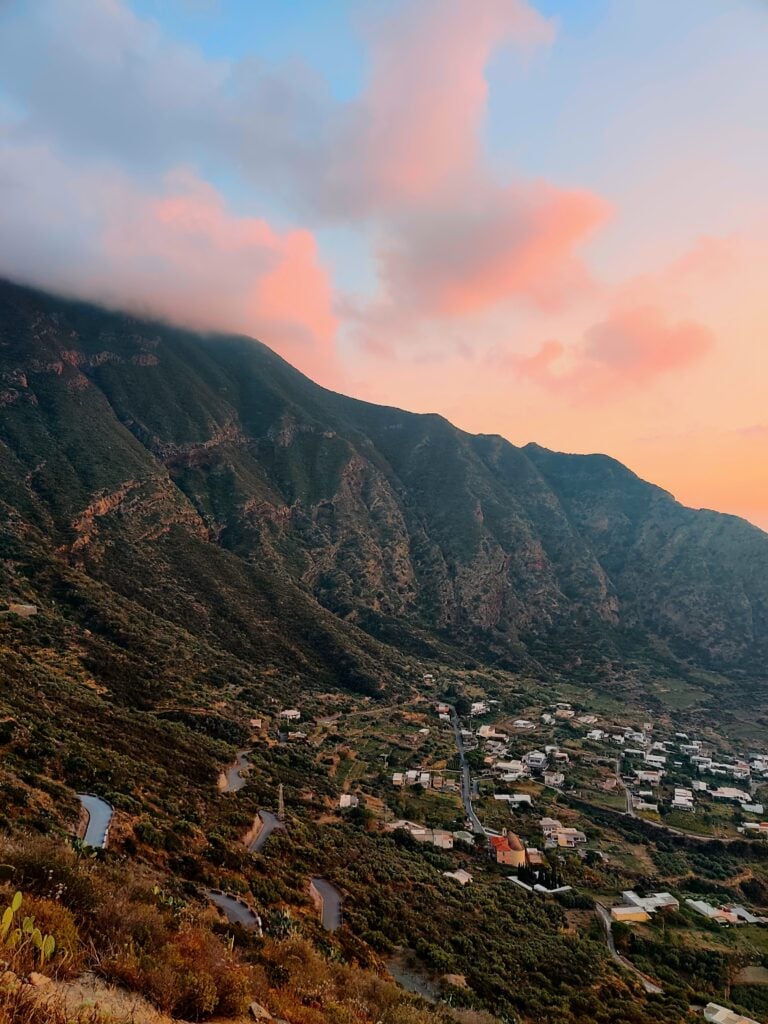
On the drive in to the boutique hotel, we stopped by Punto Panoramico Semaforo di Pollara lighthouse. This panoramic viewpoint is where you can admire one of the most beautiful sunsets in the world. It overlooks the bay of Pollara, which is the only beach and town in Italy built on the remains of a volcanic crater. The area is located at the foot of the ruins of the so-called Castle, or watchtower, of Pollara.
Evening: Check-In
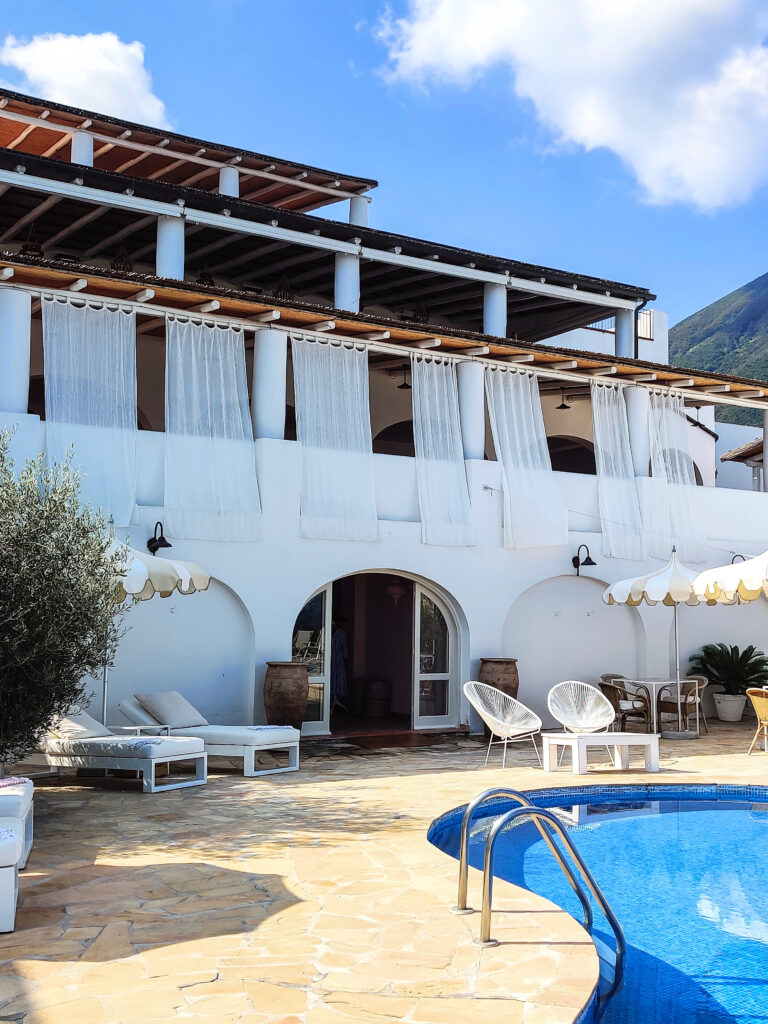
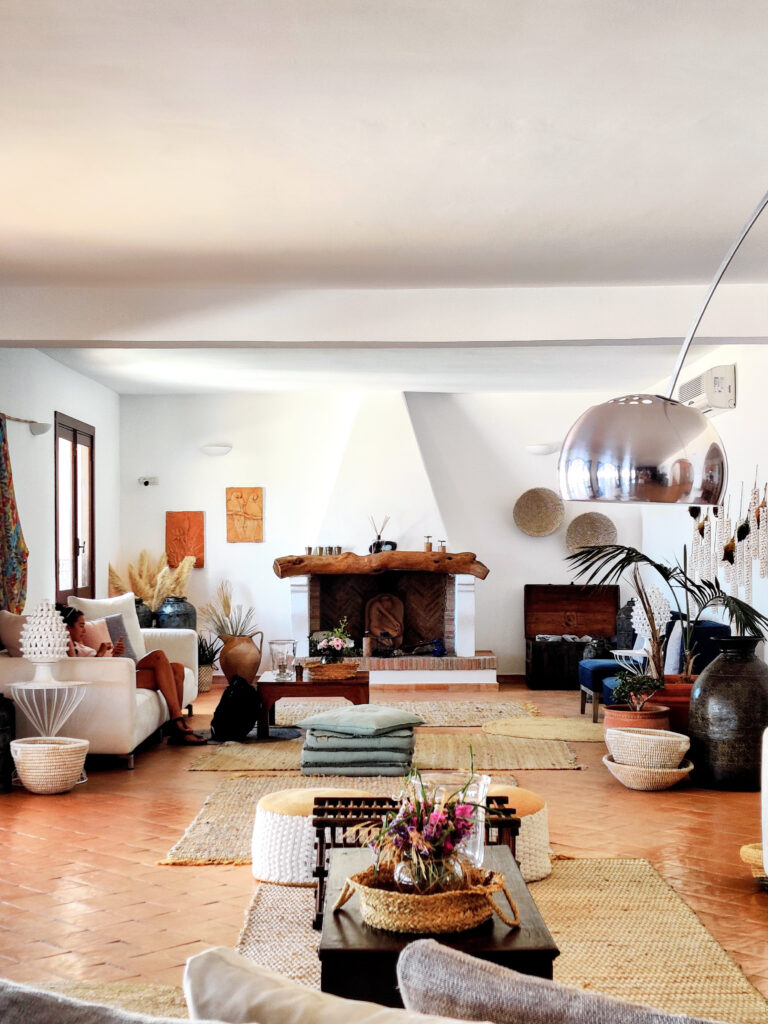
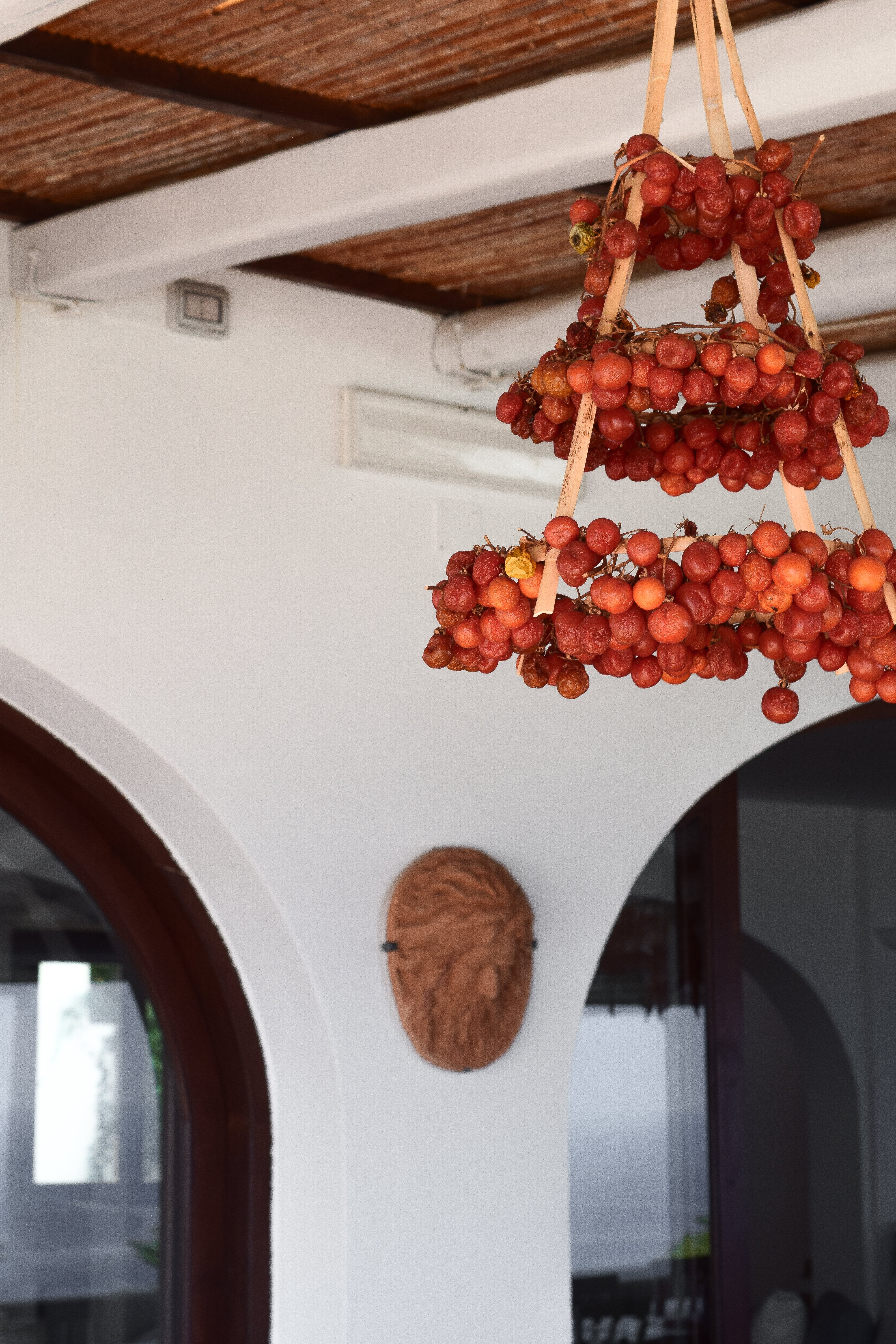
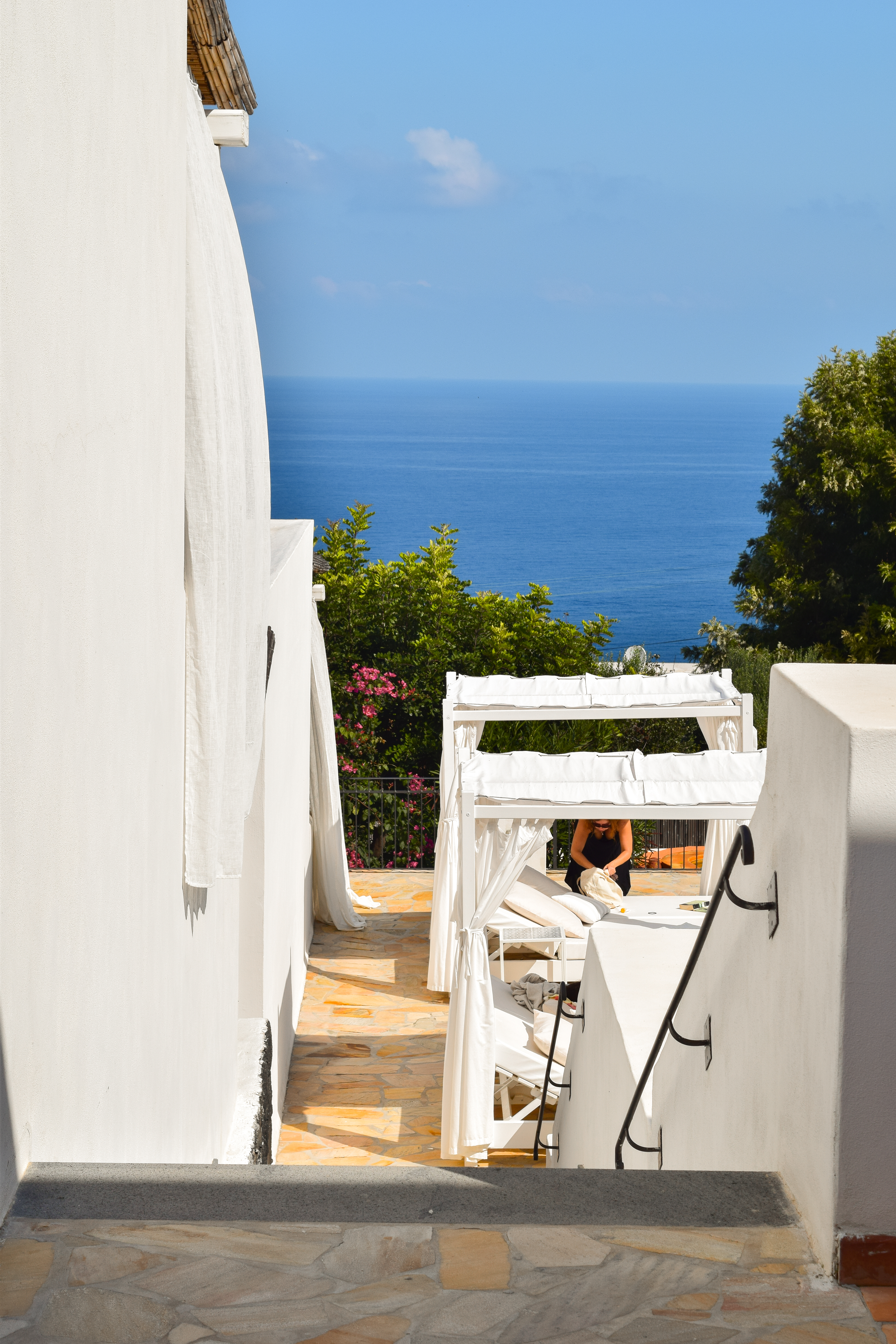
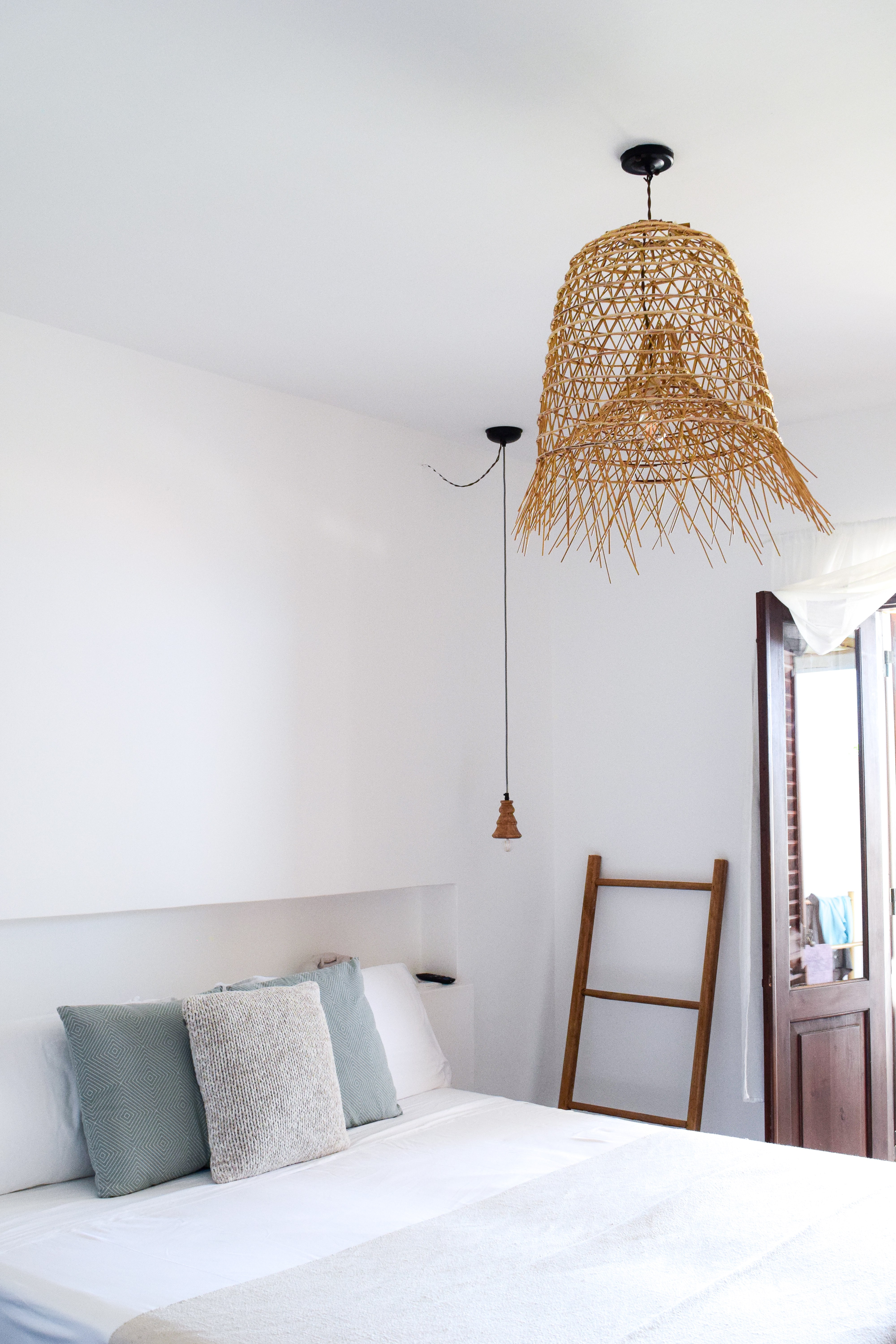
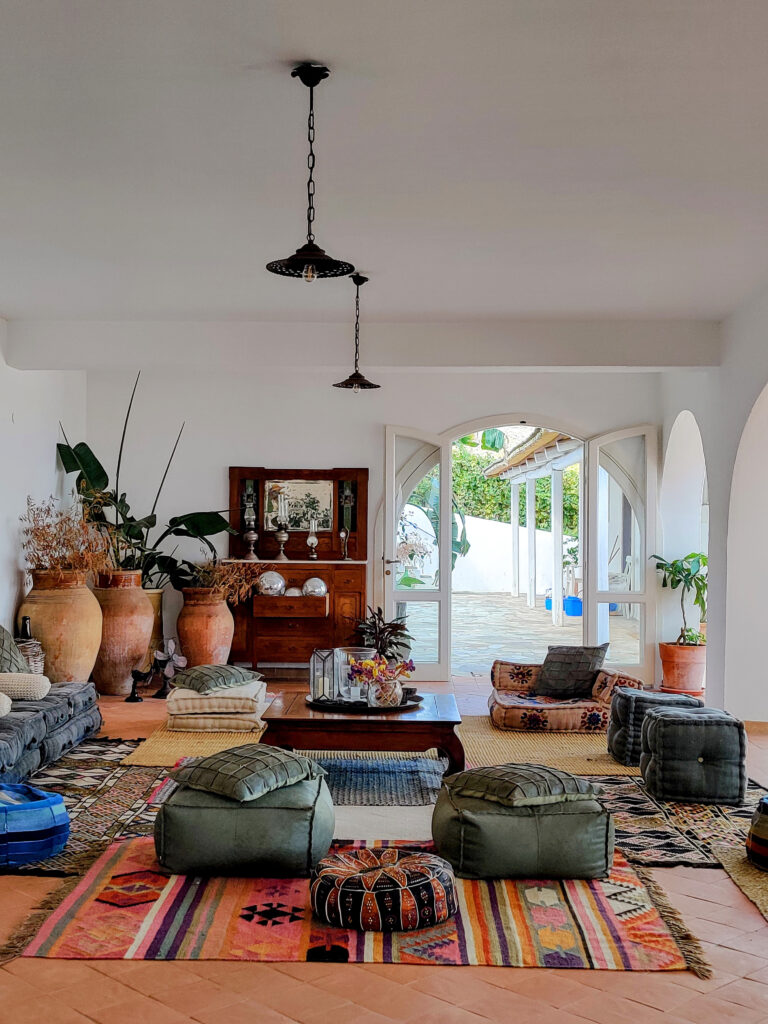
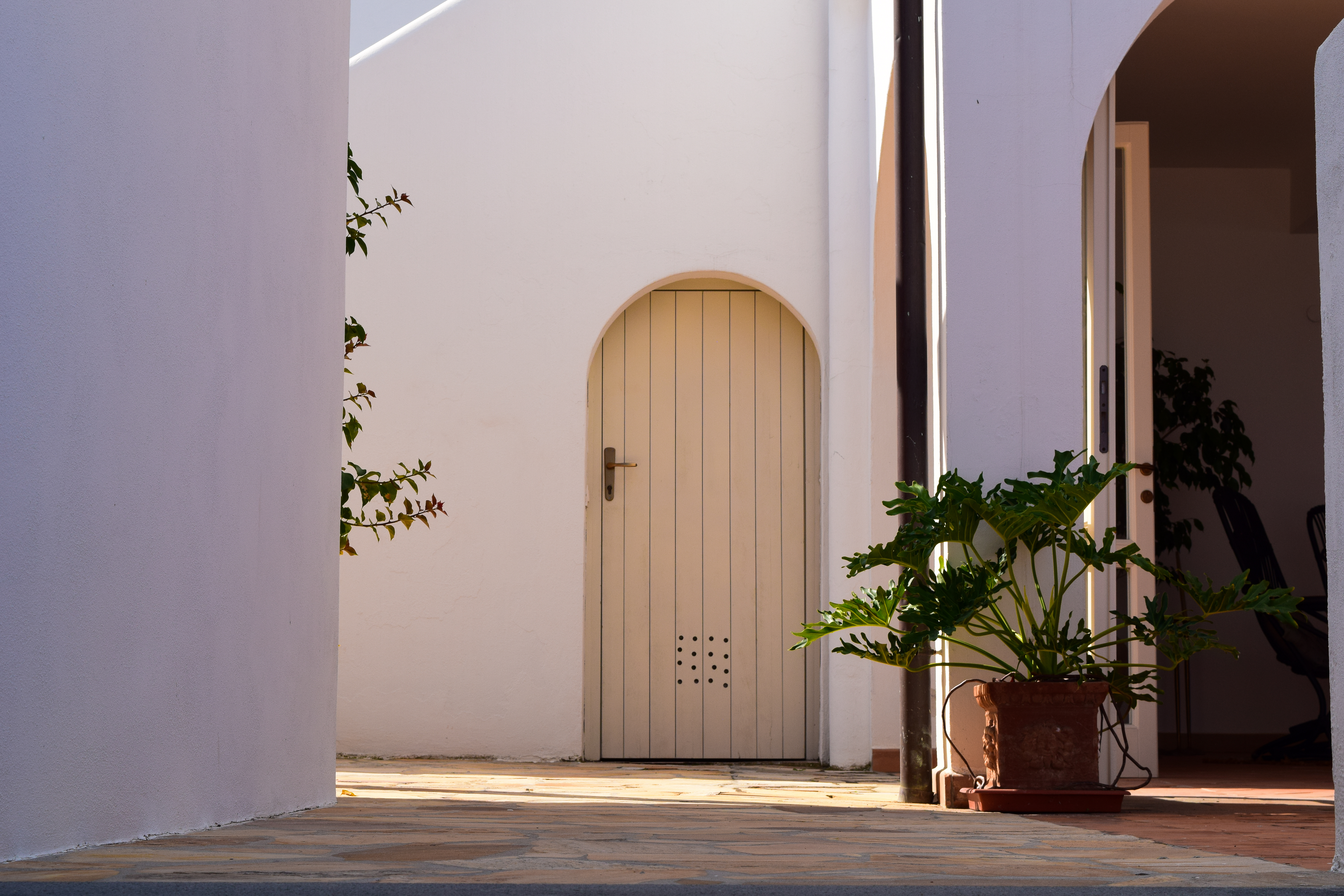
We pulled up to the hotel and checked into our room. The first thing I noticed, even though it was sunset, was the décor in the place. Just my style...bohemian and multicultural. It was a bit late to lounge by the pool, but we would take advantage of that in the next few days. We showered and got ready for one of the boutique hotel's main attractions...it's communal and imperial dinner.
Interested in Staying Here?
Purchase my private Google Maps locations below and get the name of this accommodation alongside additional accommodations, things to do, restaurants, activities, natural pools, volcanoes, attractions, and more. You'll have access to all my coveted locations and spots, straight to your phone.
Dinner: Boutique Hotel
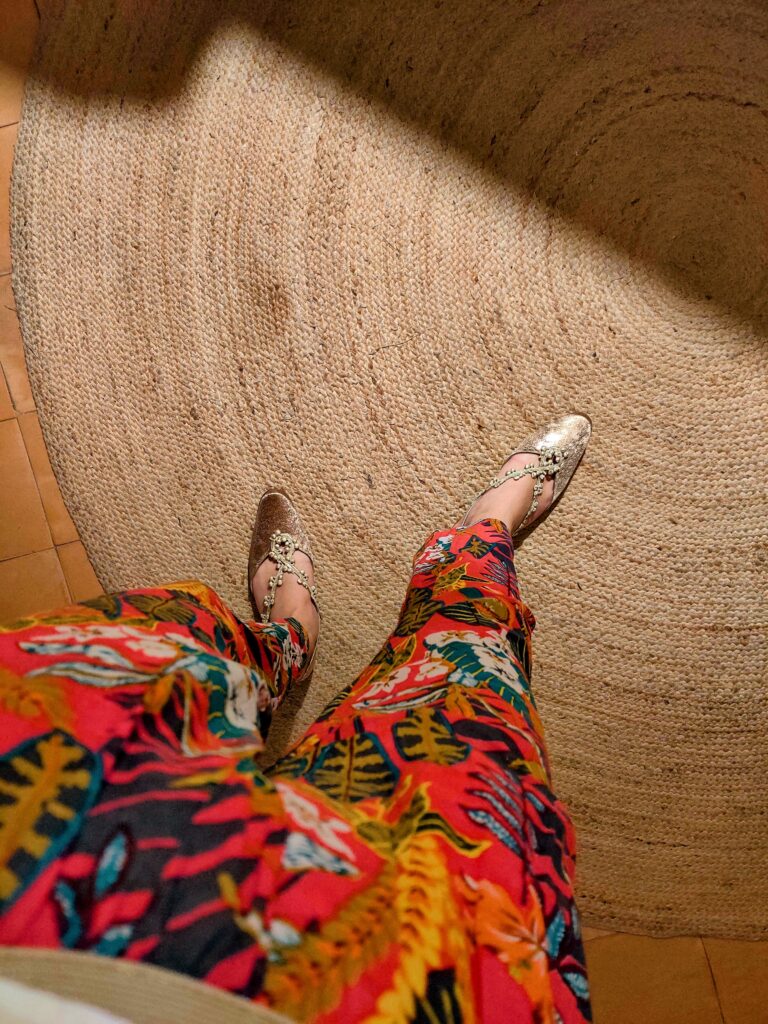
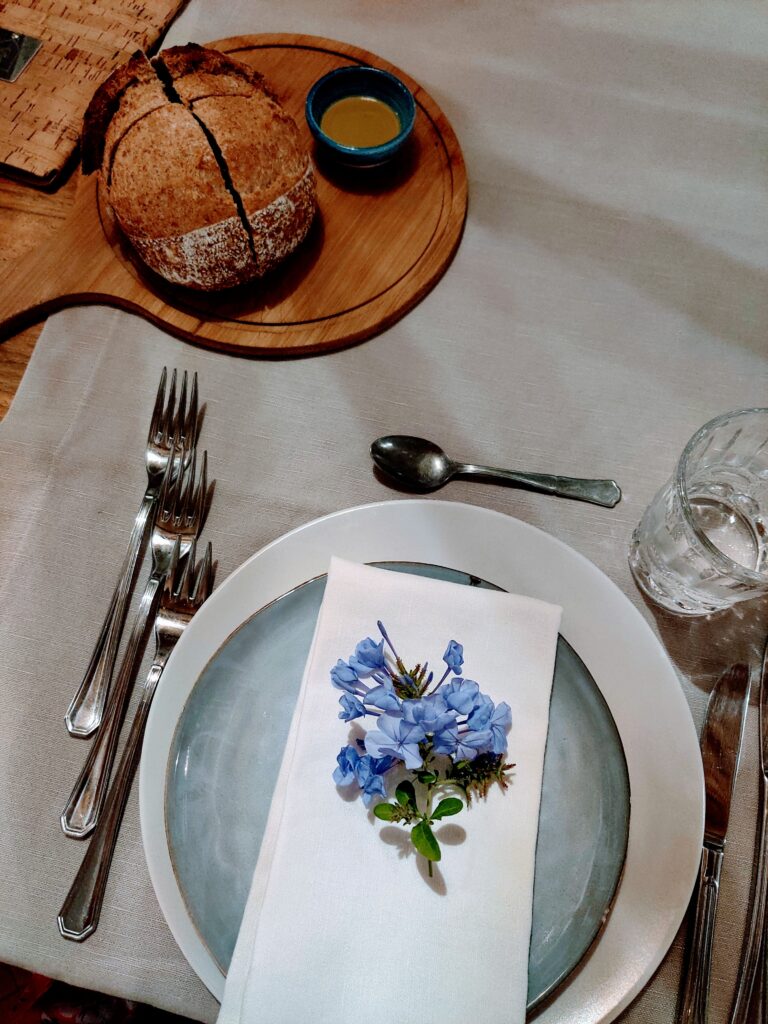
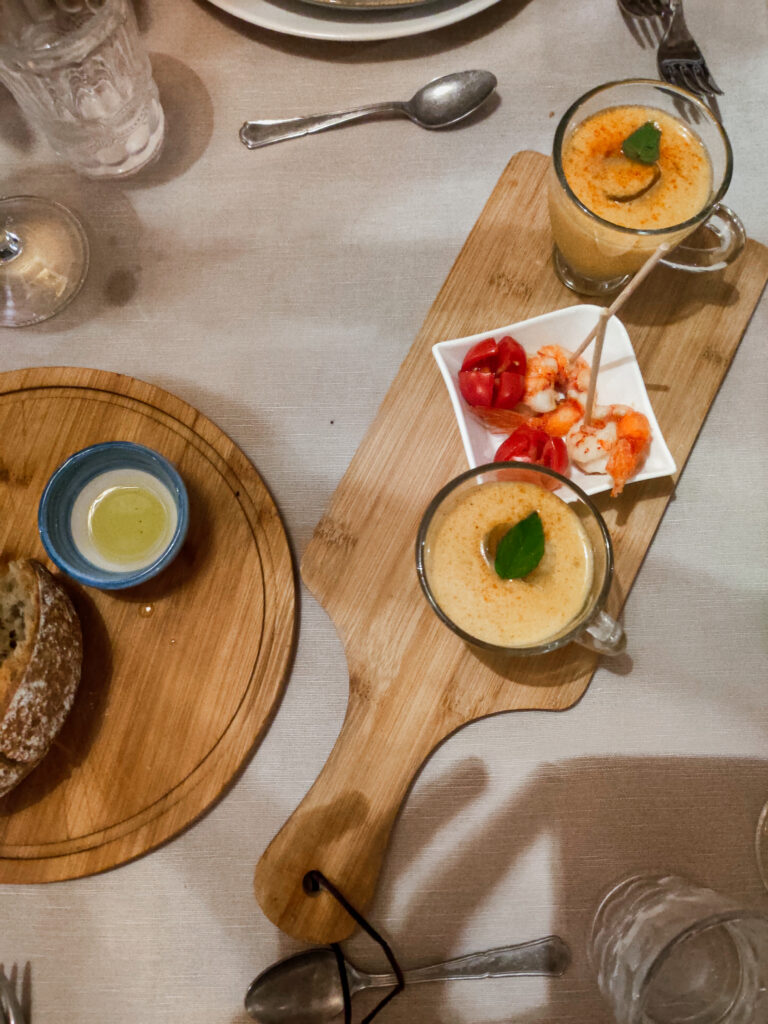
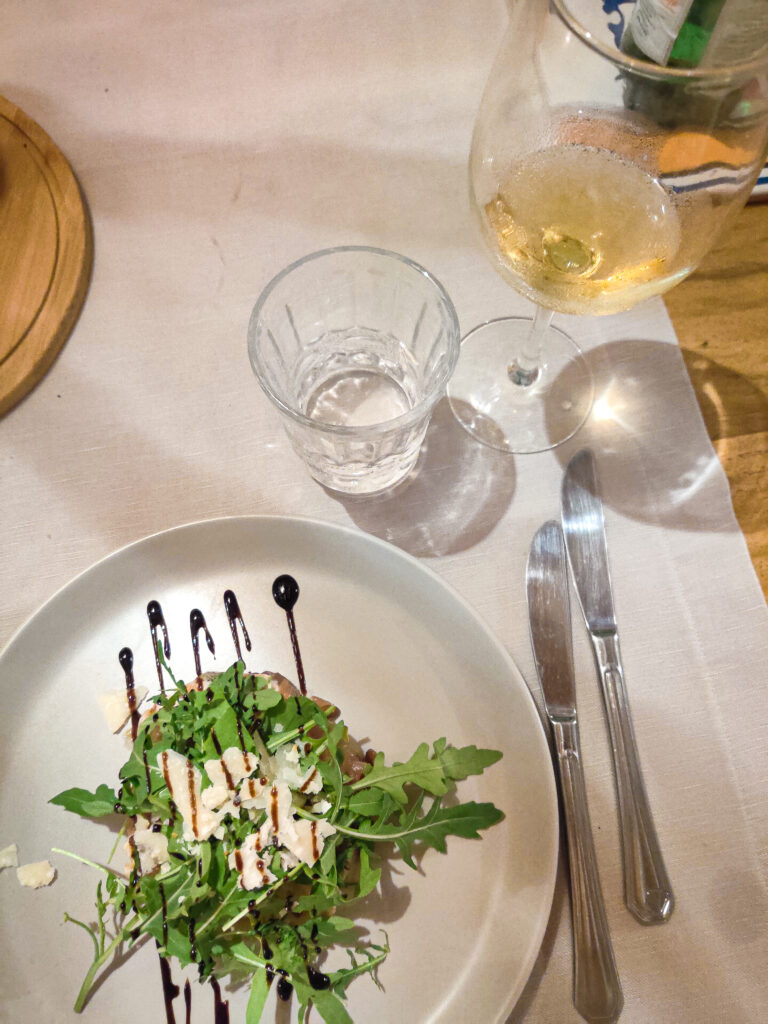
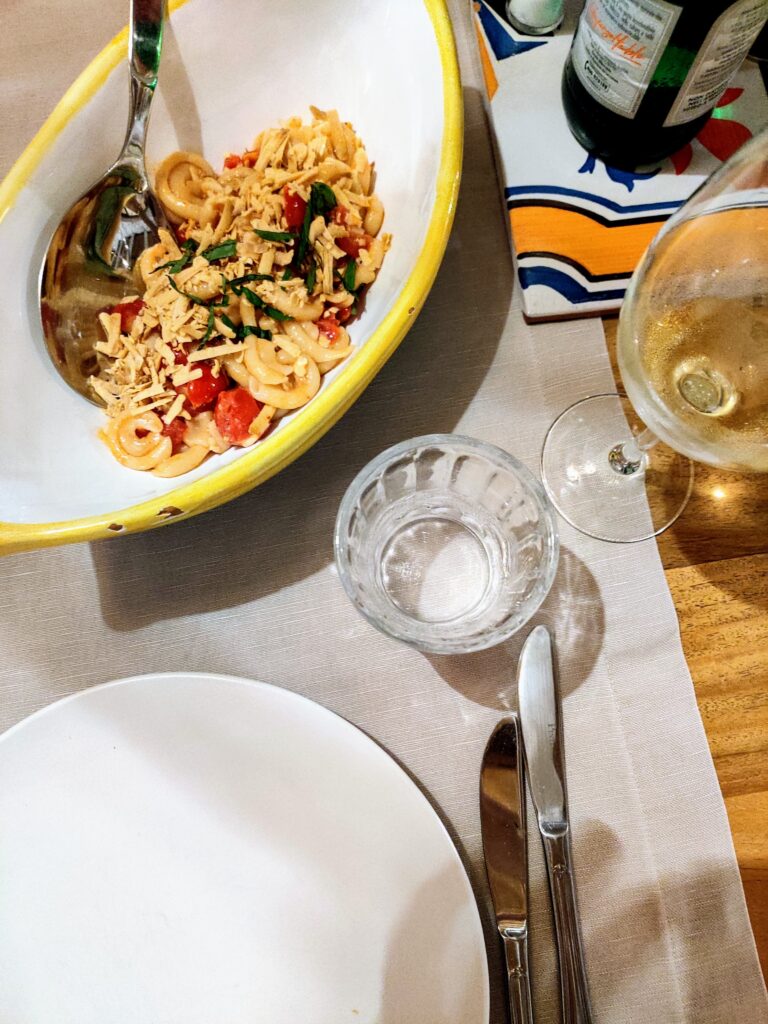
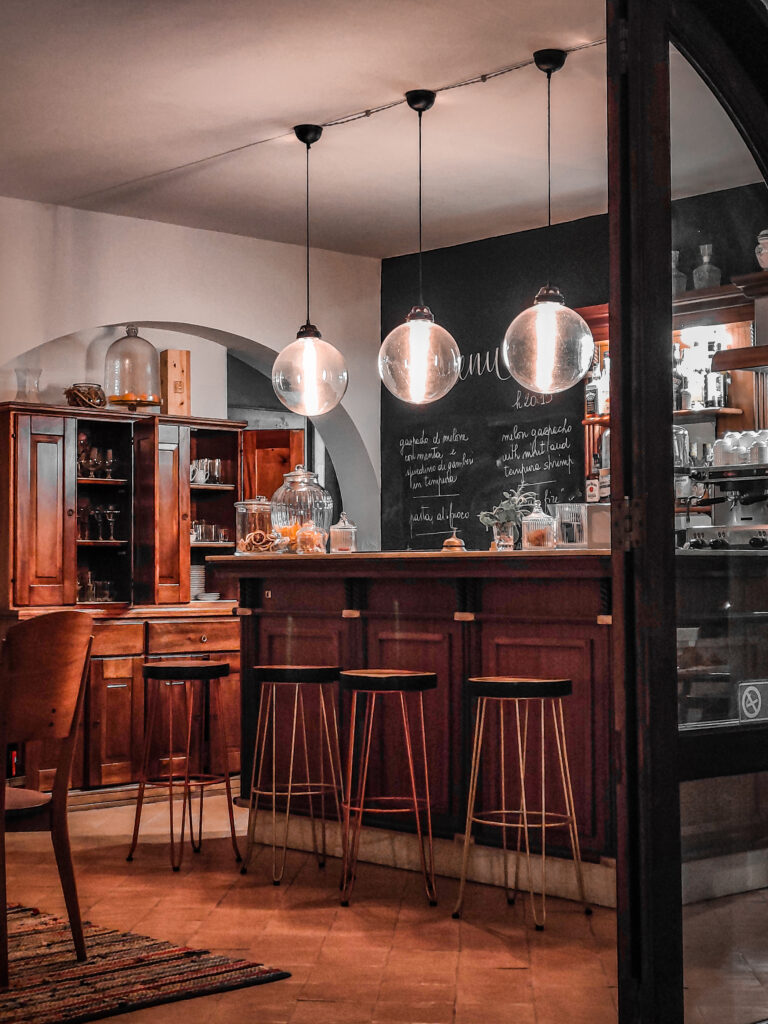
I'm not one to eat dinner at hotel properties very often. But I've been known to do so when it's the right hotel that showcases a unique experience and local food. Our boutique hotel in Malfa was one of those exceptions. We enjoyed their imperial table where they serve food family-style with other guests of the property. Non-guests can get on a waitlist day of, but odds of them being able to join during peak periods are slim. They change the menu daily to focus on fresh seasonal ingredients.
~ Day 4: Salina Island ~
Breakfast: Bar Malvasia
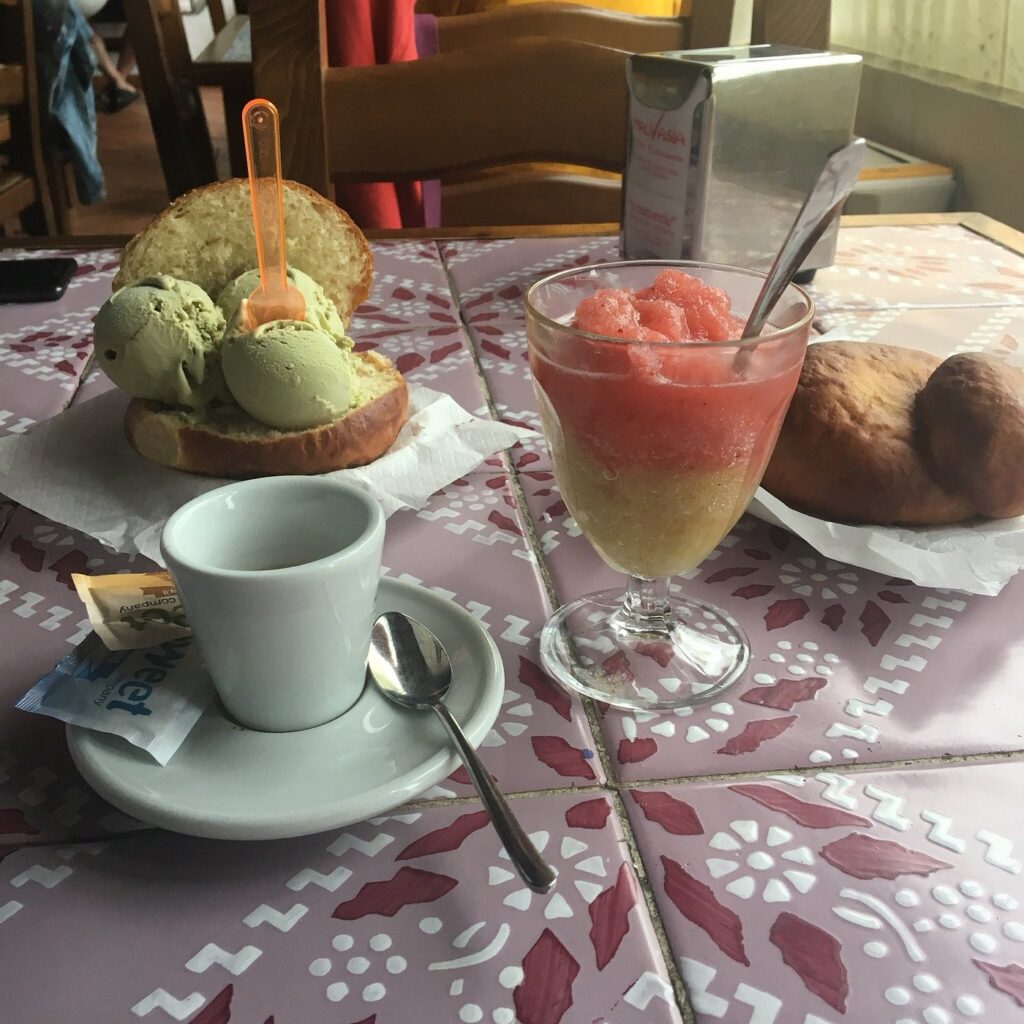
You can either enjoy breakfast at your hotel or head into Malfa town for a typical Sicilian breakfast, a heavenly pairing of fluffy brioche col tuppo - leavened pastry with a dough “top- knot” - and a dollop of refreshing granità, made with fresh fruit or almonds and coffee. Don’t miss it at Bar Malvasia in the cozy square, also called piazza, in Malfa.
Morning: Malfa
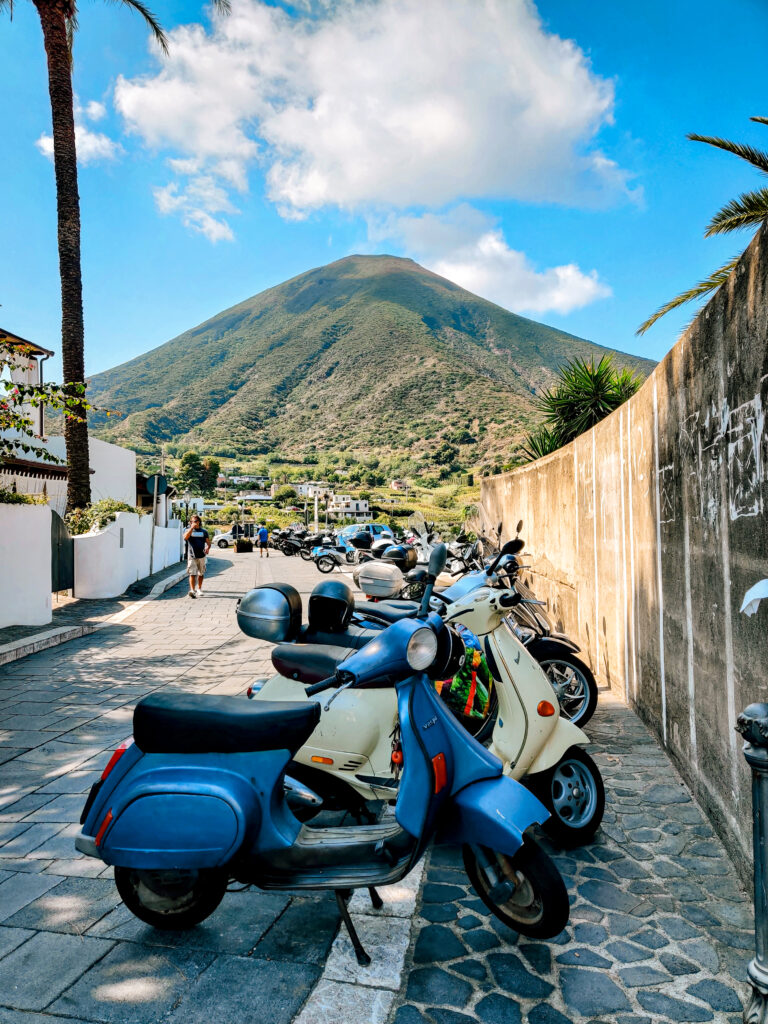
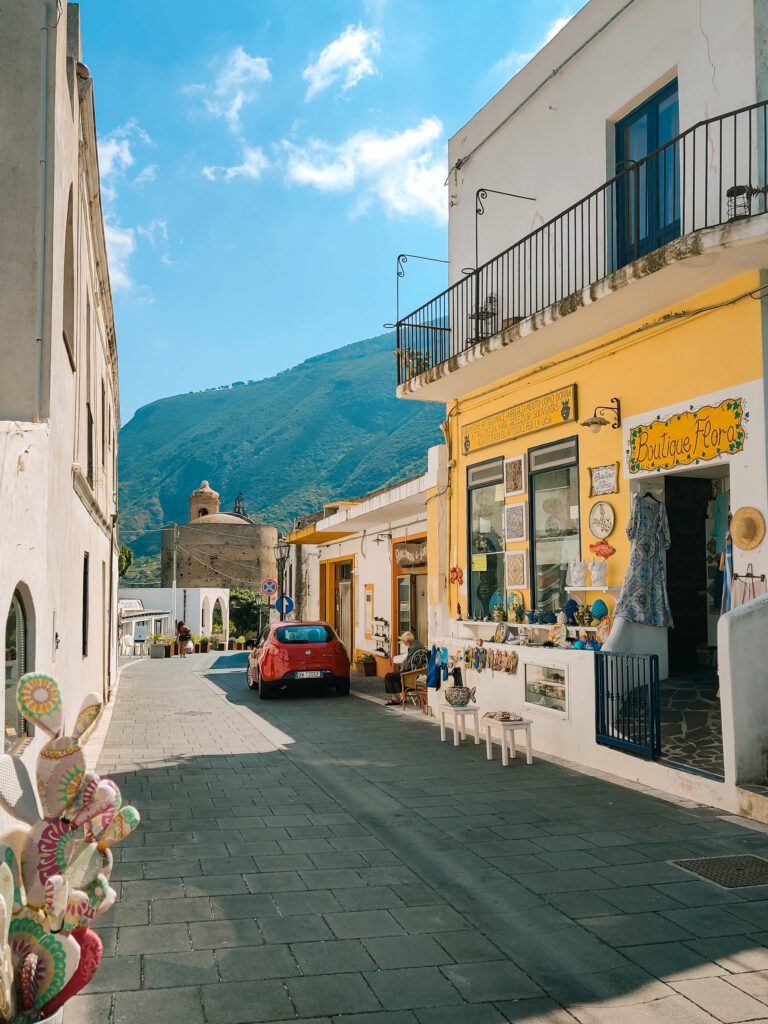
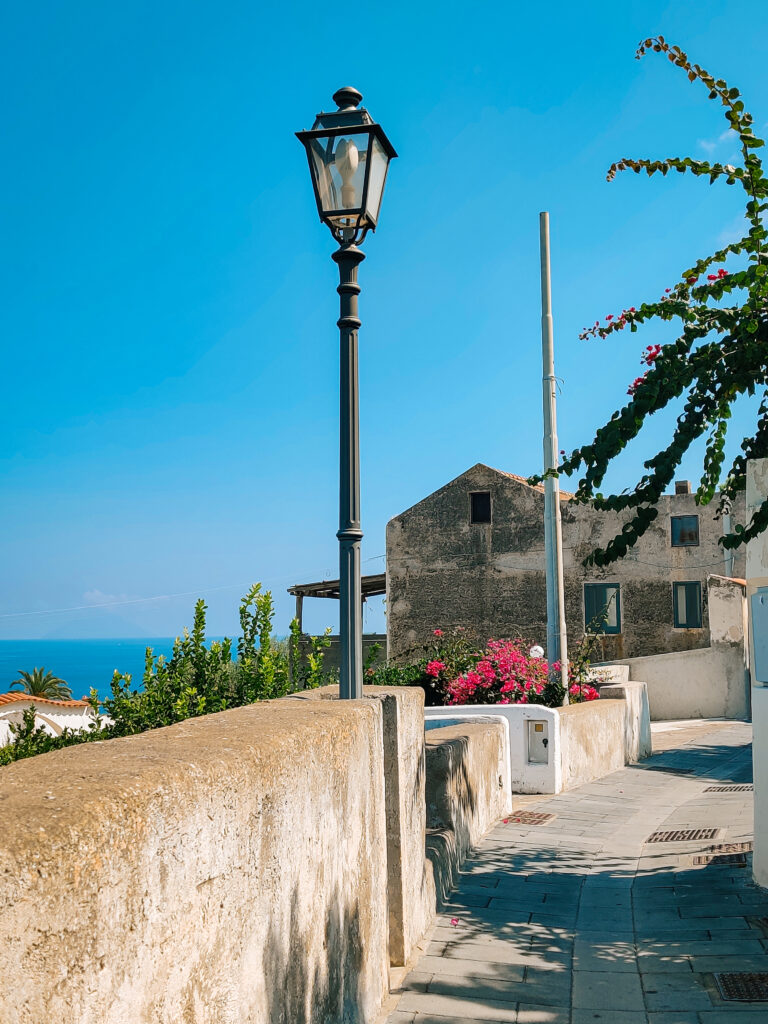
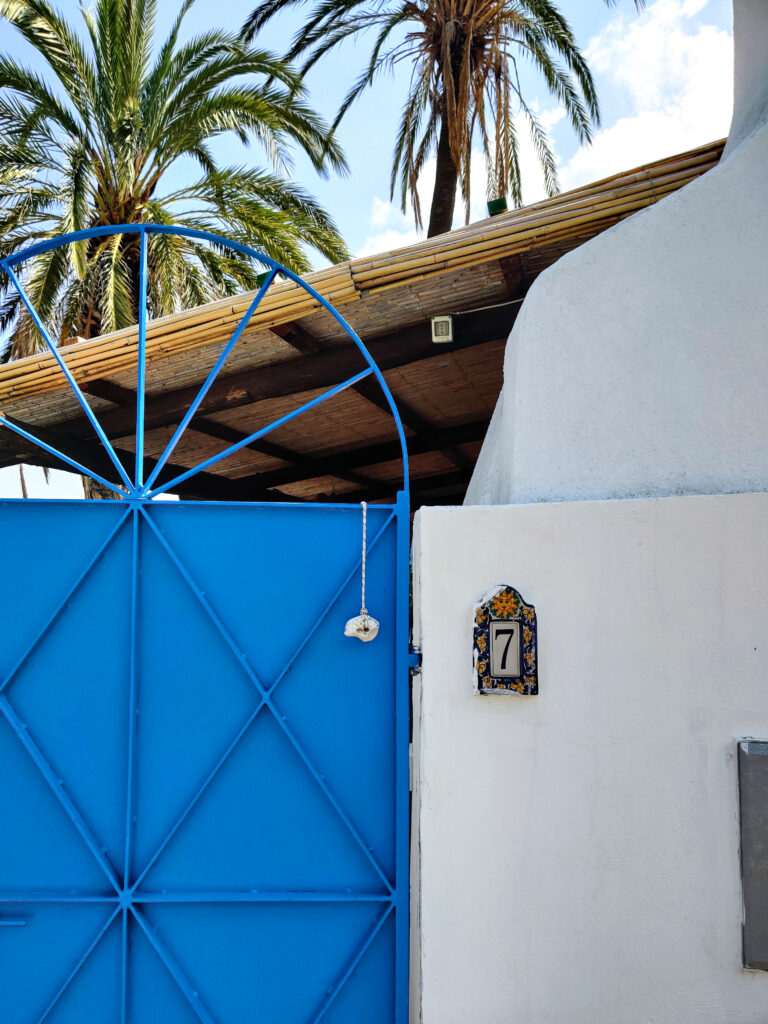
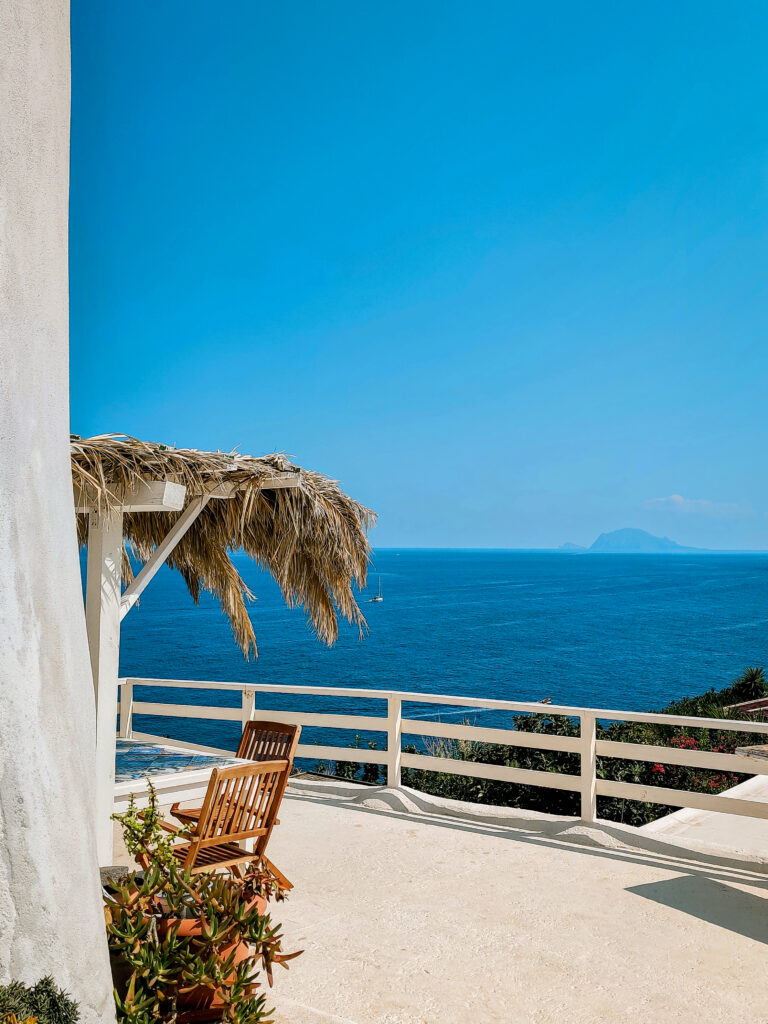
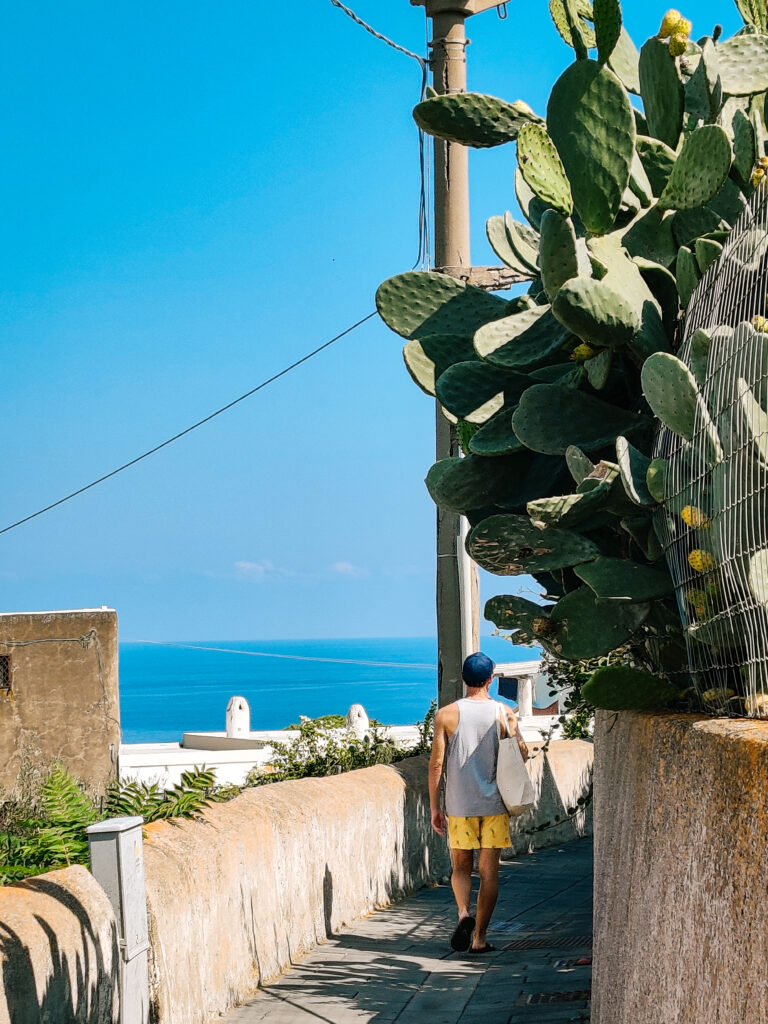
Spend the morning getting lost in the pleasant alleys of Malfa and the Chiesa di San Lorenzo. Malfa is a warm and artistic Mediterranean community with a sea-facing piazza, countrified villas, and plenty of Malvasia wineries that survey the twon from the green hills behind. Here you'll find a vast selection of top tier restaurants and bars where you can taste local specialties or sip on some Malvasia wine during sunset. Malfa is my recommended base village when on the island. It is away from the bustle of the Port of Santa Marina, but still has everything you need for a long stay: supermarket, pharmacy, bank and reliable transportation.
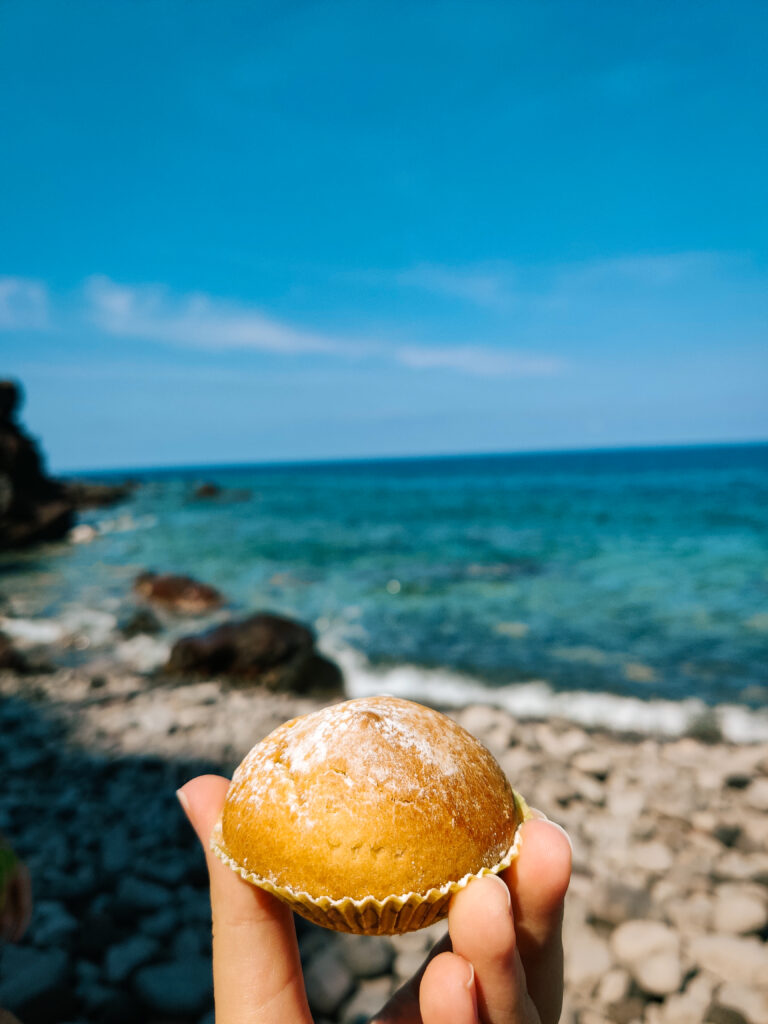
On the way down to the Spiaggia dello Scario, we purchased a little post-lunch dessert from a local pastry shop in Malfa called Pasticceria “Barrano.” The bakery has been around since 2013, but the owner Giancarlo Barrano has been a professional pastry chef since 1982. We got a pistachio cream filled pastry.
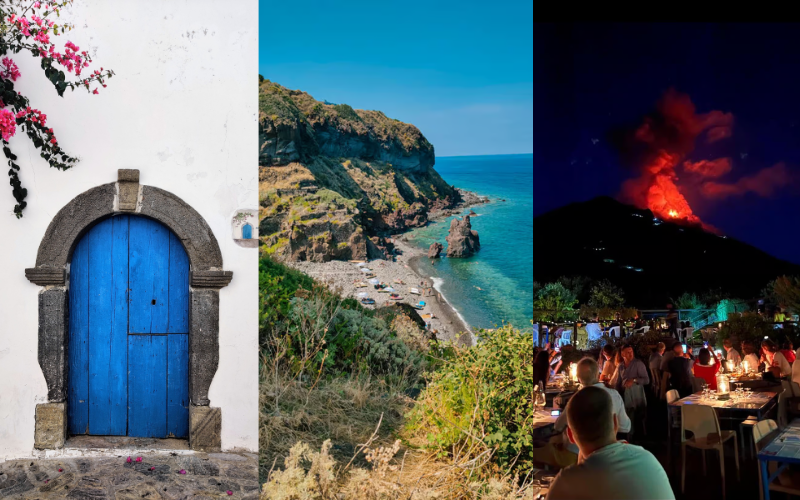
Lunch: Bar Maracaibo
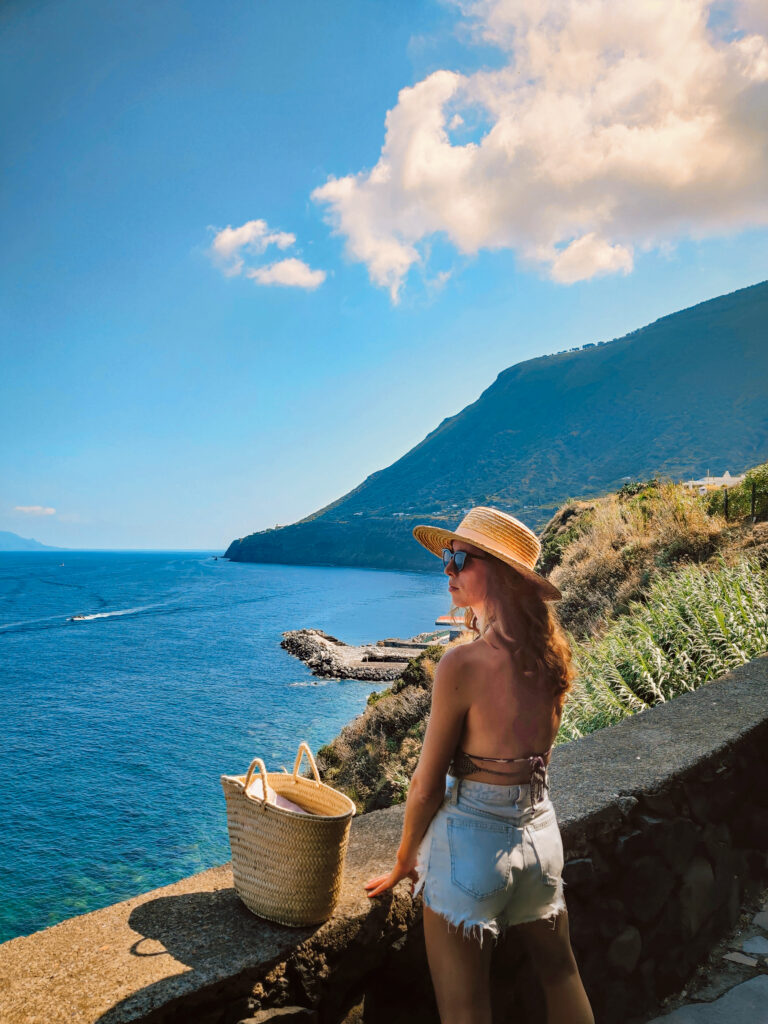
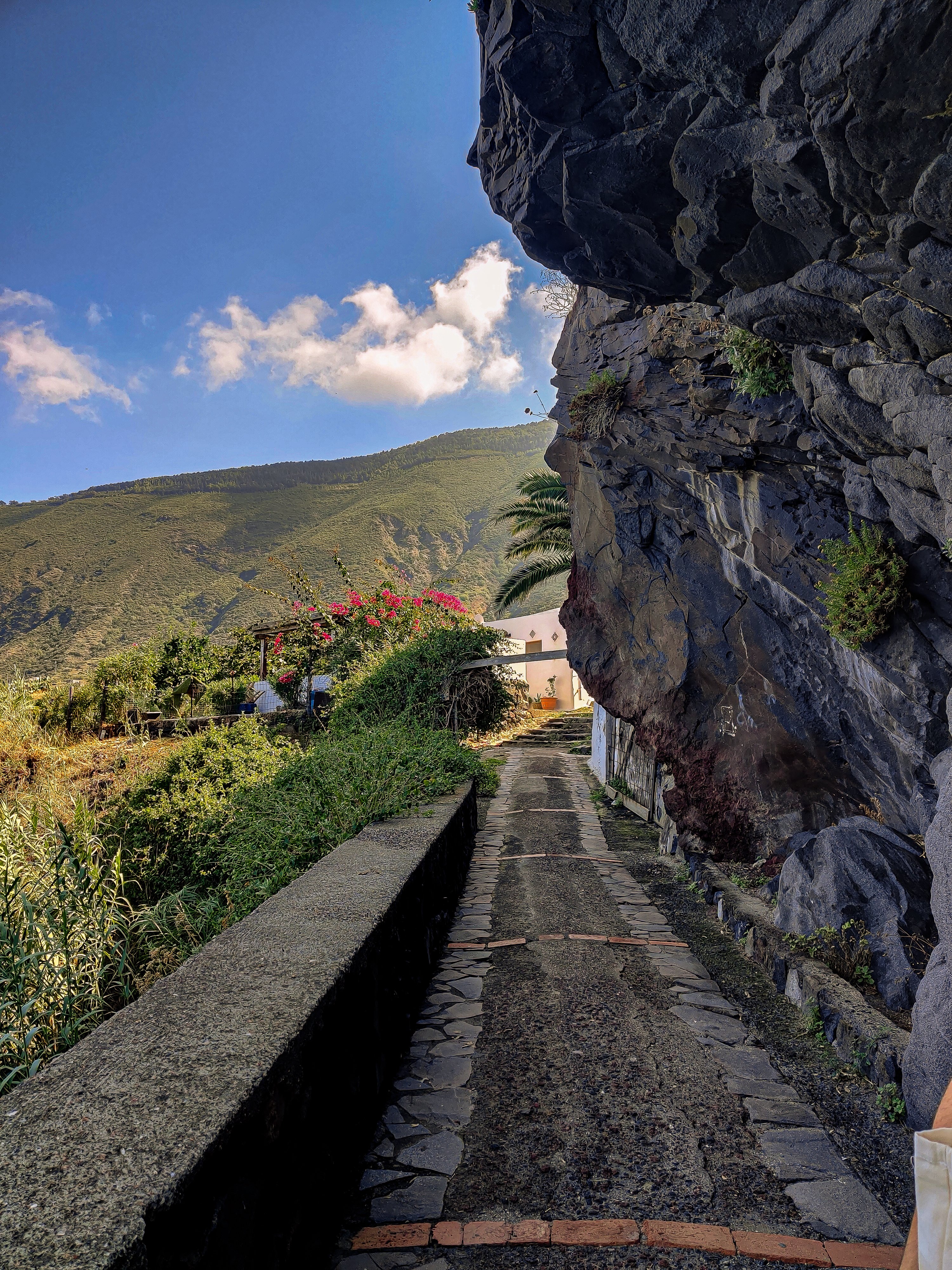
Just 5 minutes from the center of Malfa is Scario beach. This is where sailors used to dock their ships back in the day before trading with the locals in Malfa. The road to get there is a small descent that opens up to stunning views of the coastline and pebble beach below.
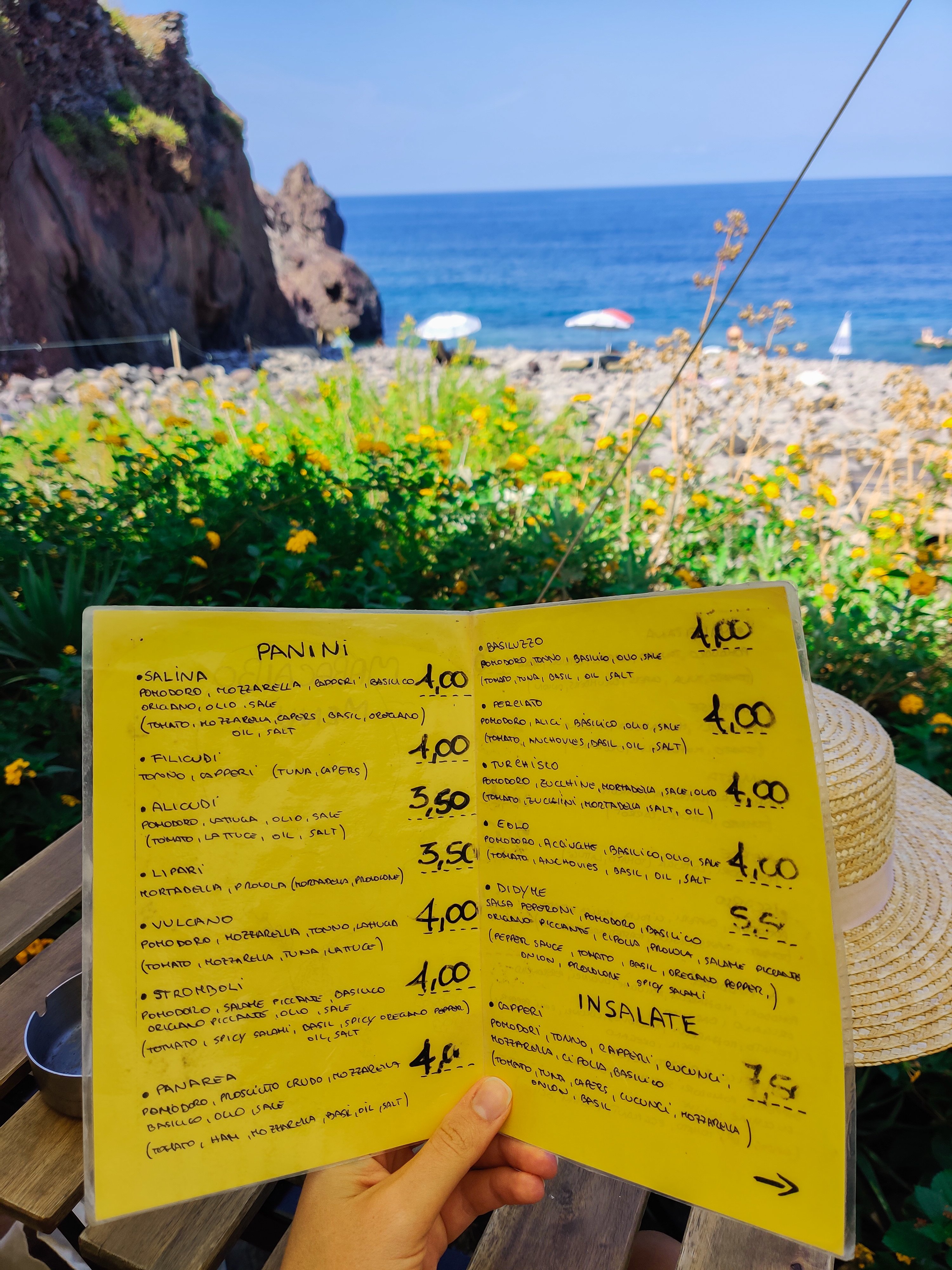
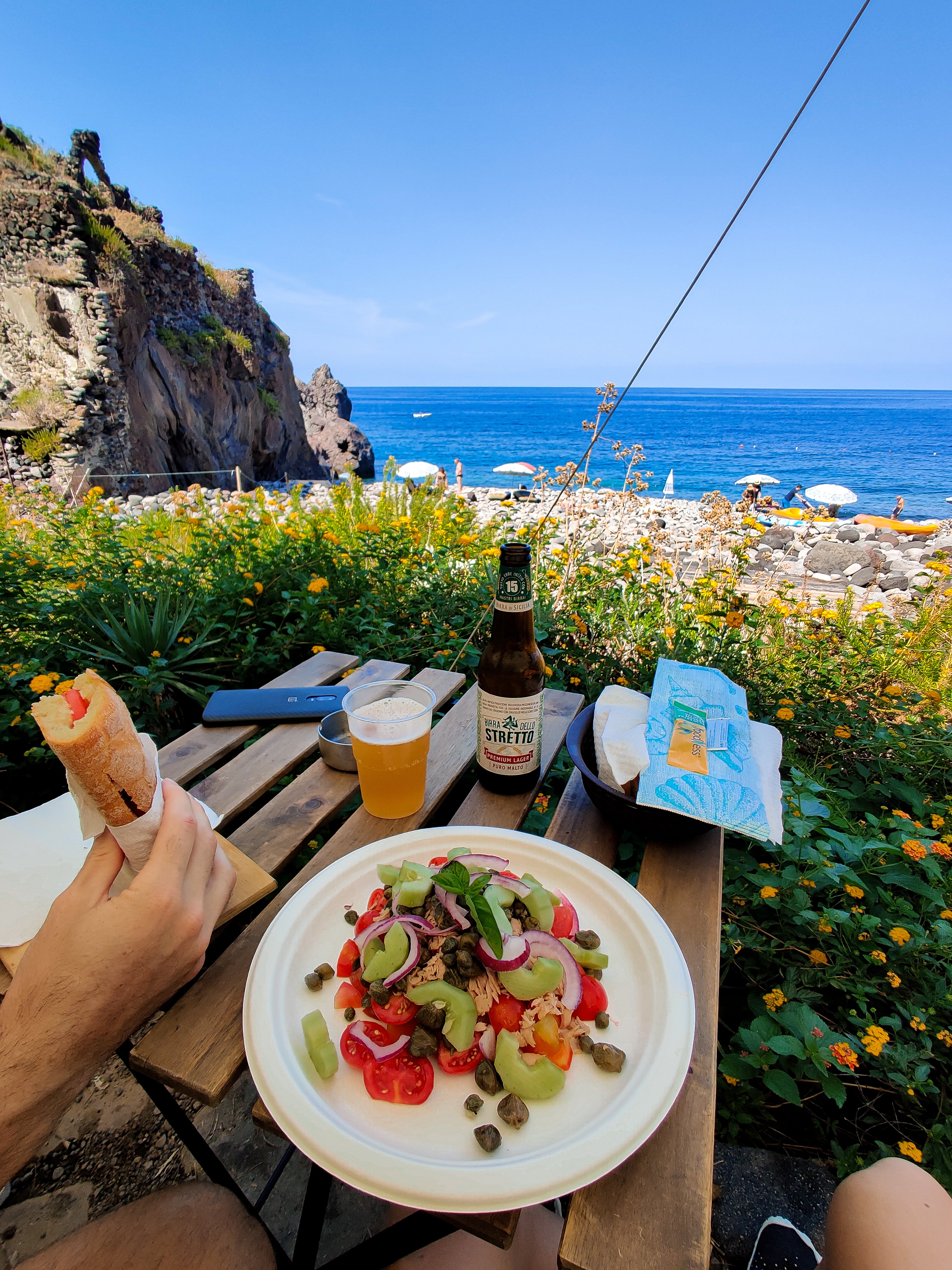
What to Expect at Spiaggia dello Scario Beach in Malfa, Salina
Once at the bottom, you will find a beach bar called Bar Maracaibo tucked away in the back of the pebble beach. The place only accepts walk ins. Prices are very affordable starting at 4 euro for a sandwich and 7 euro for a salad. They also serve great granitàs and cocktails. Pat and I got a table with a view. I ordered a simple Aeolian tuna salad, with the island specialty of course—capers. Pat ordered a Vulcano panino. Both very good and satisfying, especially for the price.
Afternoon: Spiaggia dello Scario
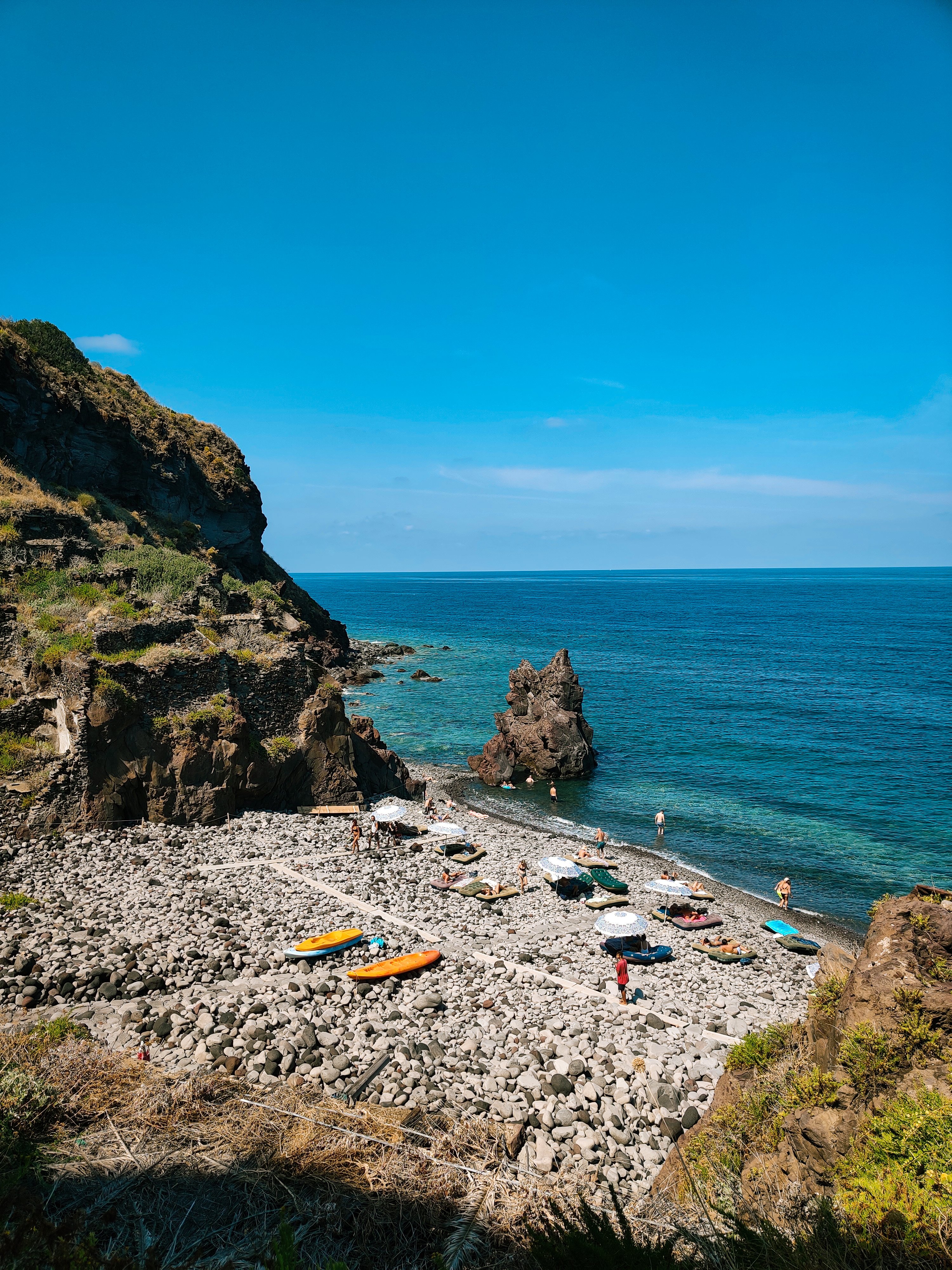
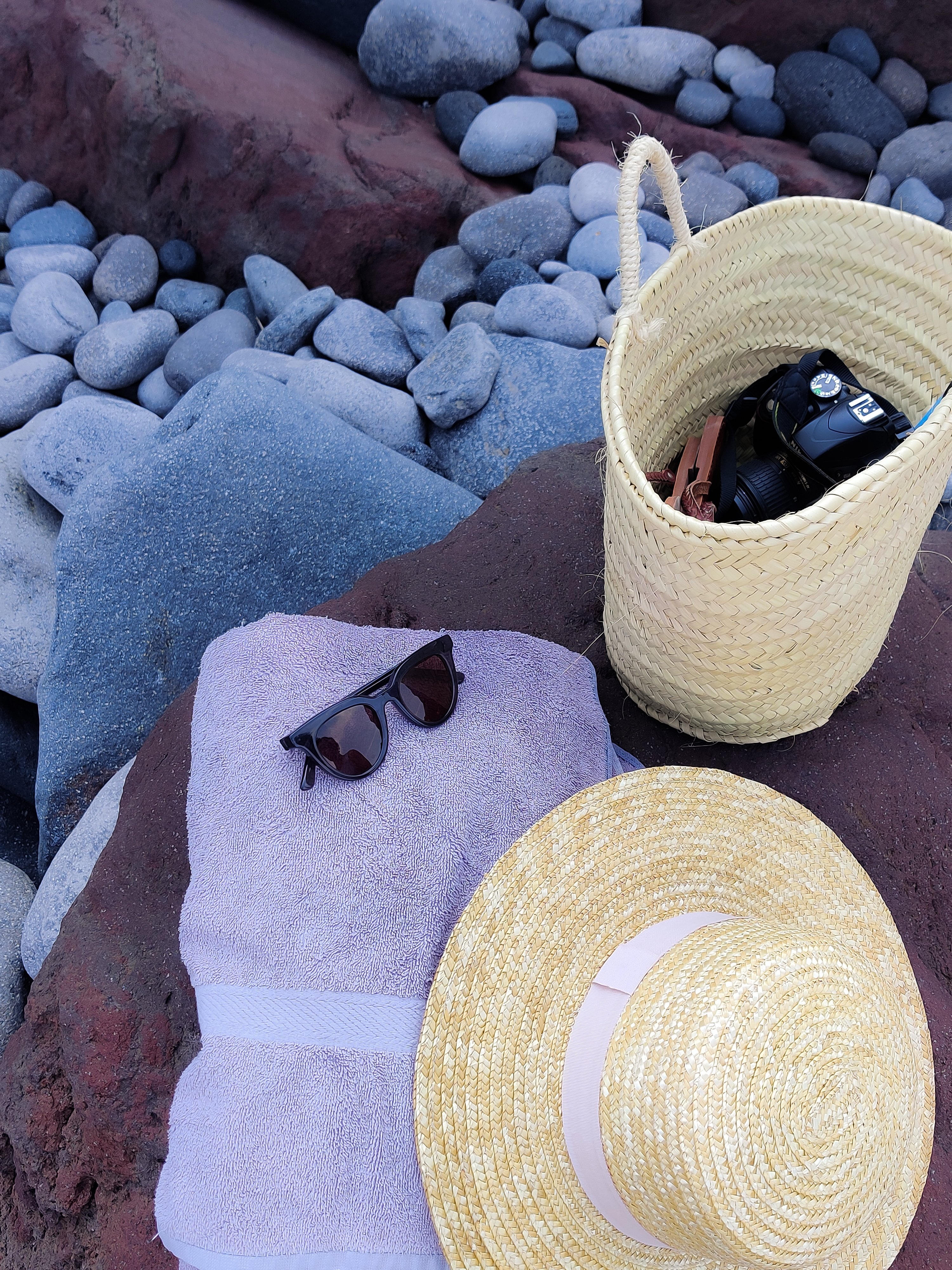
What to Expect at Spiaggia dello Scario Beach in Malfa, Salina
Spend the afternoon enjoying the beach. Because Spiaggia dello Scario is pebbly, you can choose to double up on towels (bring your own from the hotel!) or rent an inflatable mattress from the beach bar to cushion the experience. Plus, you can use the mattress to float around in the water as well! The area gets shady around mid-afternoon so bring a wide-brimmed hat for mornings and mid-day. You can also rent umbrellas, SUPs, and kayaks from Bar Maracaibo if you want to explore the area further.
TIP:
Remember to bring water shoes and snorkeling gear.
Evening: Pollara
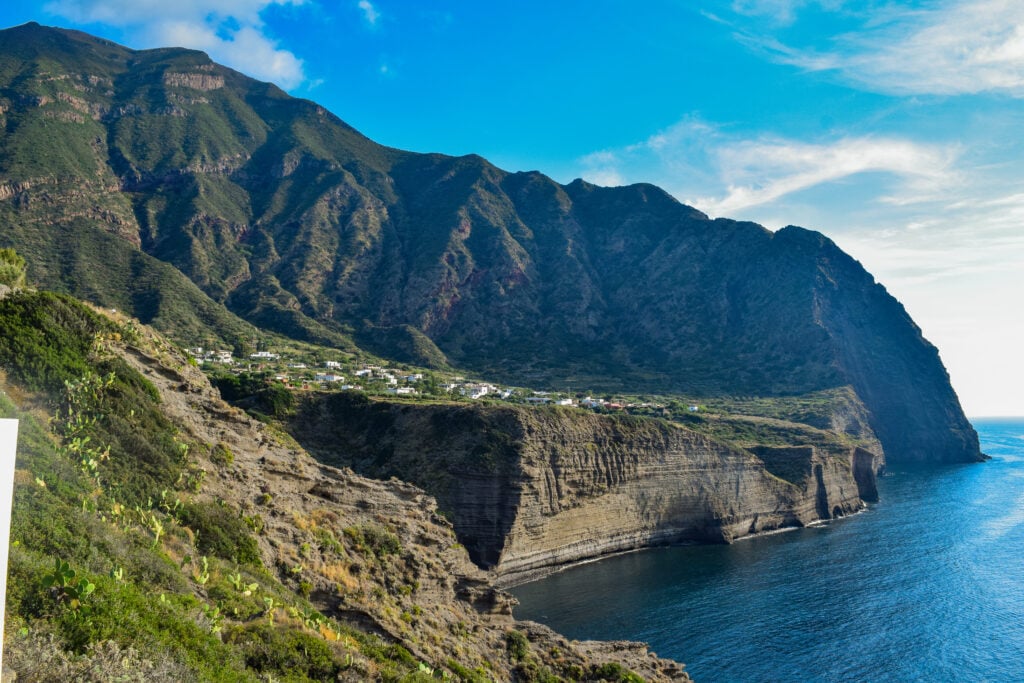
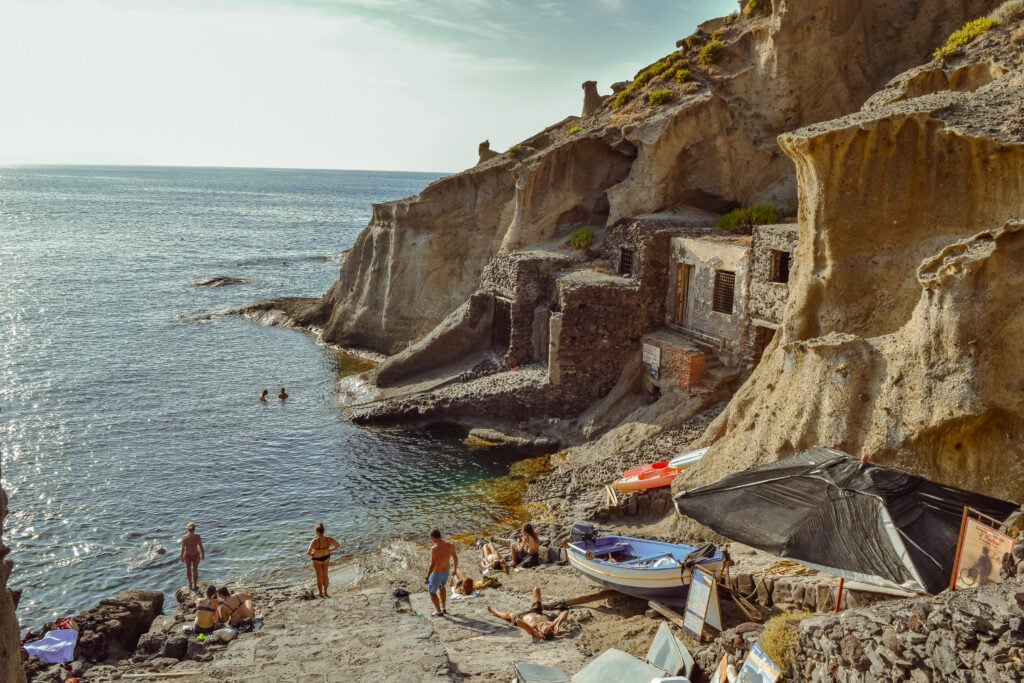
Pollara, Salina: Top Things to Do, See, and Experience
I found myself enchanted by the secluded village of Pollara, a place that feels like a well-kept secret. Nestled within an ancient volcanic crater, Pollara offers some of the most breathtaking views I've ever encountered in Italy, especially at sunset from the Punto Panoramico Semaforo di Pollara. It's also rich in authentic experiences. Patrick and I drove down to swim at Pollara’s unique black-sand beach and Le Balate before dinner. While the village may seem small, Pollara is not only famous for its cinematic history as the backdrop for the movie, Il Postino. There's plenty of unforgettable local experiences including touring caper plantations and savoring the island’s famous capers. Pollara truly is a place that embodies the slow, sweet life of Sicily.
Dinner: La Locanda del Postino
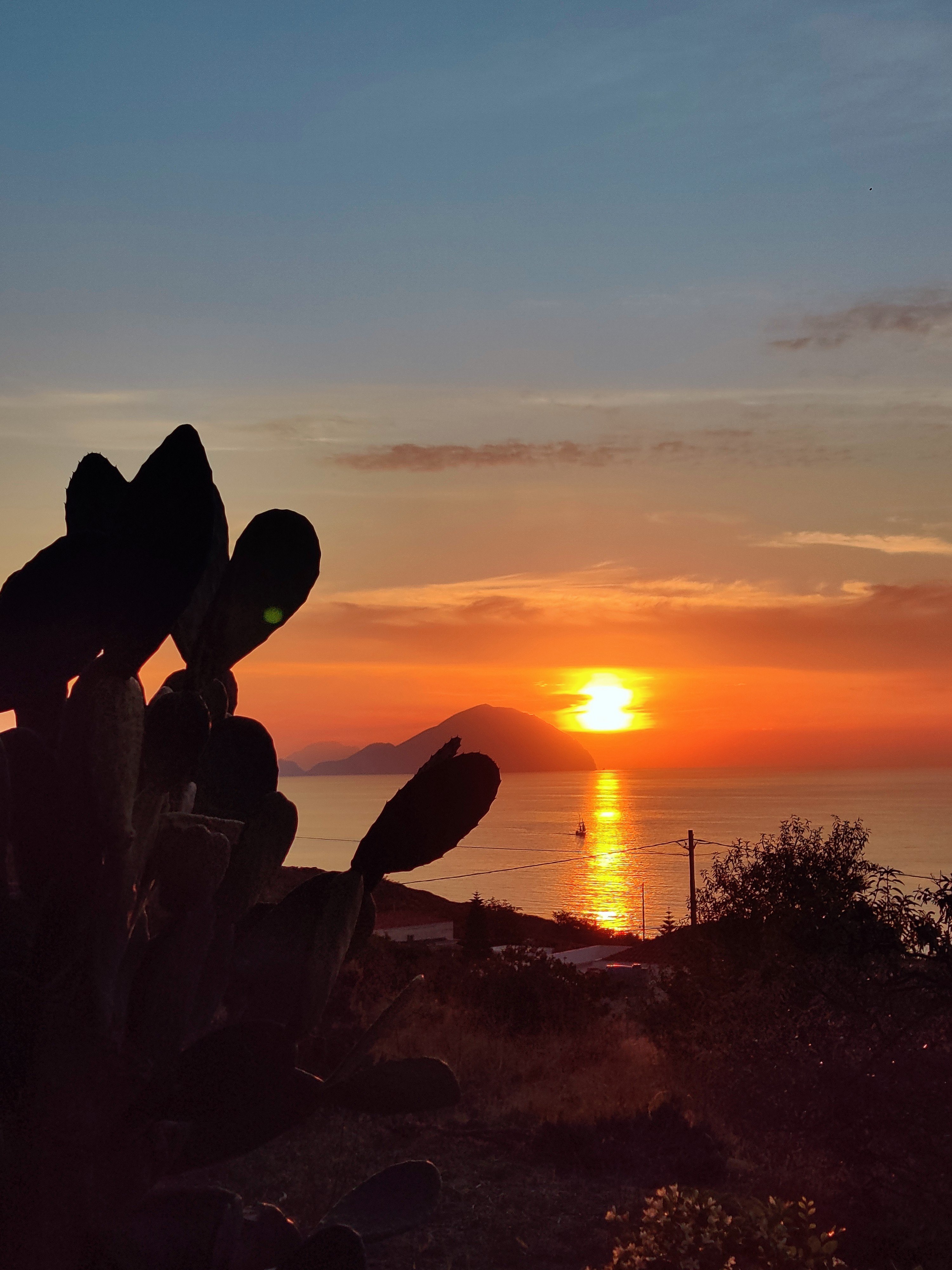
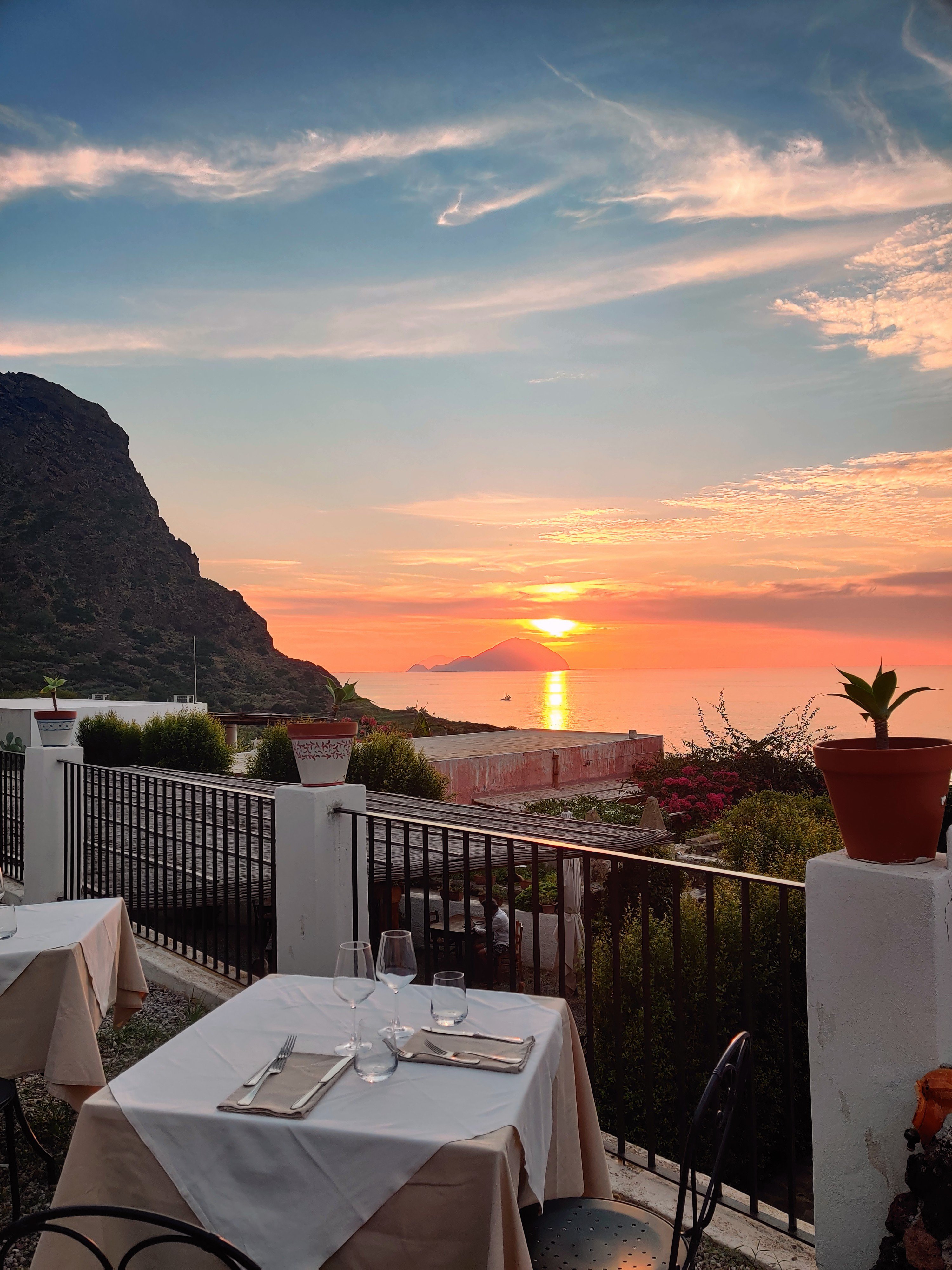
Pollara, Salina: Top Things to Do, See, and Experience
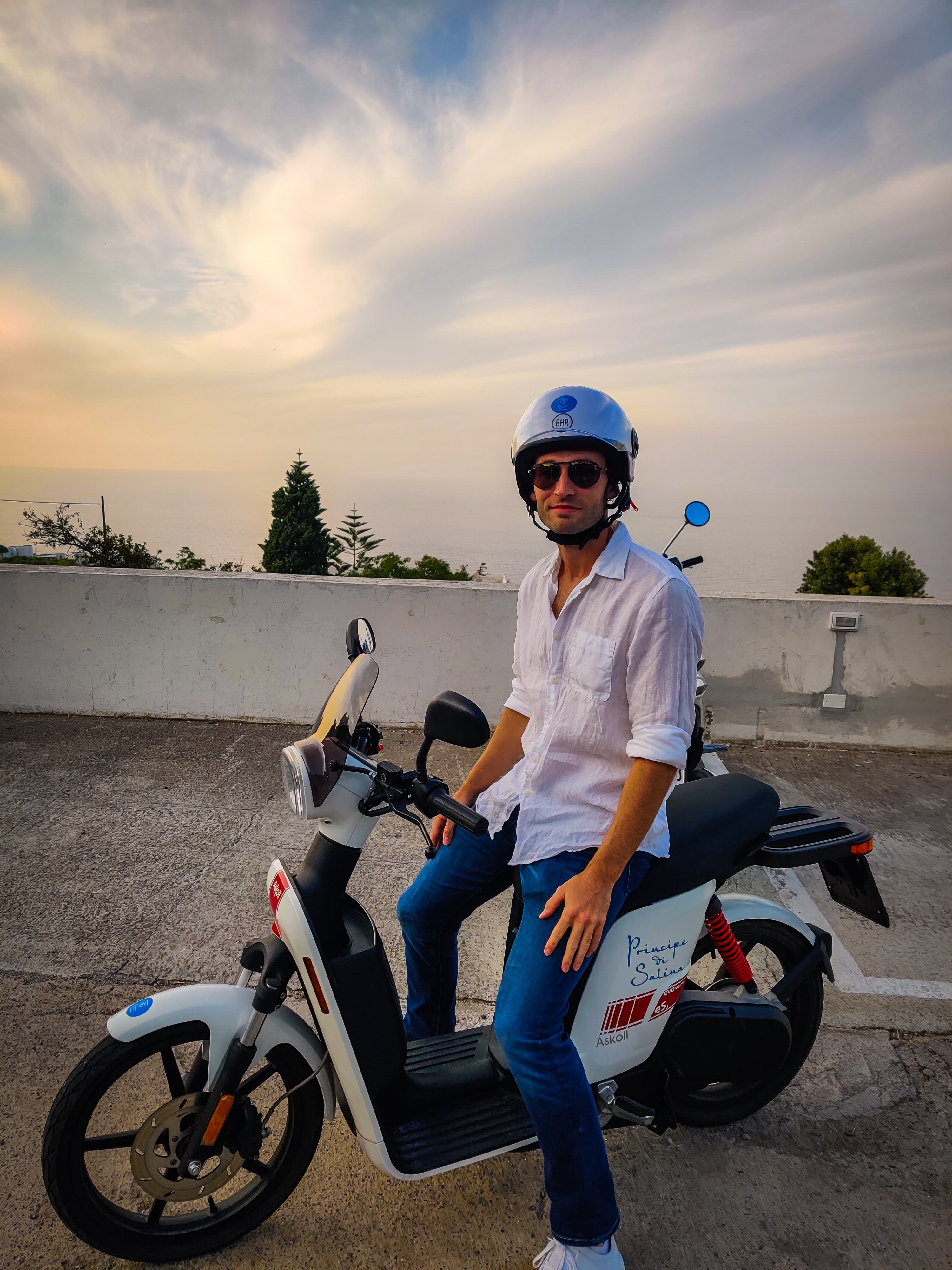
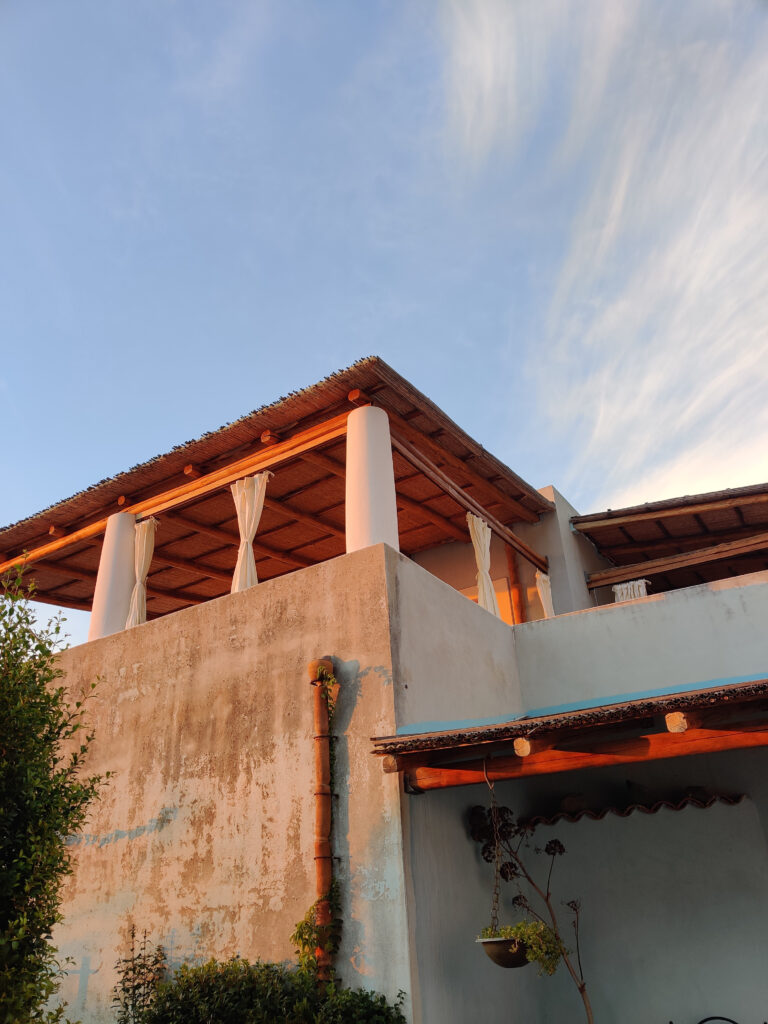
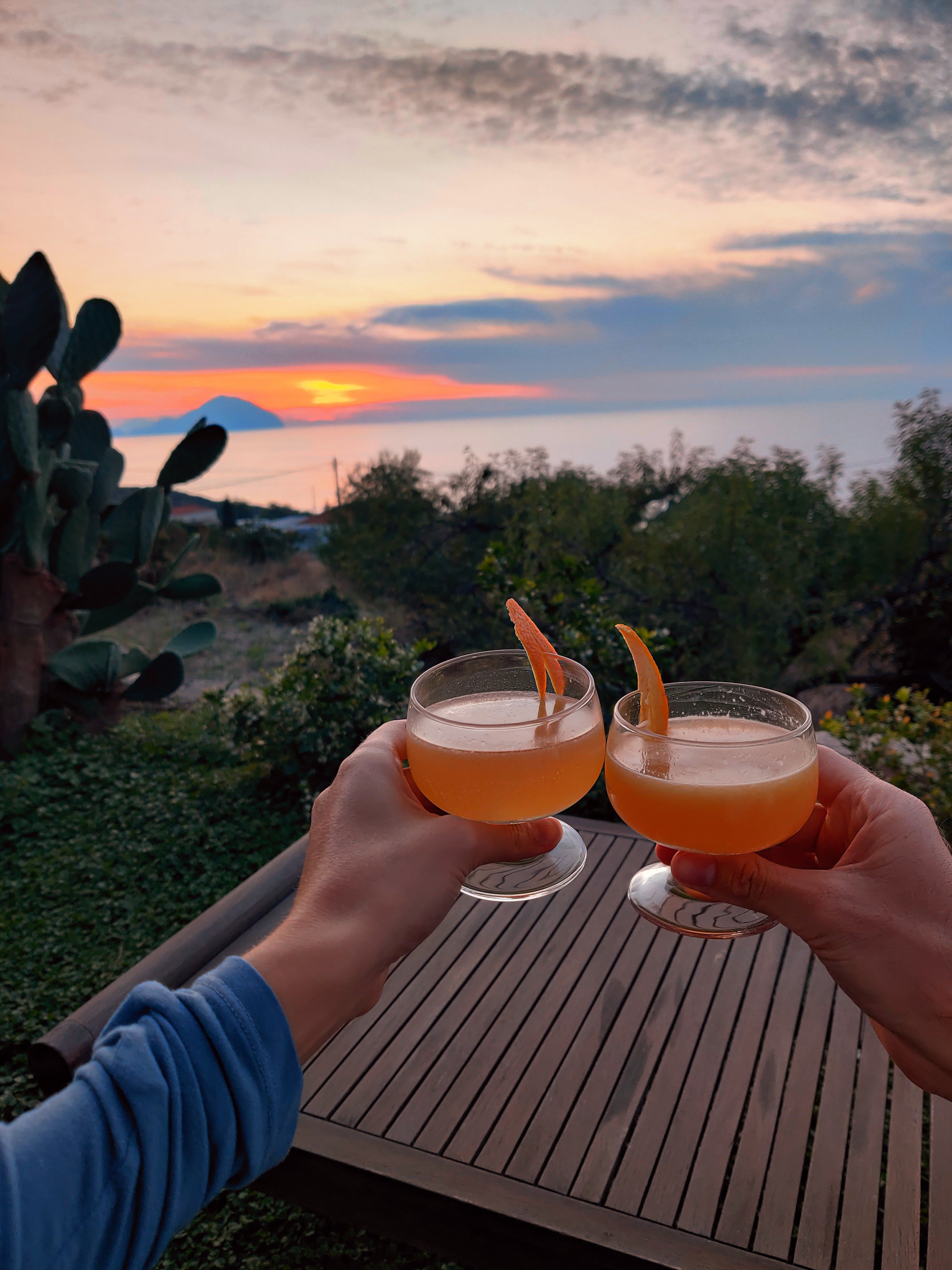
After quickly showering back at the hotel, we hopped back onto our electric vespa and made our way back to Pollara in time for sunset at La Locanda del Postino hotel and restaurant. In the summer months, dinner is served on a panoramic terrace overlooking the sea and surrounded by the crater of Pollara. After the sunset, lanterns are placed on the tables to create a romantic and suggestive atmosphere. The low lighting allows you to admire the beautiful starry sky of Pollara. The focus here is typical Aeolian dishes and fresh fish utilizing herbs from their garden.
~ Day 5: Salina Island ~
Morning: Hike Monte Fosse delle Felci Volcano
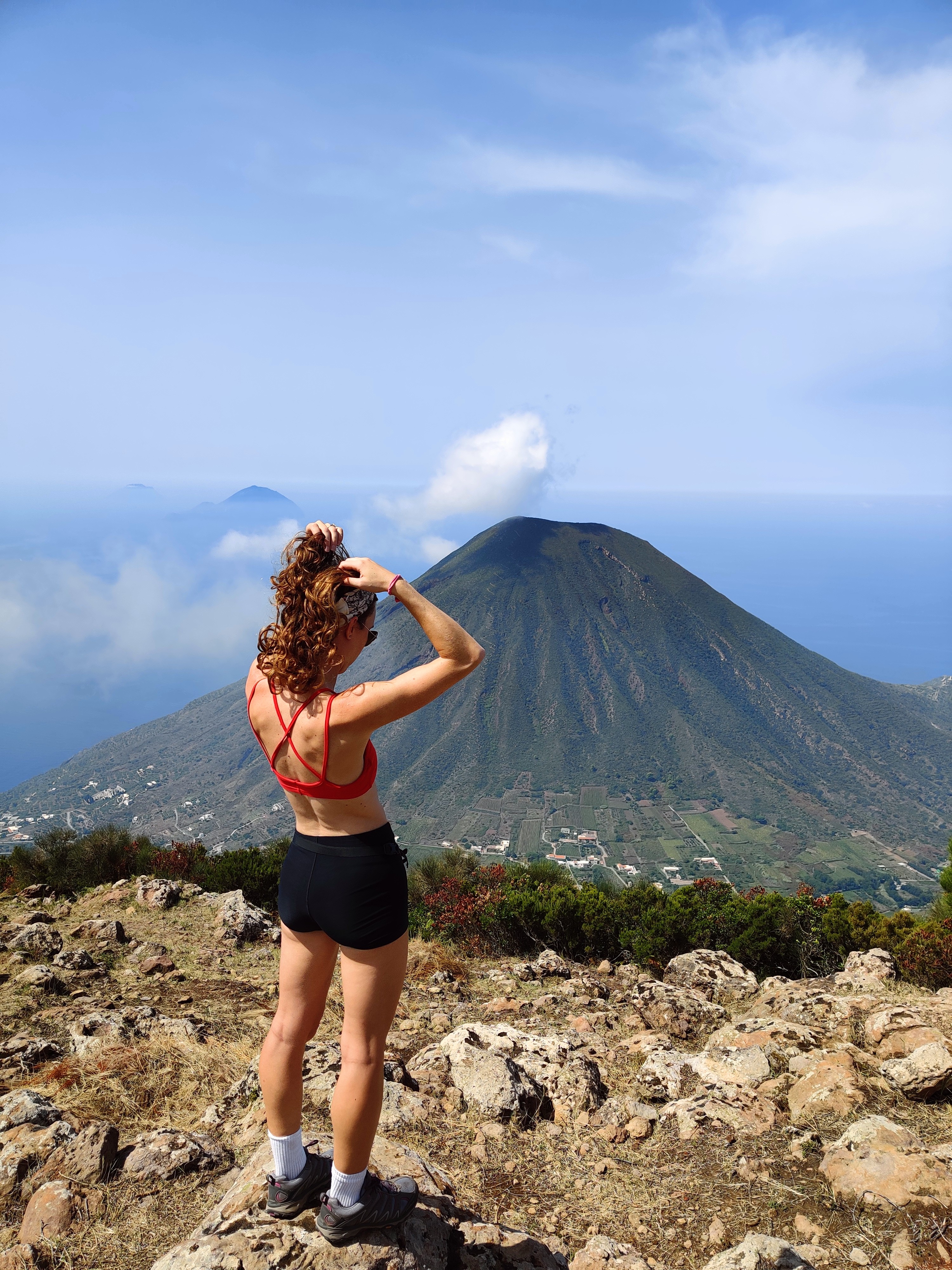
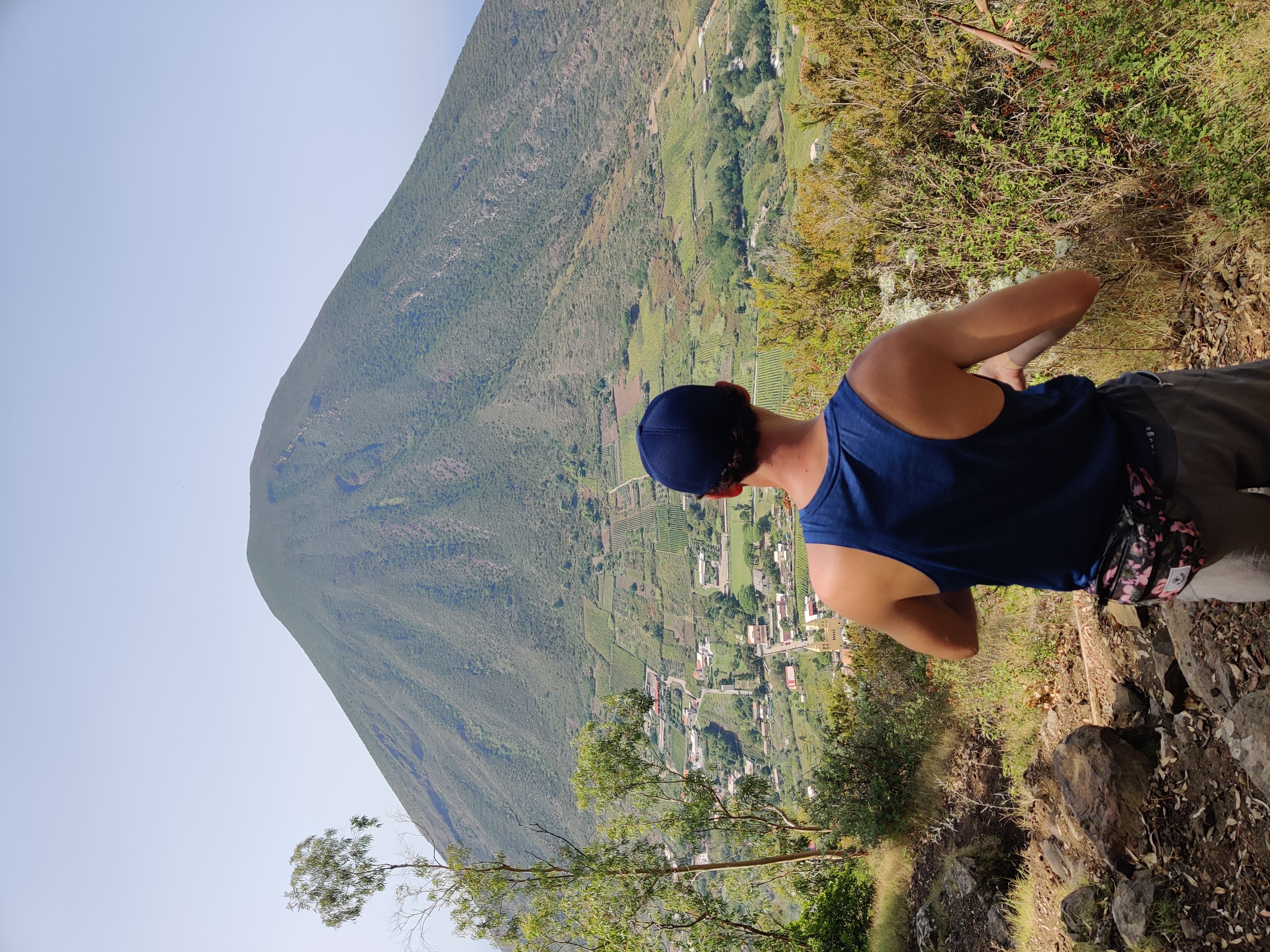
Salina consists of 6 volcanos, which are not active anymore. Only 2 are visible on the island of Salina: Monte Fossa Delle Felici and Monte dei Porri. A hike to the top of one of them is tough, especially in the torrid Sicilian heat, but it's worth the view. Pat and I hiked Monte Fossa Delle Felci when there. It is the highest non-active volcano on Salina at 962 meters (3,156 feet).
You can reach the summit from any of the villages, but we chose to go for one of the most convenient and closest villages. We parked our electric scooter at the village of Valdichiesa, next to the yellow 19th century church, and followed the hiking path to the left. From here we followed signs for Monte Fossa.
You have 2 options to hike up. Option one, the harder one, is the hiking path. It is a legit hike through fields, bushes, and trees. This one is quite hard and steep. It takes about 2 hours to get up and 1 hour to get down. And watch out for snakes because we did see one big one slither by us on the way back down! Option two on the other hand is easier. You just take the street adjacent to the hiking path and walk all the way up. There is some shade on the hike up, but there's also a good amount of sun. Once at the top, you will take in views of the other volcano Monte dei Porri and the two small Aeolian islands of Alicudi and Filicudi in the distance.
Lunch: Paperò Glicine
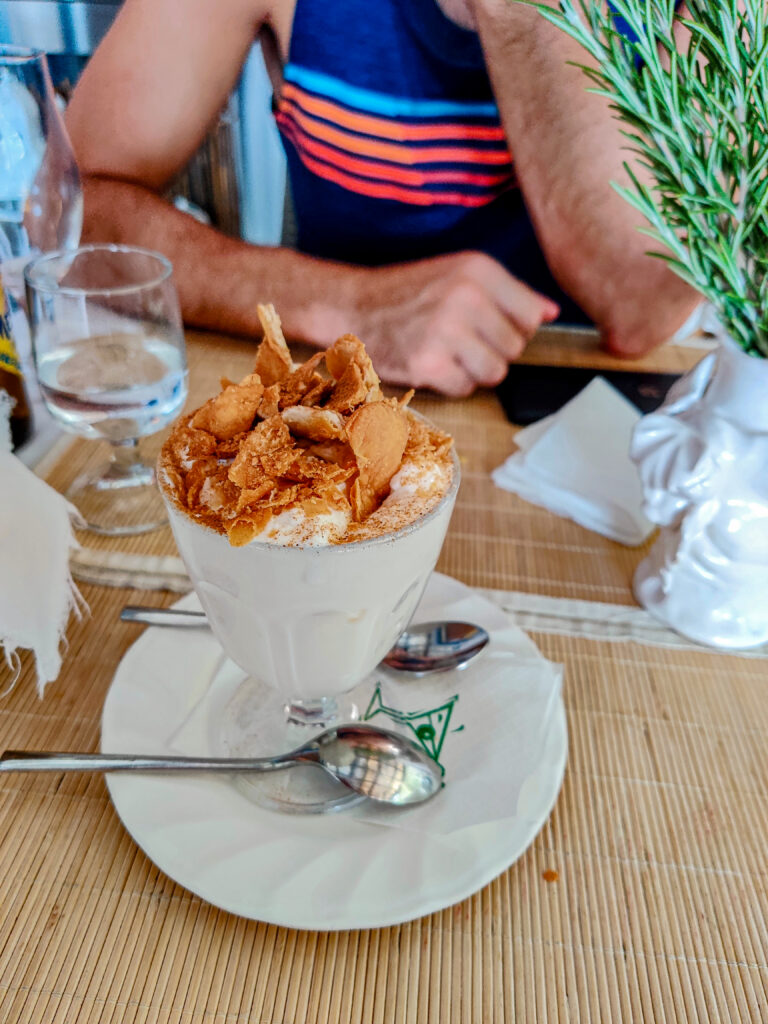
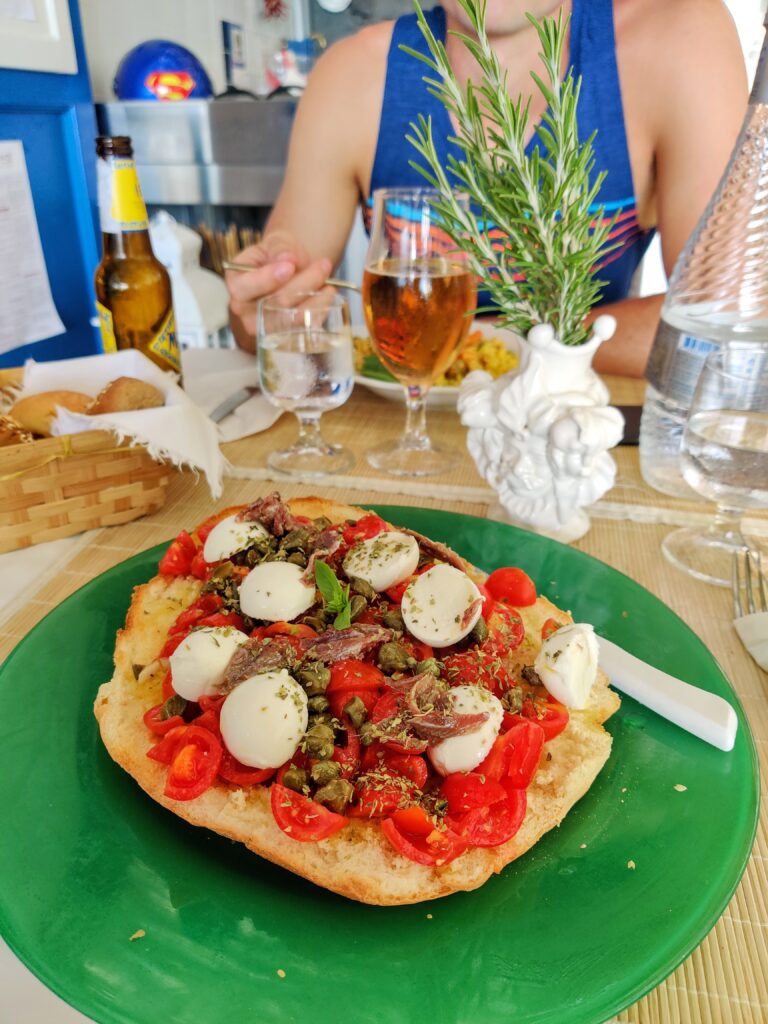
This was my favorite meal in all of Salina, however the restaurant accepts walk ins only. Paperò Glicine is a small, family-run bar in Rinella, where you can get some of the best ricotta granità on the island. Some recommend trying it with the islands famous candied capers, which has a unique contrast between the soft ricotta and the salty capers. Otherwise, opt for the traditional.
What is Granità?
Granità is a quintessential Sicilian treat made from water, sugar, and fresh fruit. It comes in refreshing flavors like lemon, pistachio, and coffee, but Salina is famous for their sweet ricotta version. Granità is often enjoyed for breakfast with a soft brioche bun, it can be eaten as a sandwich or dipped.
For lunch, we ordered the traditional Sicilian meal, pane cunzato. It used to be a typical “poor man’s” meal, or cucina povera, i.e. bread of misery. They use stale bread and enrich it with spices and herbs. Over time, they added richer ingredients like anchovies and mozzarella. A must when on Salina...and in my opinion, better than the place people recommend going to usually for pane cunzato - Da Alfredo.
TIP:
First thing you should do when you arrive in Rinella is stop by Paperò and make a reservation in case there is a 1 hr+ wait. This way you can hang by the beach while you wait. If they turn you down for lunch, ask if you can have a quick granità, they should be able to accommodate!
Afternoon: Rinella Beach
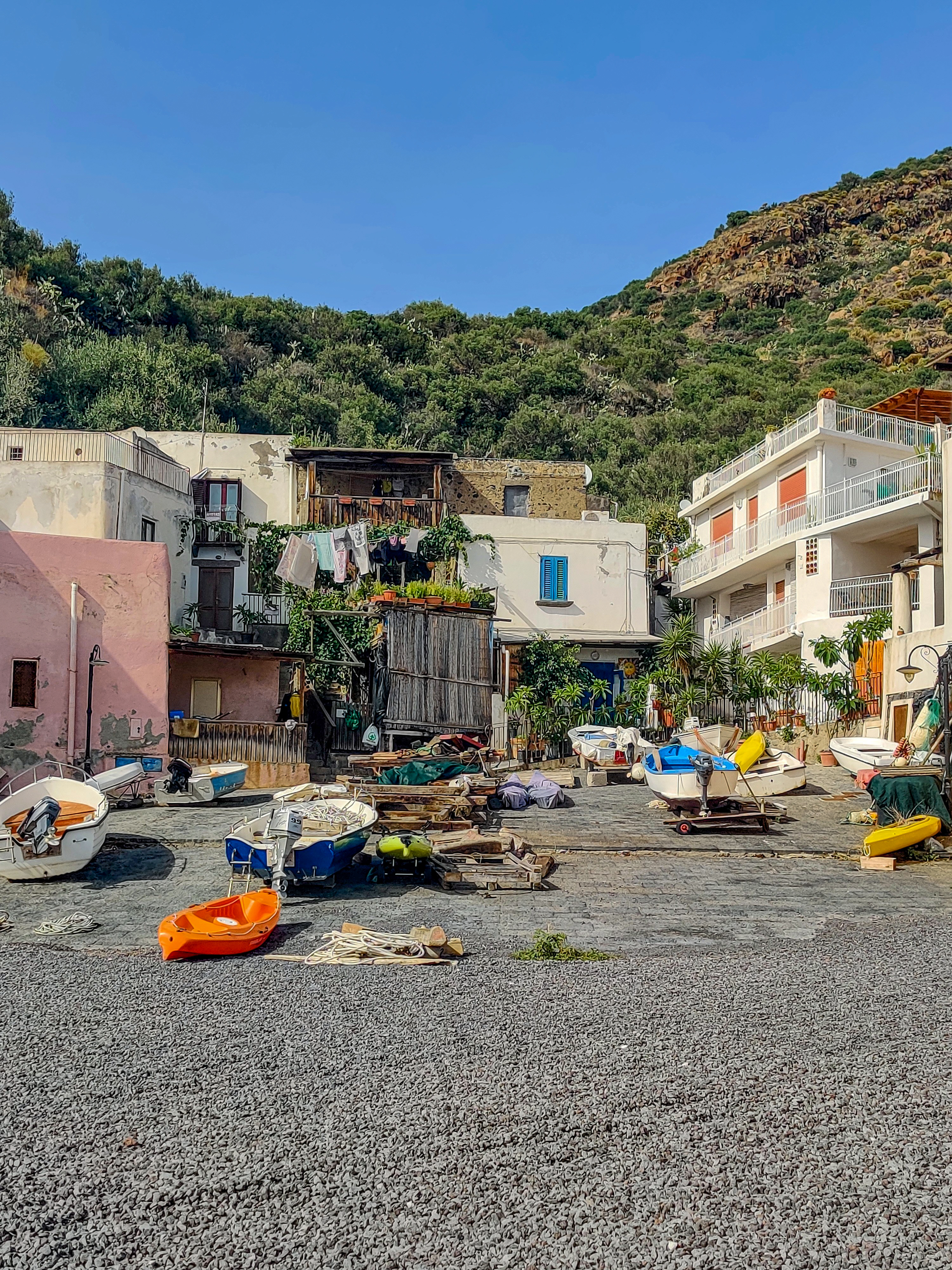
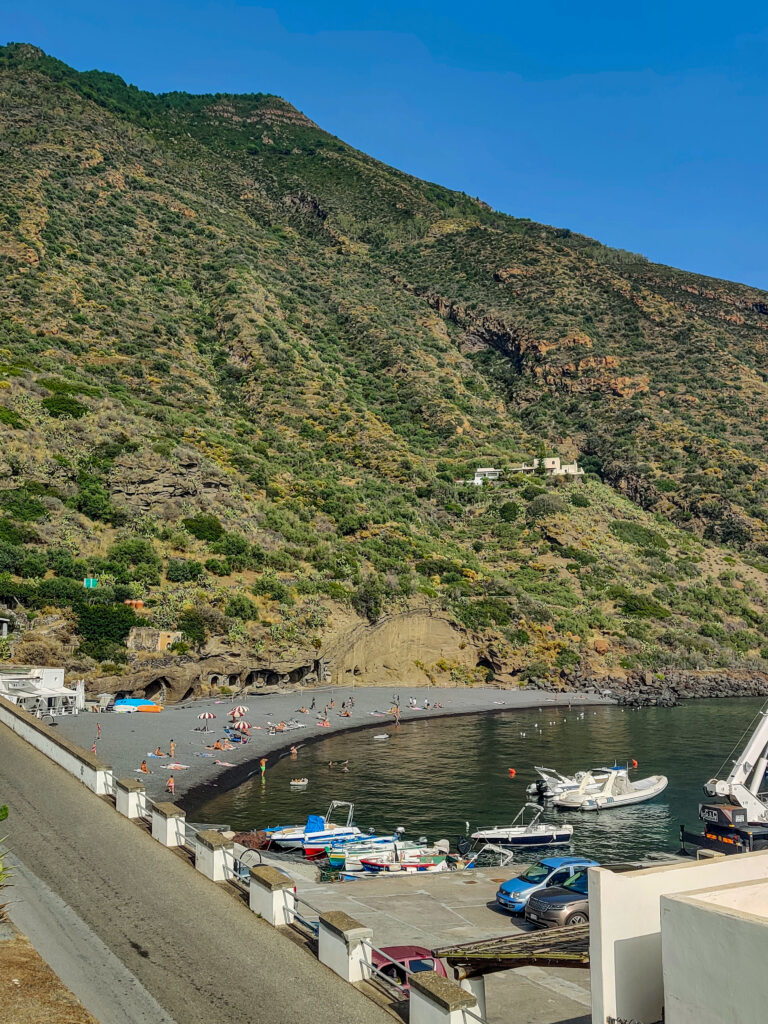
After relaxing at the property for a while, we hopped on our electric scooter and headed to the small and reclusive village of Rinella for lunch. We were told there was a wait for lunch, more on that below, so decided to hang out at the beach next door for a while. In Rinella you will find the only black sand beach on the island of Salina, created by volcanic activity, nestled among caves dug into the rocks from long ago. Up until a few years ago, the caves served as shelters for boats. When going for a swim, keep your eyes peeled for the post-volcanic phenomena called sconcassi. It is an underwater emanation of sulphuric gas and vapor caused by disturbances in the seabed, i.e..post-volcanic activity.
TIP:
If the beach is packed, you can reach another more hidden beach nearby called Prà Venezia. Take the 15-20 minute nature path next to the Aeolian Camping across from the Church of San Gaetano. This is a rock beach. From here you can see the islands of Filicudi and Alicudi.
Afternoon: Chill at Boutique Hotel
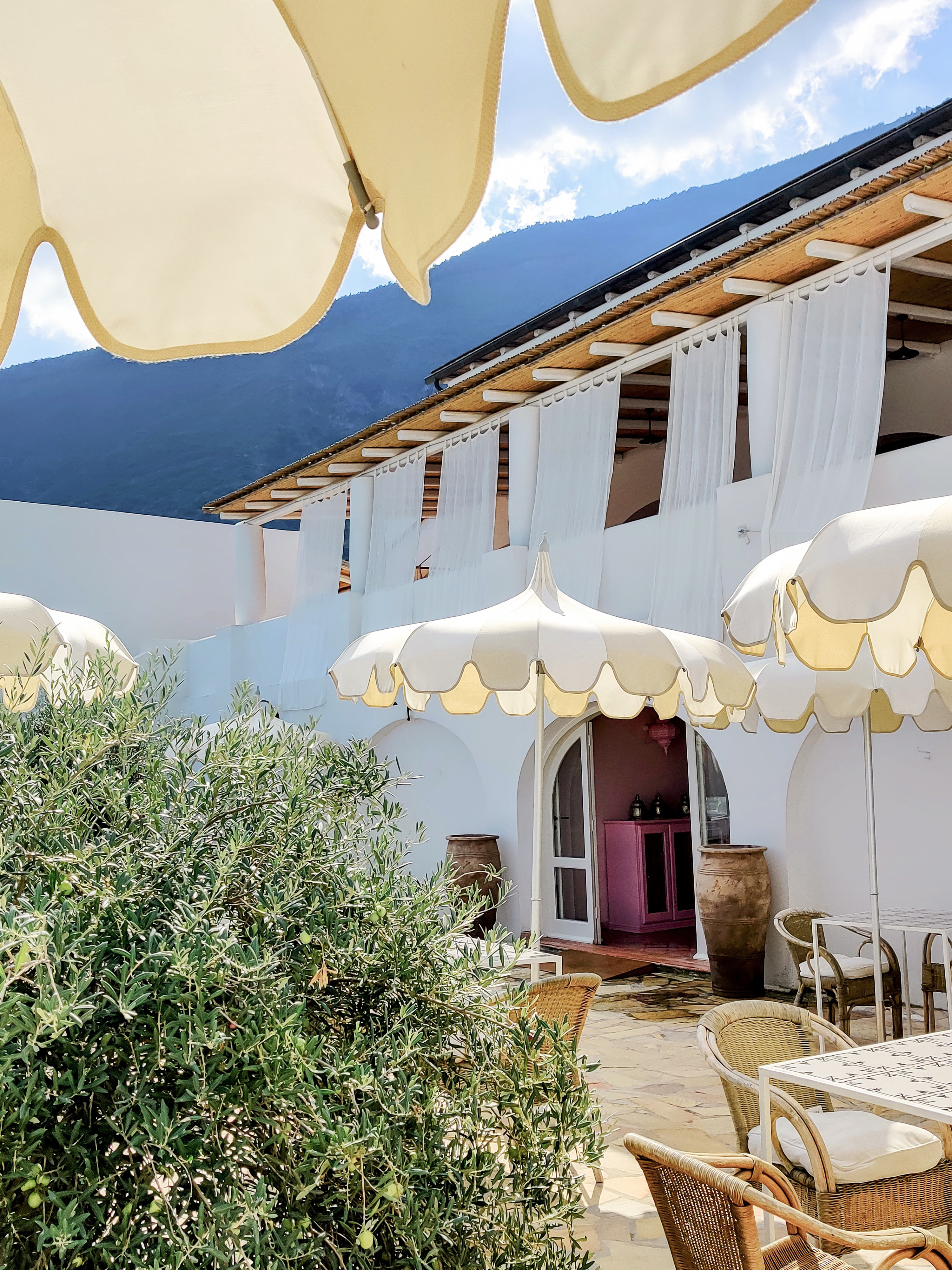
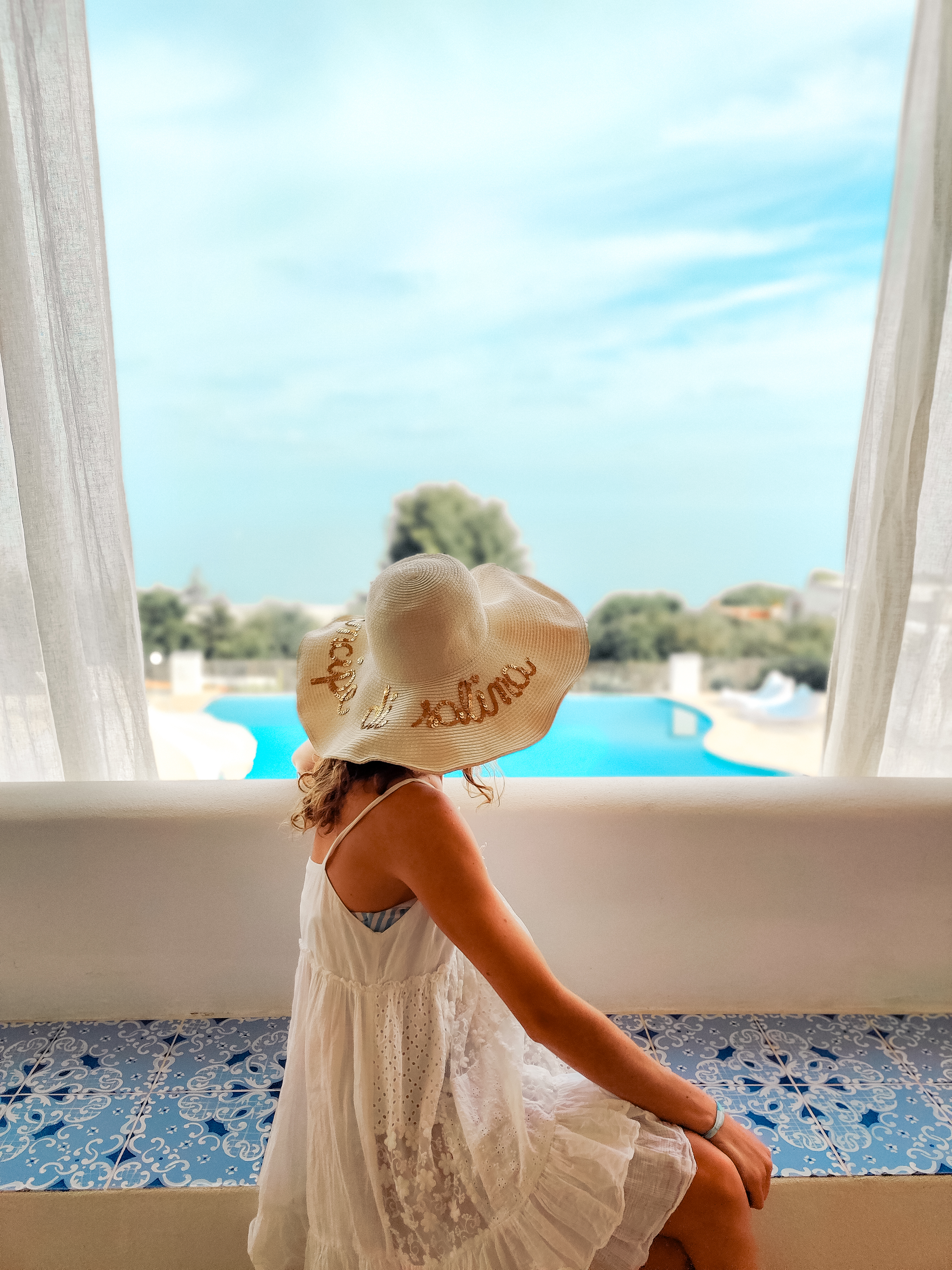
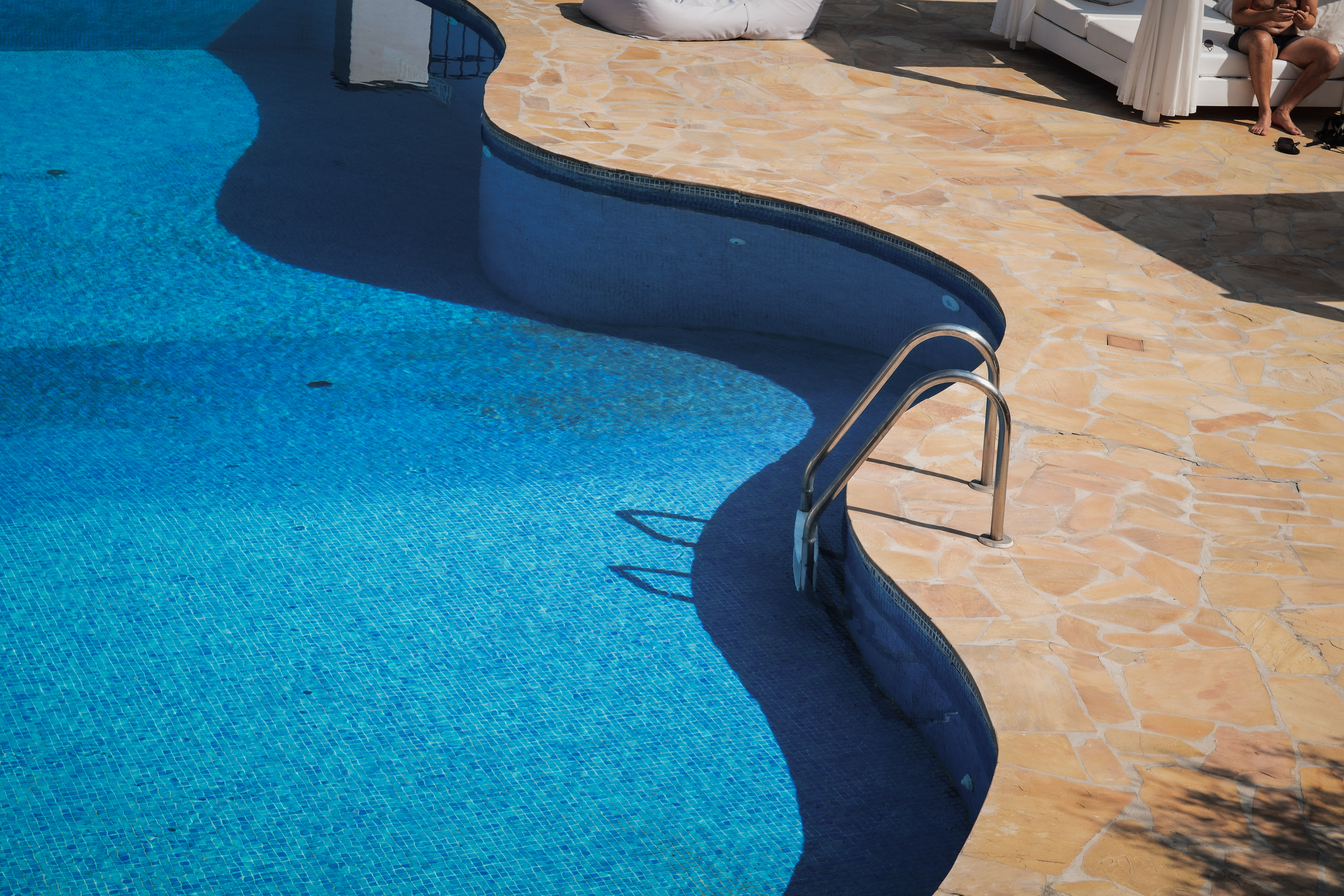
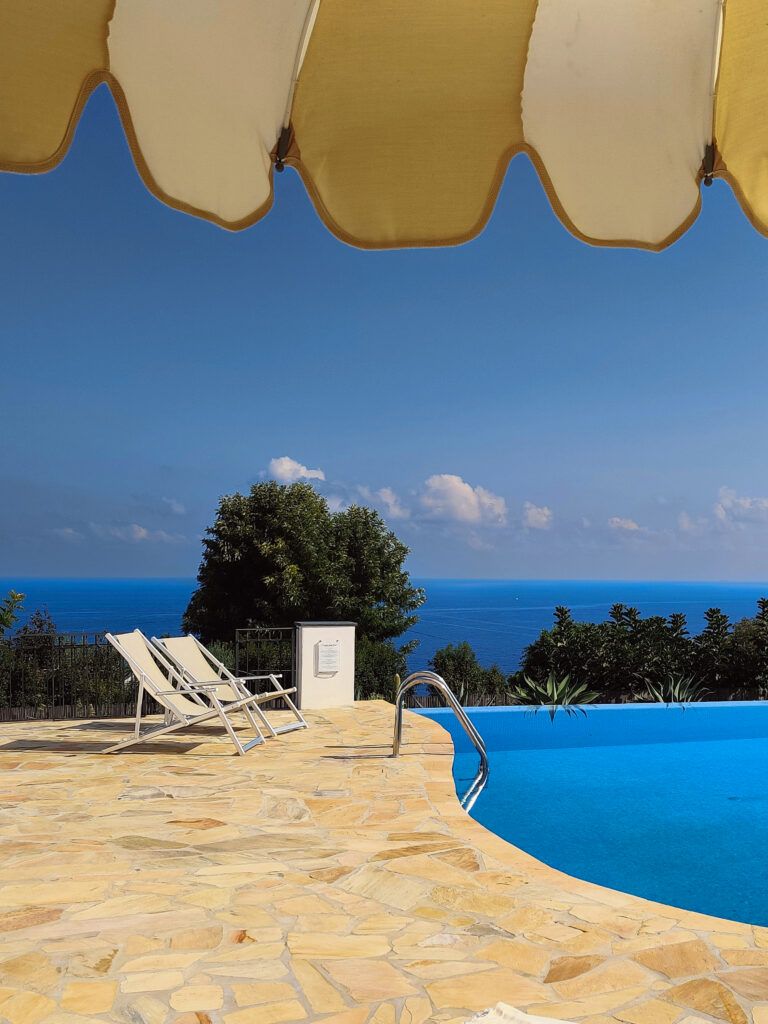
While our room was delightful, the private pool is where we spent a good chunk of our time. When I think of a relaxing itinerary, seclusion by the pool with a view of the Tyrrhenian Sea sounds ideal. What could be better than the billowy white clouds against the bright blue sky, a freshening breeze, and a just-delivered Negroni or Spritz to quench your thirst?
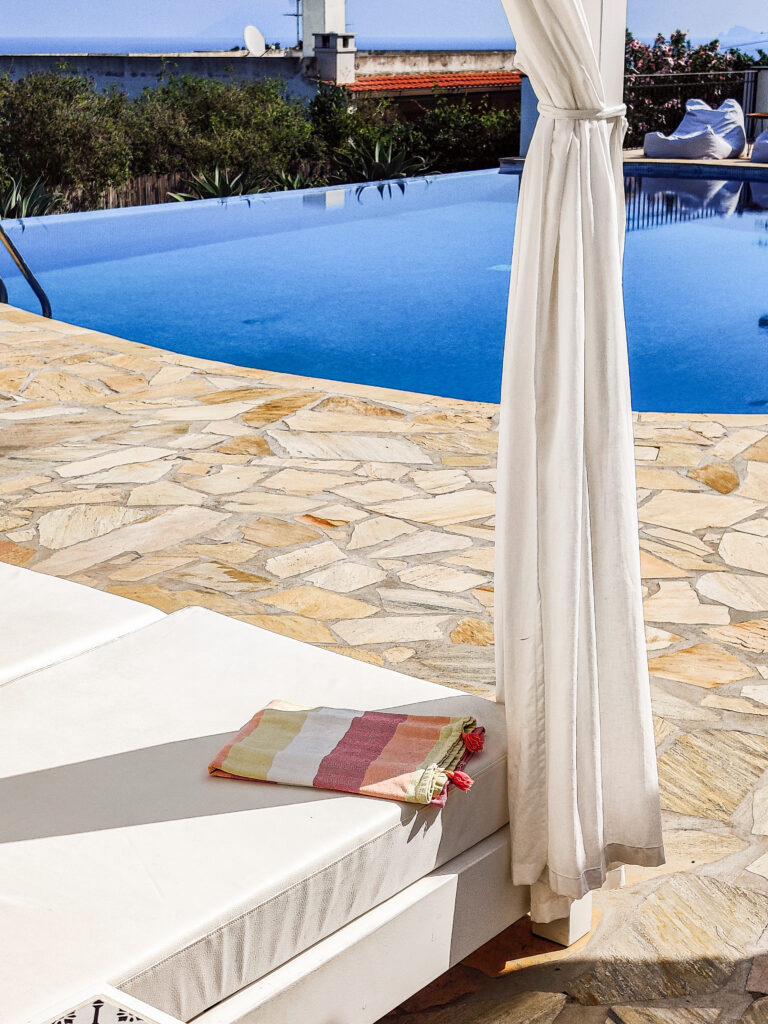
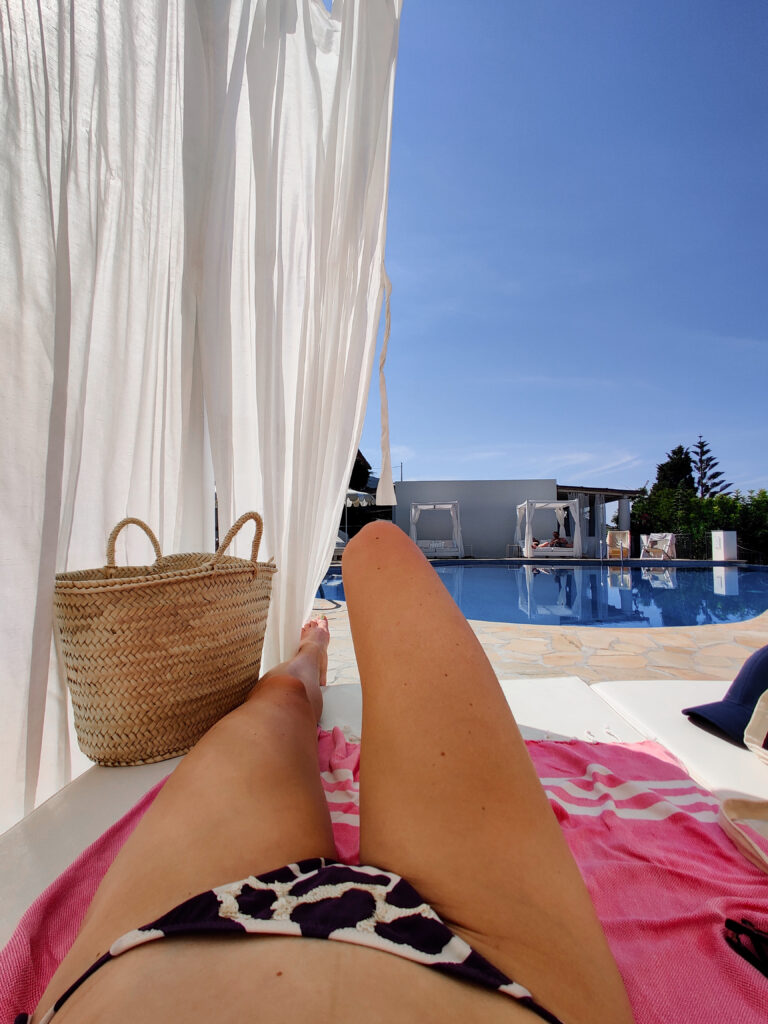
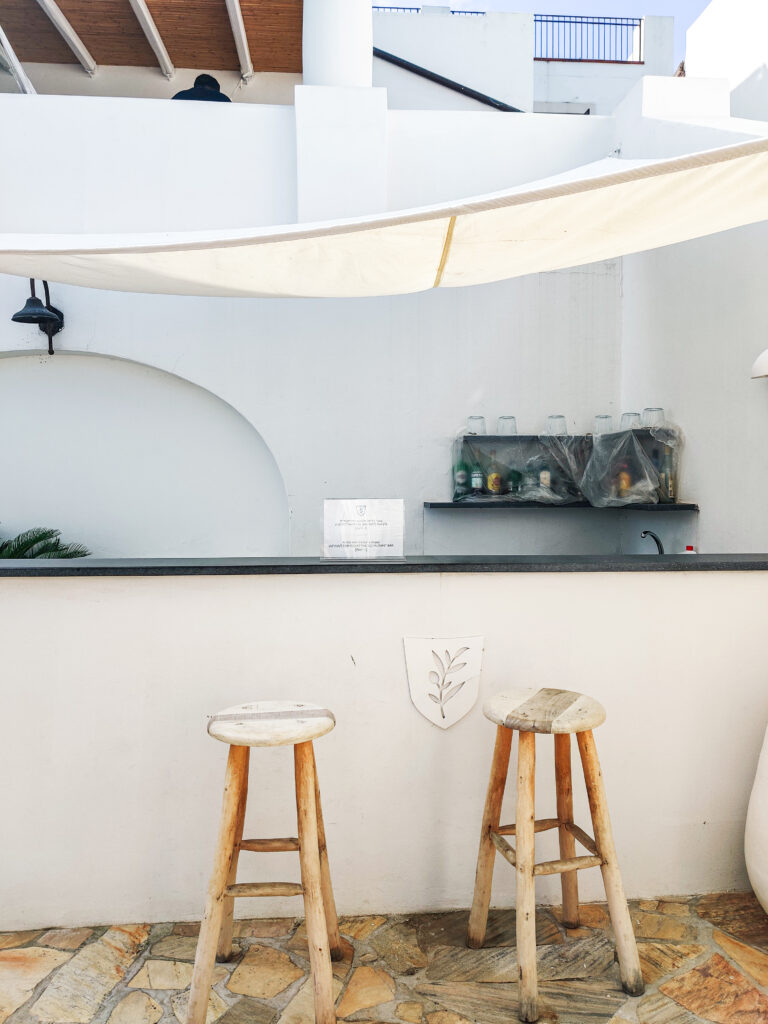
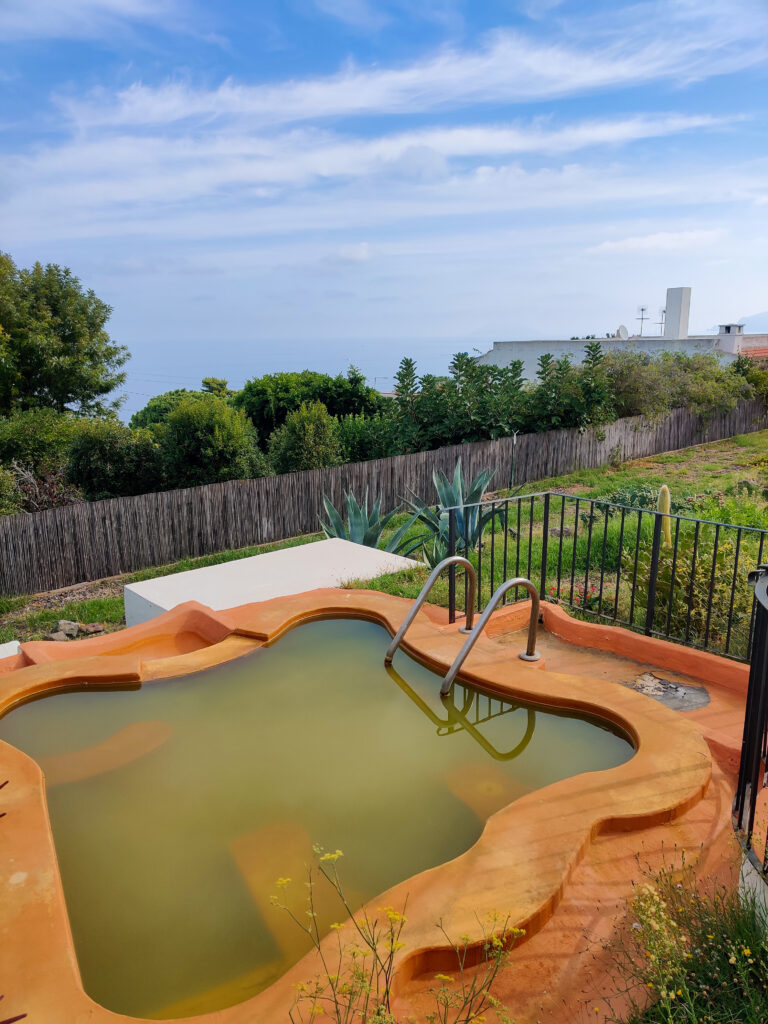
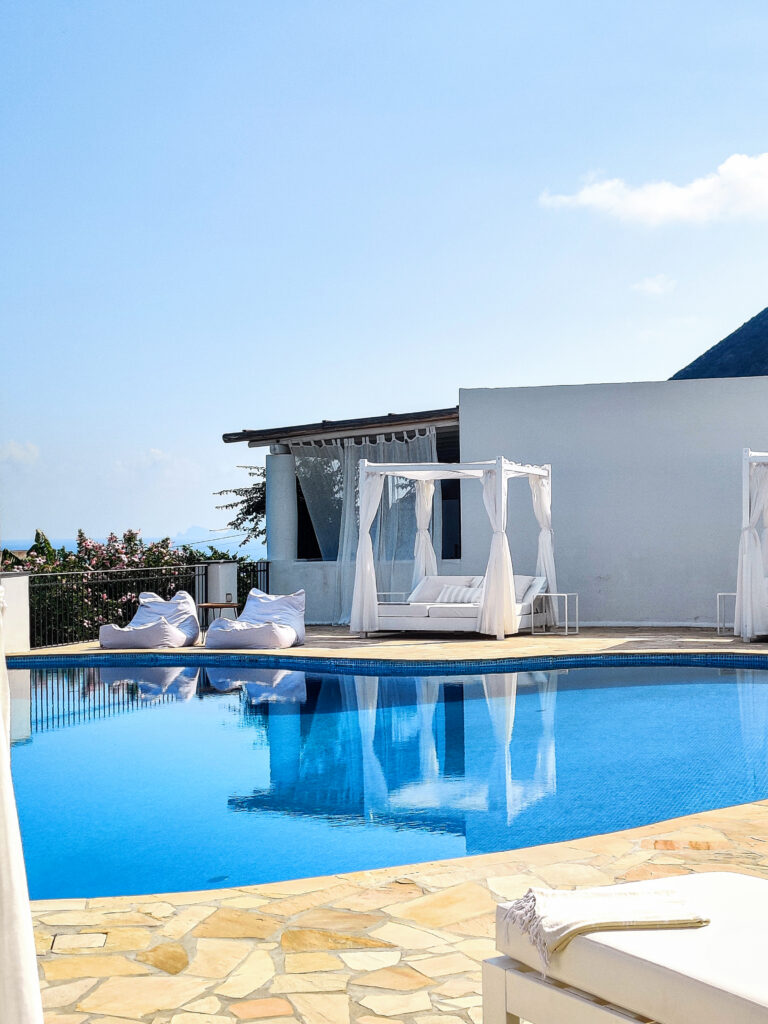
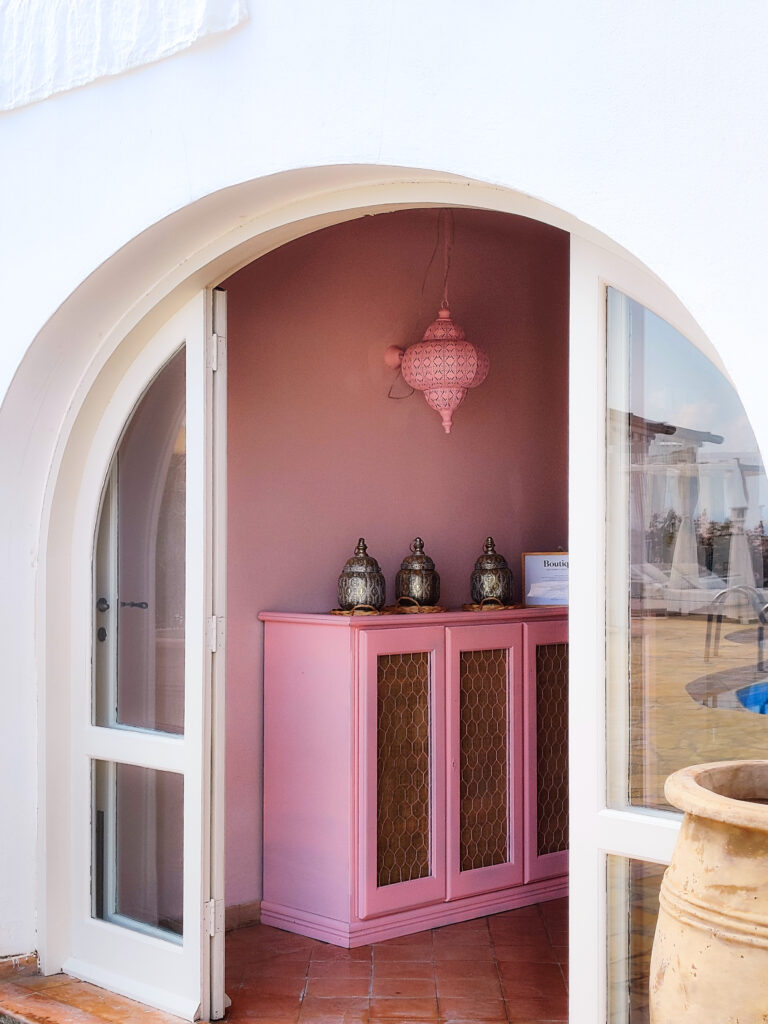
In addition to a lovely pool, the property even has it's own thermal hot spring. That's the orange jacuzzi-like structure pictured above. This especially came in handy post-hike, when we needed some natural hot spring minerals from the volcanic soil and water to heal our poor legs!
Interested in Staying Here?
Purchase my private Google Maps locations below and get the name of this accommodation alongside additional accommodations, things to do, restaurants, activities, natural pools, volcanoes, attractions, and more. You'll have access to all my coveted locations and spots, straight to your phone.
Afternoon: Explore Santa Marina
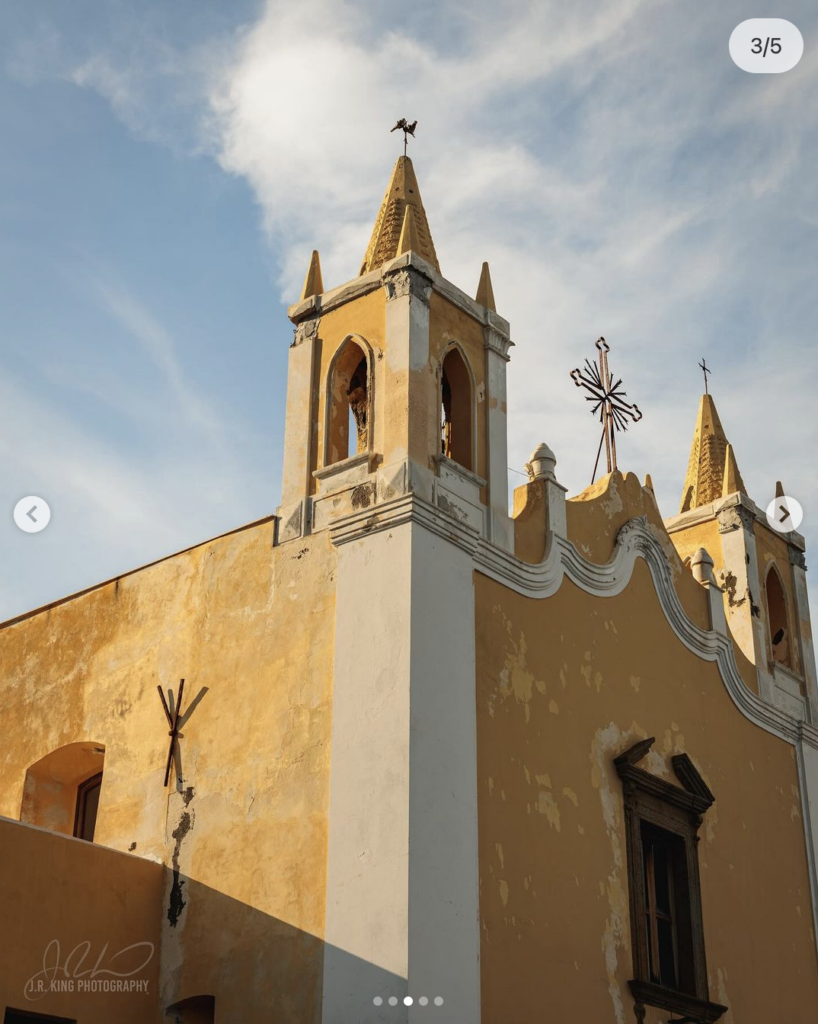
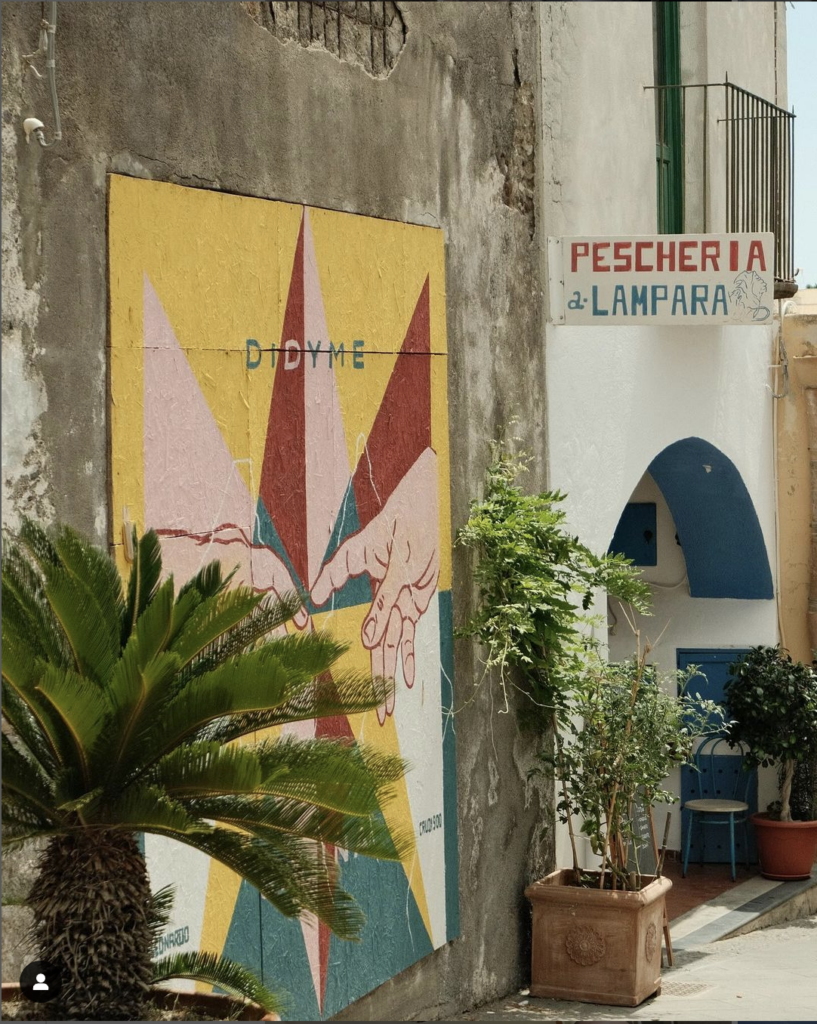
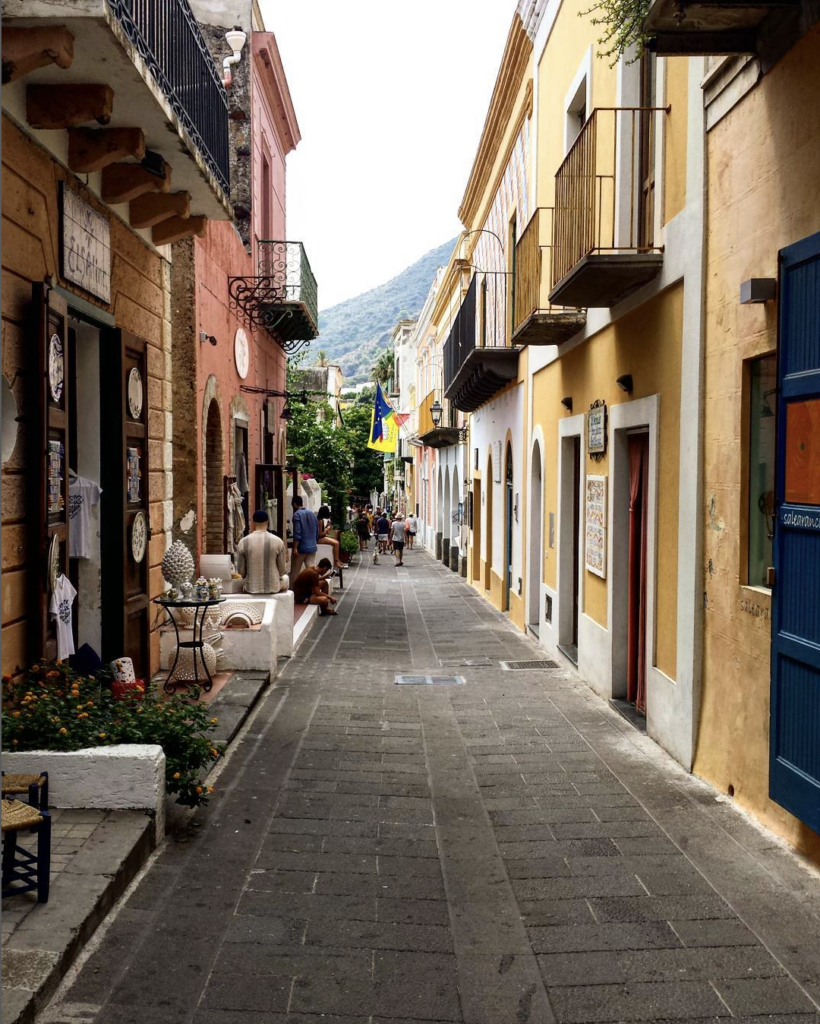
Santa Marina, known by locals simply as “la città,” gives a more urban impression. It is the main port and village on the island. A good 900 people live in the “town”. It’s the busiest area on the island for both shopping and nightlife. The main shopping street is Via Risorgimento with several nice stores. Stop by:
- Casa Salina: Sells silk kaftans and the island fragrances “Eolie Parfums.”
- Salearancio: Flip-flops from Ipanema, cool Mondegliani sunglasses and locally made ceramics.
- Le Signorine: Sell their own line of jewelry, chic swimsuits and nice home accessories.
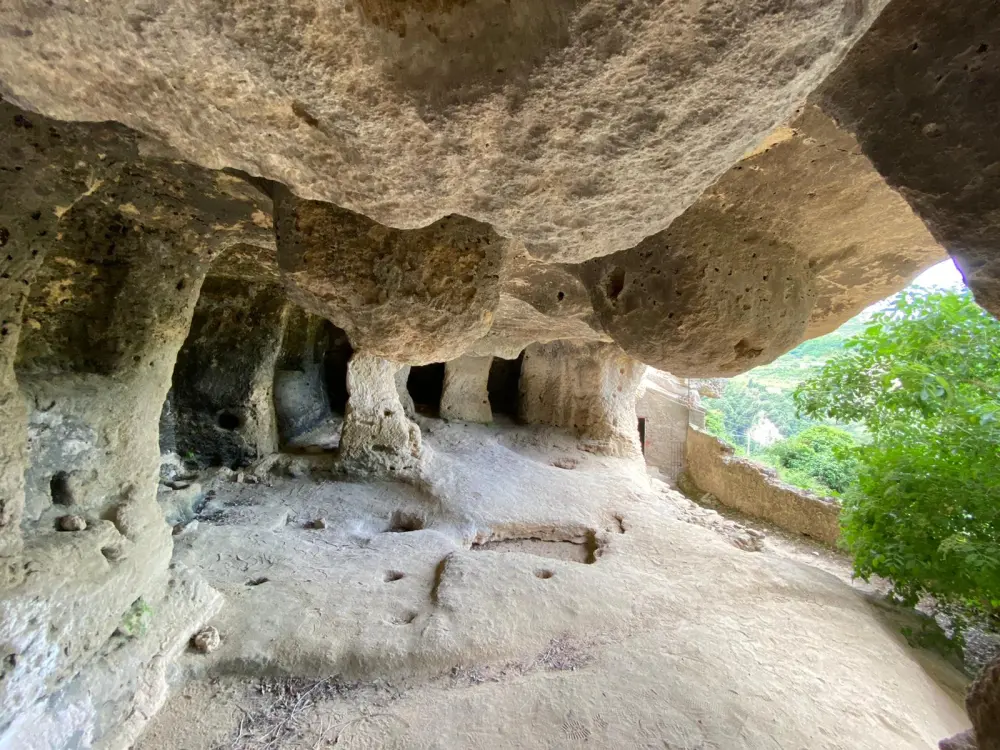
If you're looking for something more active and historical, there’s an intensive 2 hour hiking path that takes you through fruit and olive trees that takes you to the Saracen Caves, Le Grotte dei Saraceni, a distinct morphological structure dug into tuff used as a refuge during the invasion of the Saracens in 650 AD.
Dinner: Villa Carla
This small family-run restaurant in the village of Leni offers delicious Aeolian cuisine made only from local ingredients. The restaurant is based in the garden of the owner’s house so when they run out of ingredients they pop by their back garden to get them. Everything they prepare is fresh, tasty and home-made.
There’s no fixed menu; the offer is concise, regularly updated and contains both the obvious local standards like pasta alla norma as well as some more elaborate dishes, like fish steamed in orange tree leaves. Everything is accompanied by Aeolian and Sicilian wines that perfectly complement the food.
~ Day 6: Panarea Island ~
Morning: Check into Boutique Hotel
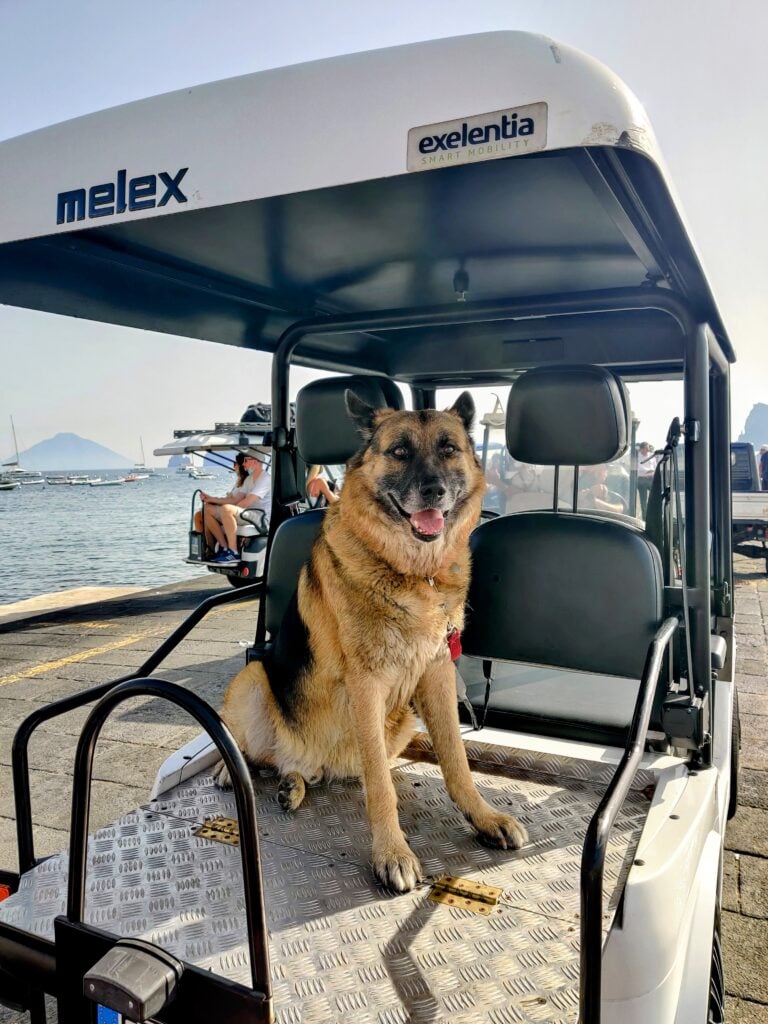
The trip from Salina to Panarea is very quick—just 30 minutes via ferry. As soon as we arrived at the miniature port of Panarea, our boutique hotel sent a golf cart to pick us up and take us to the property. After all, there are zero cars on the island so the only way to get around is on foot, via scooter or via golf cart. Some of the golf carts even had what Pat and I called "working dogs" on the back!
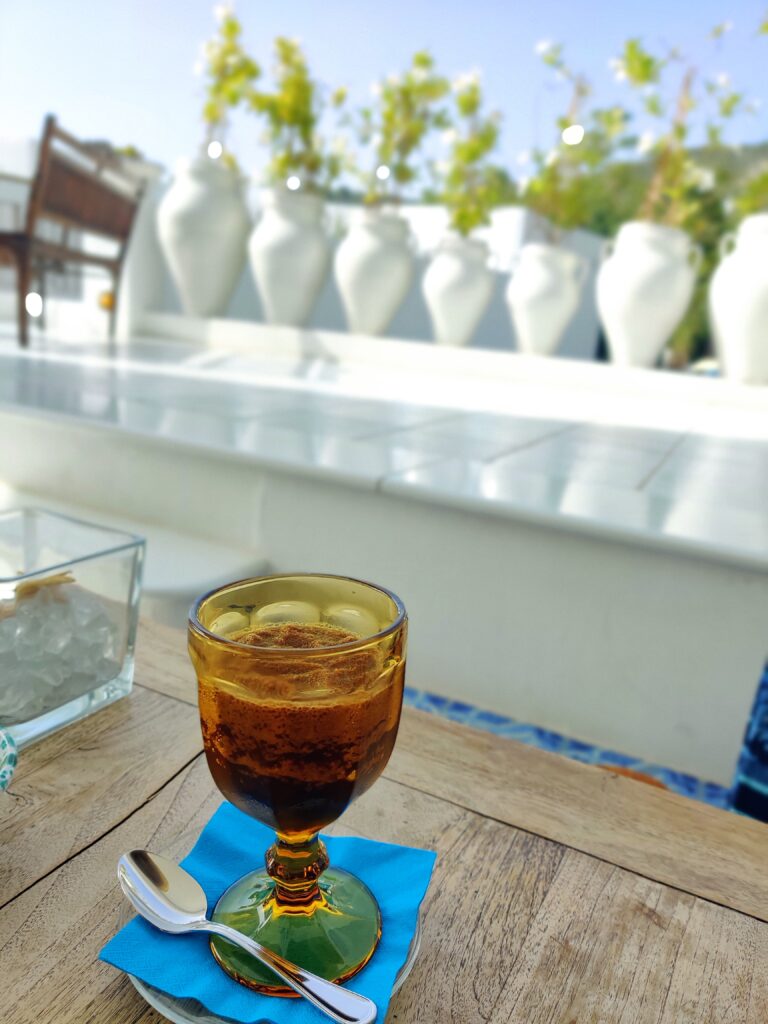
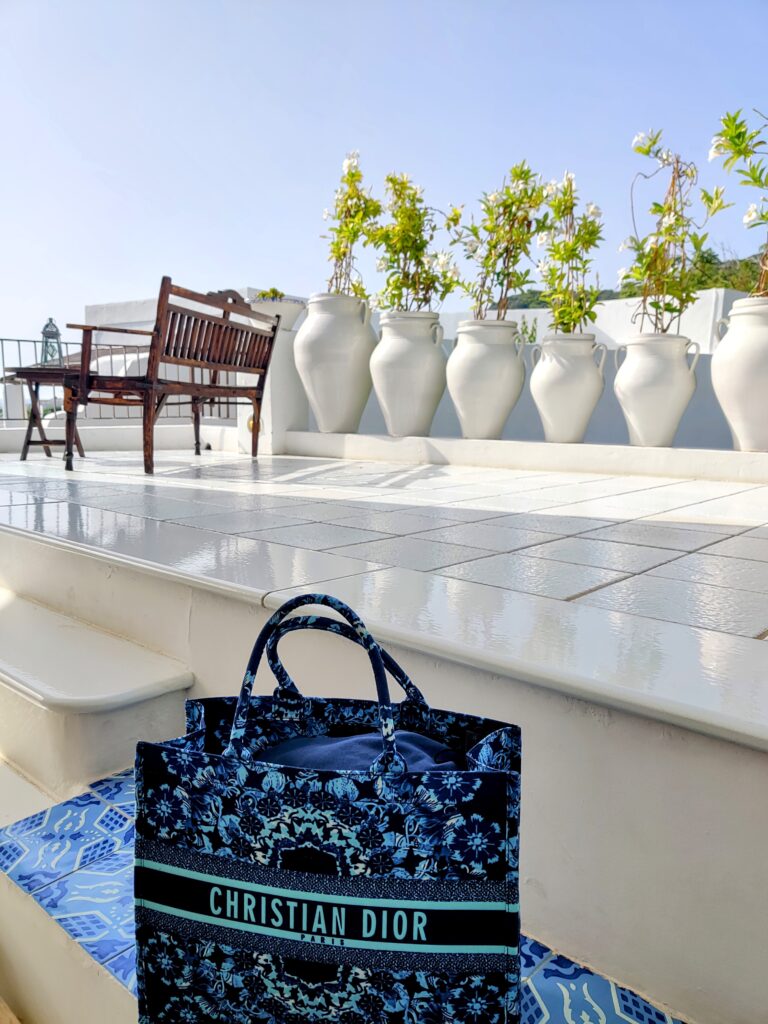
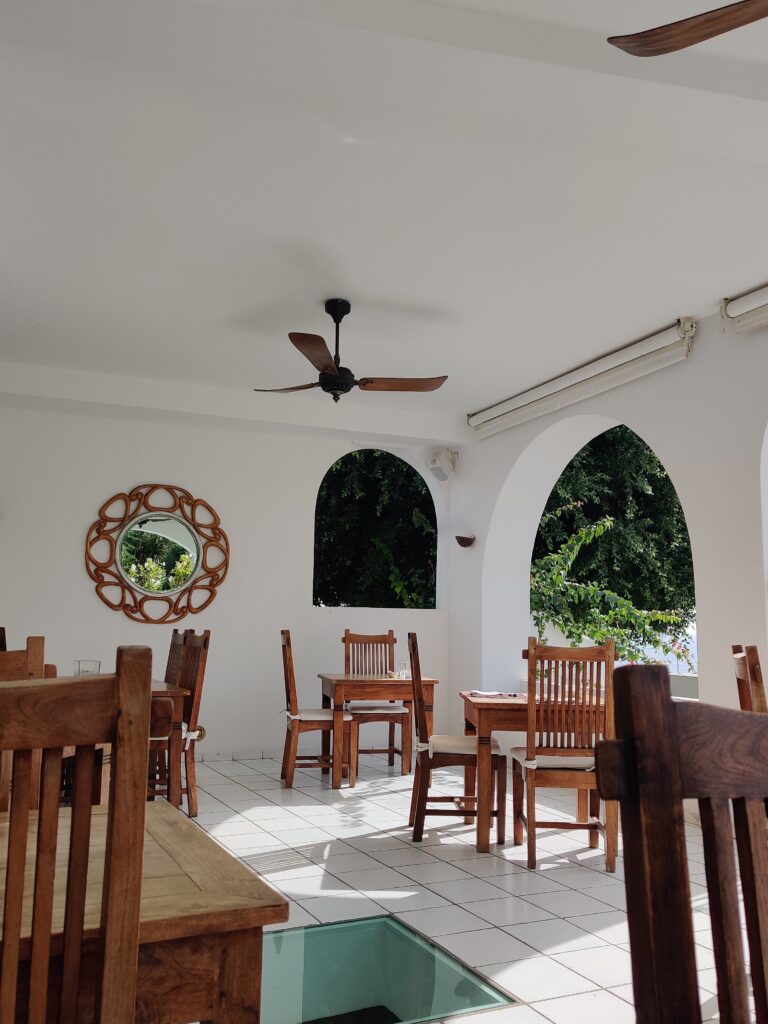
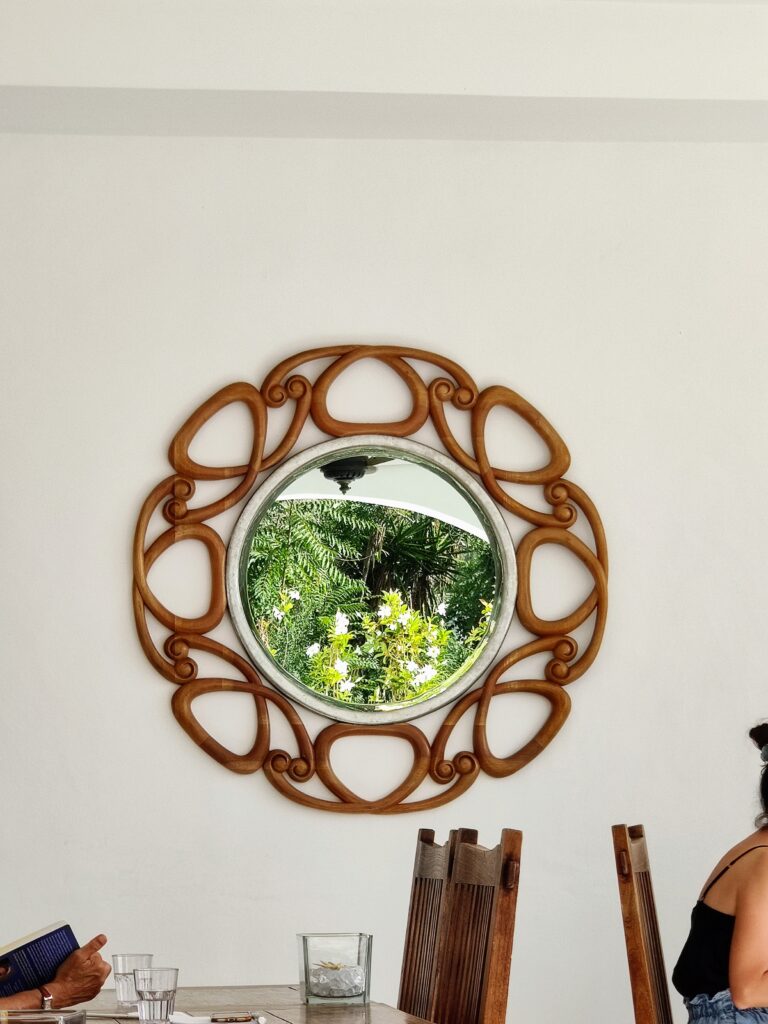
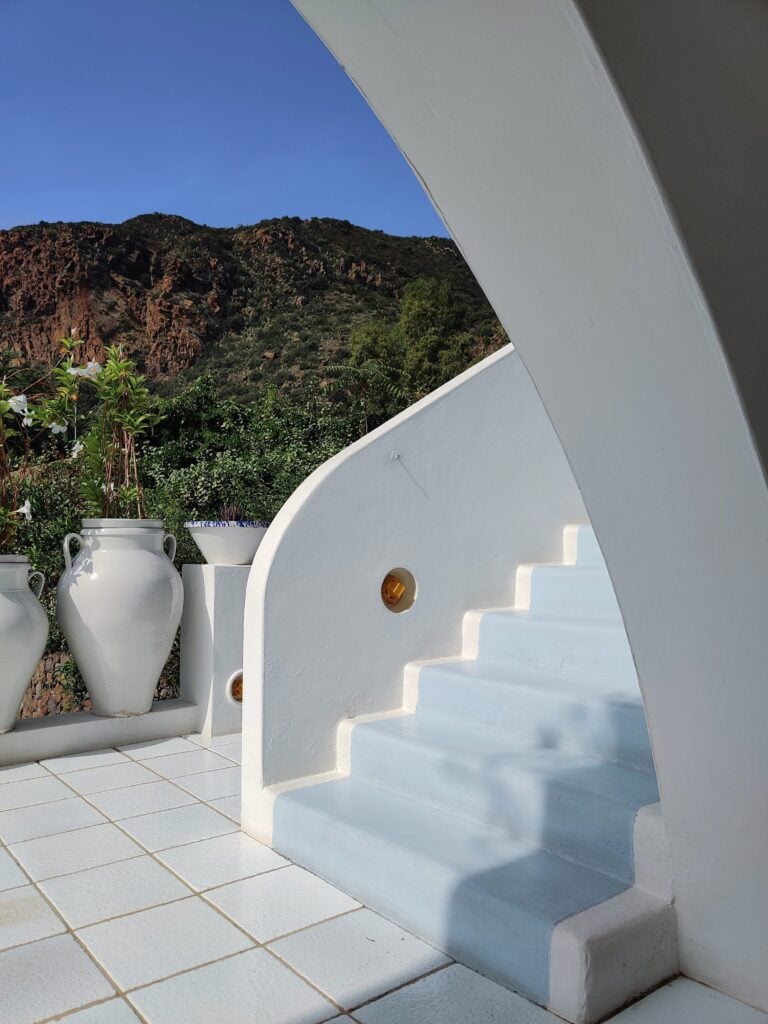
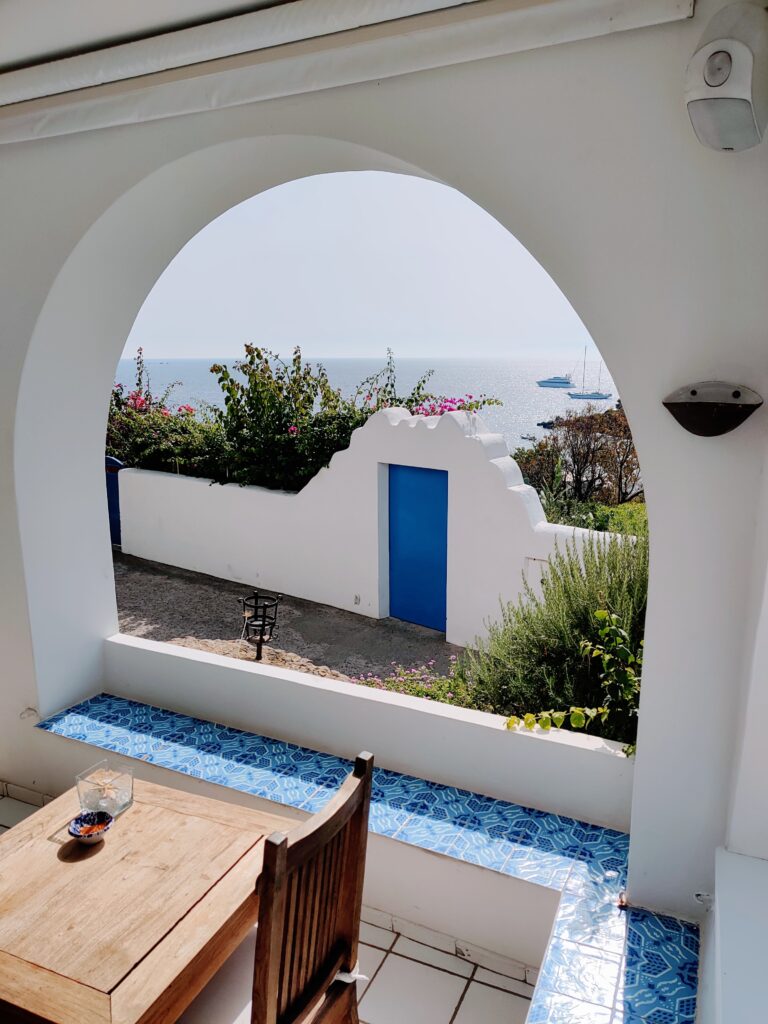
Once arrived at our boutique hotel, we were greeted with a local coffee granità while we waited for our room. Granità is a quintessential Sicilian treat made from water, sugar, and fresh fruit. It comes in refreshing flavors like lemon, pistachio, and coffee, but Salina is famous for their sweet ricotta version. Granità is often enjoyed for breakfast with a soft brioche bun, it can be eaten as a sandwich or dipped. Since our room wasn't ready yet, we left our bags with the hotel and decided to explore the port town of San Pietro and Ditella.
Interested in Staying Here?
Purchase my private Google Maps locations below and get the name of this accommodation alongside additional accommodations, things to do, restaurants, activities, natural pools, volcanoes, attractions, and more. You’ll have access to all my coveted locations and spots, straight to your phone.
Morning: San Pietro
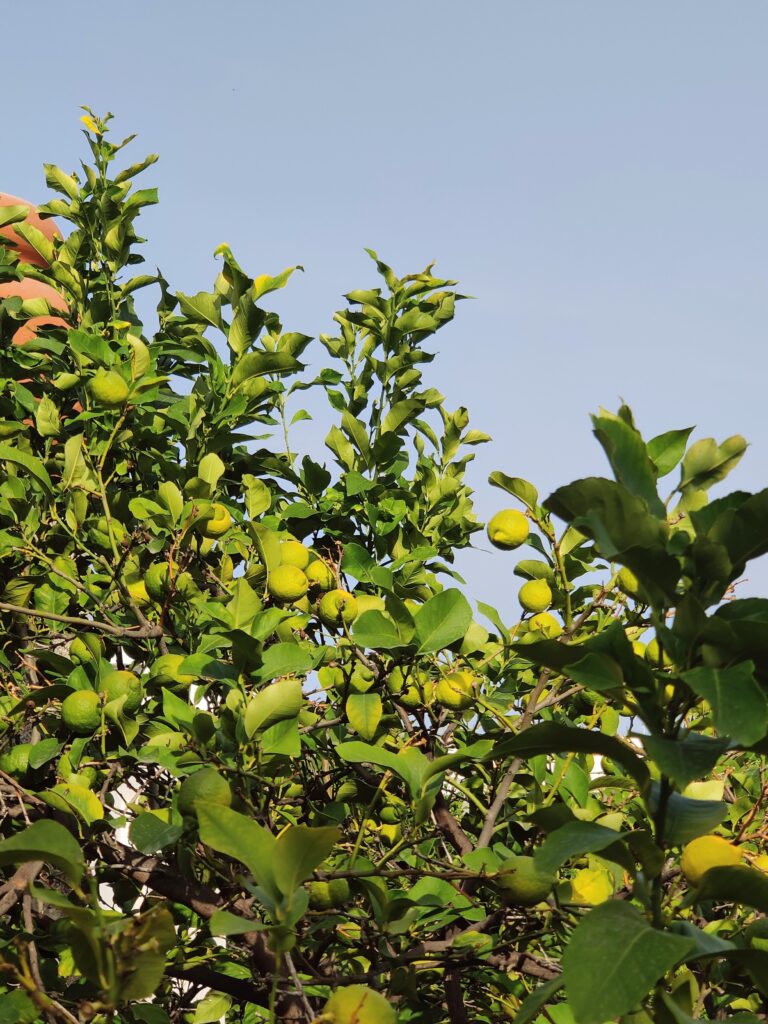
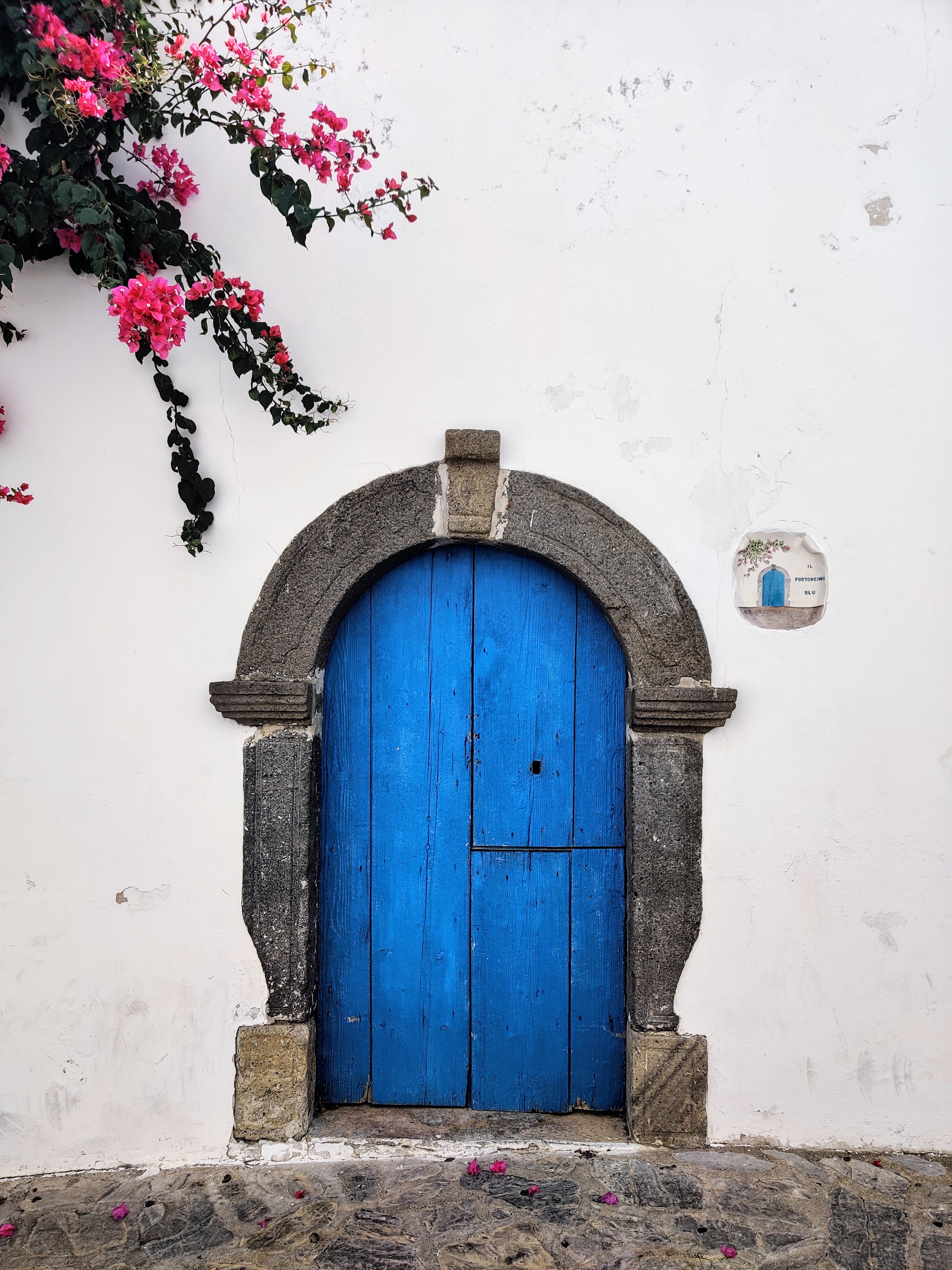
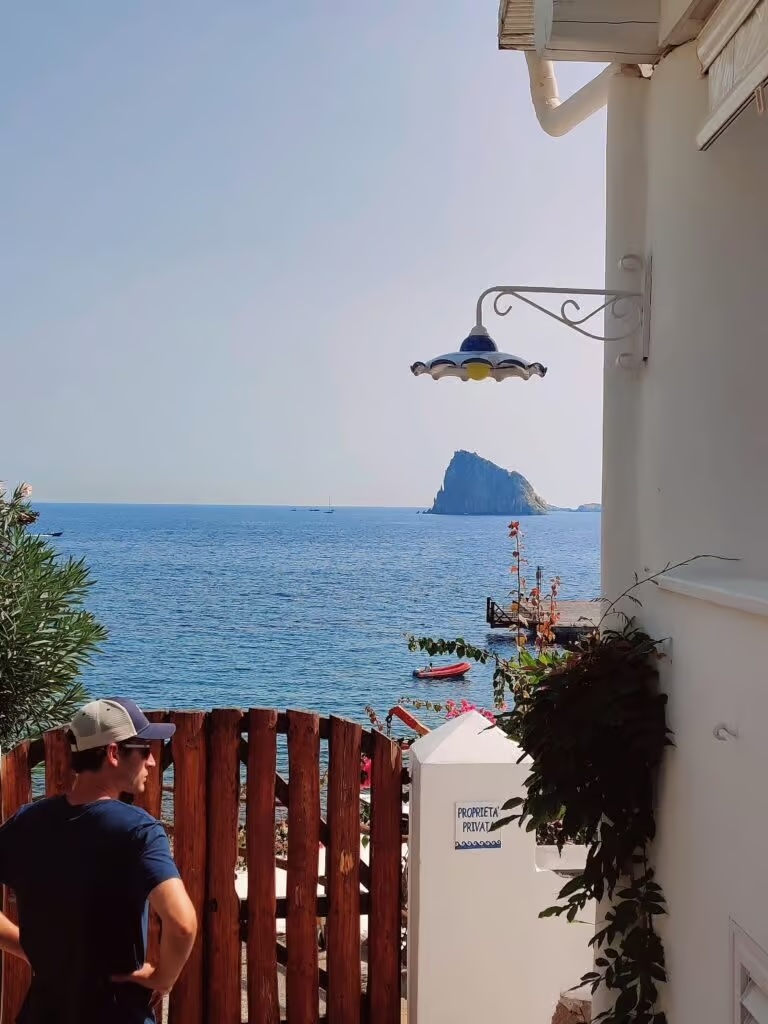
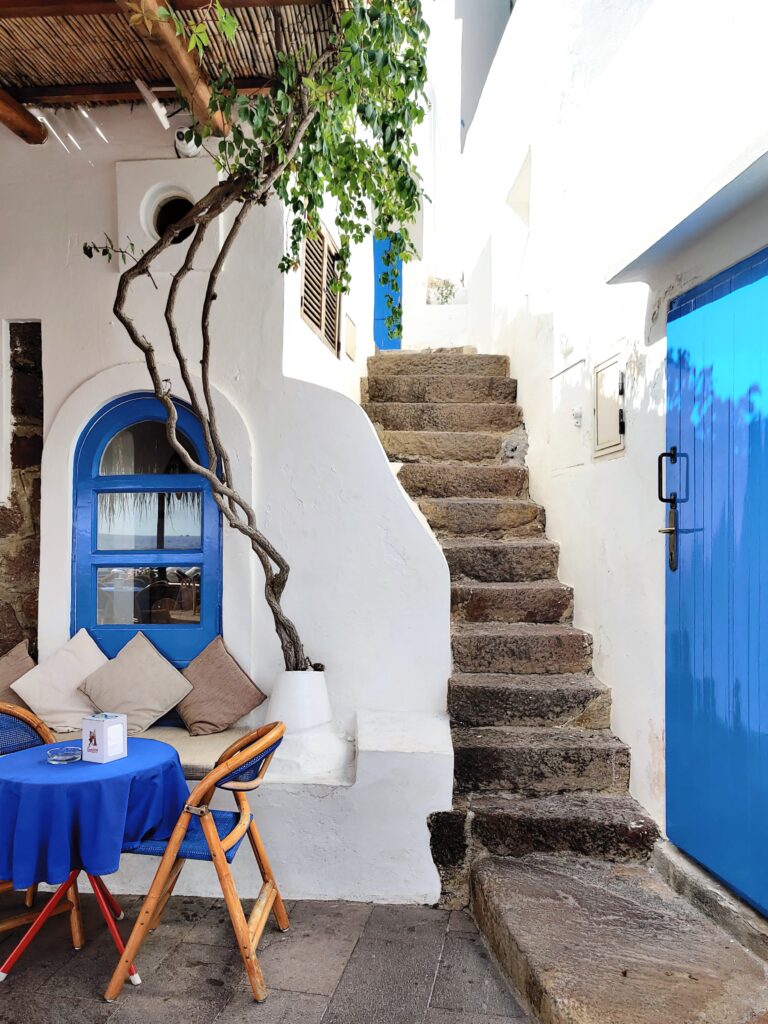
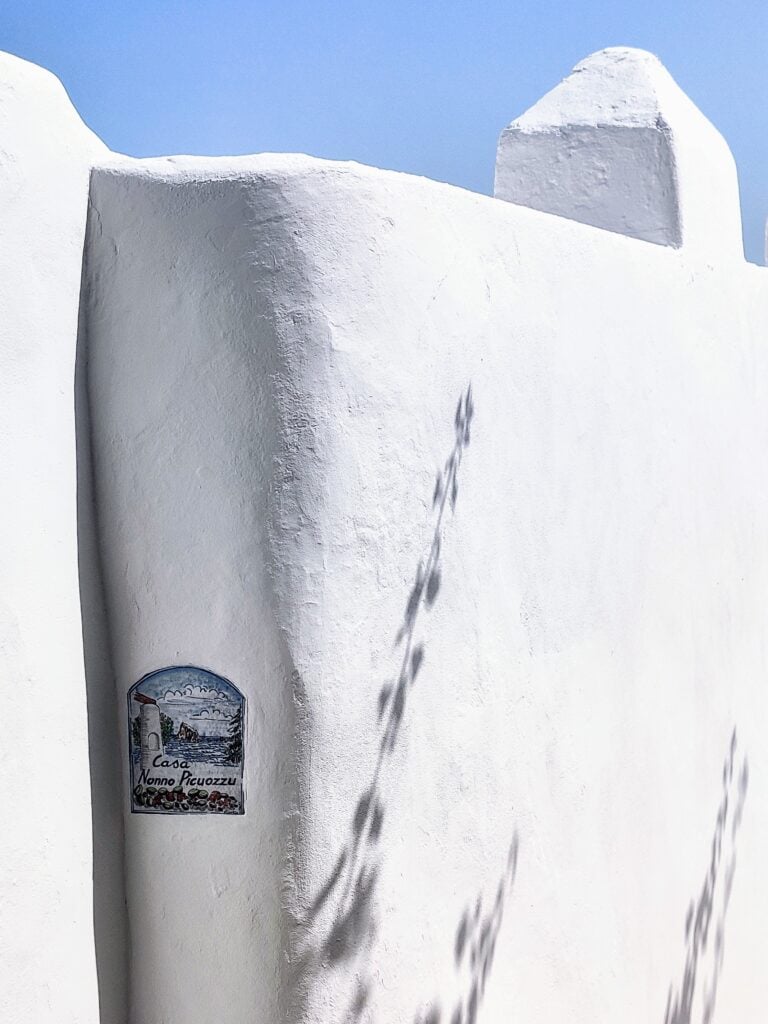
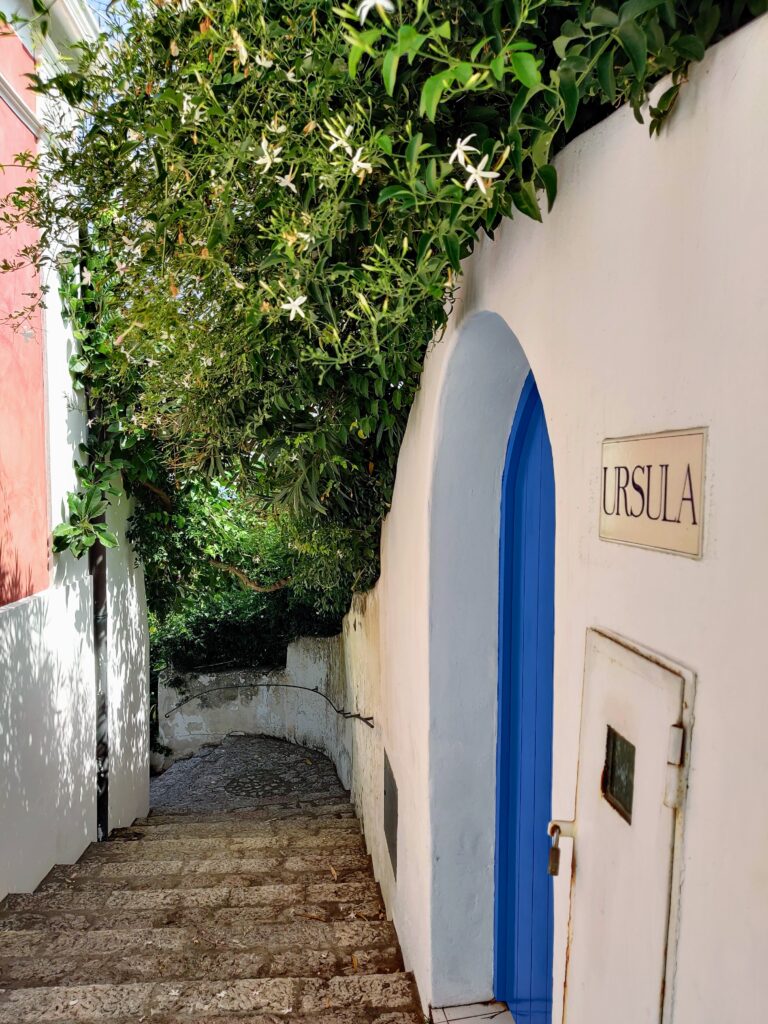
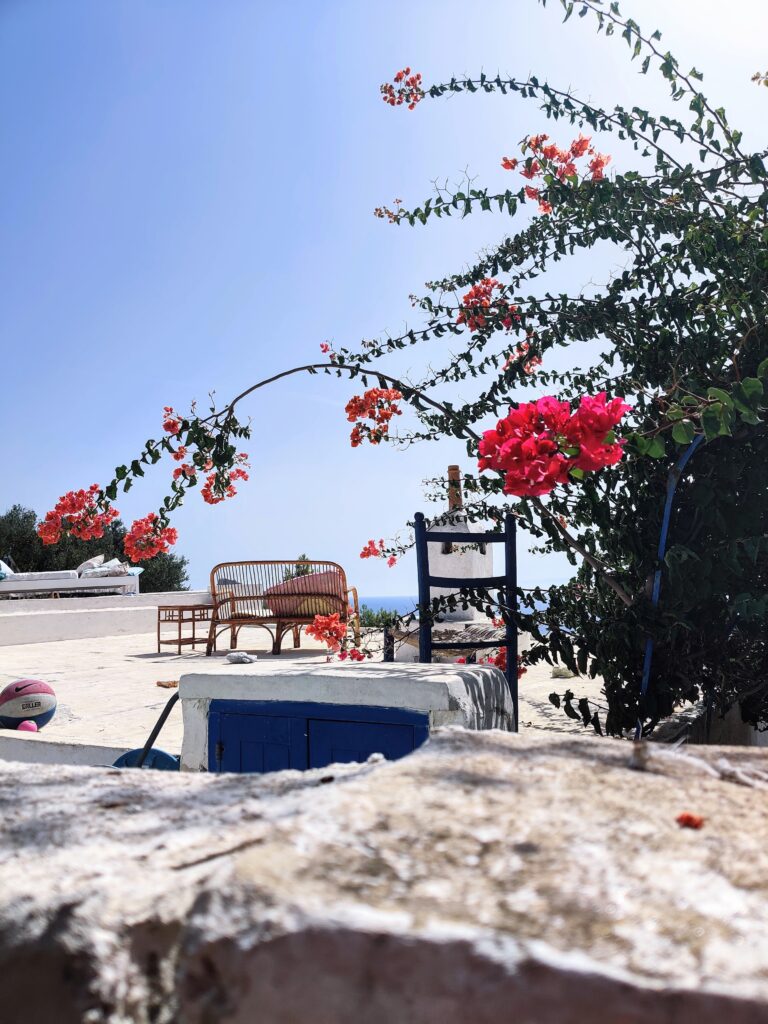
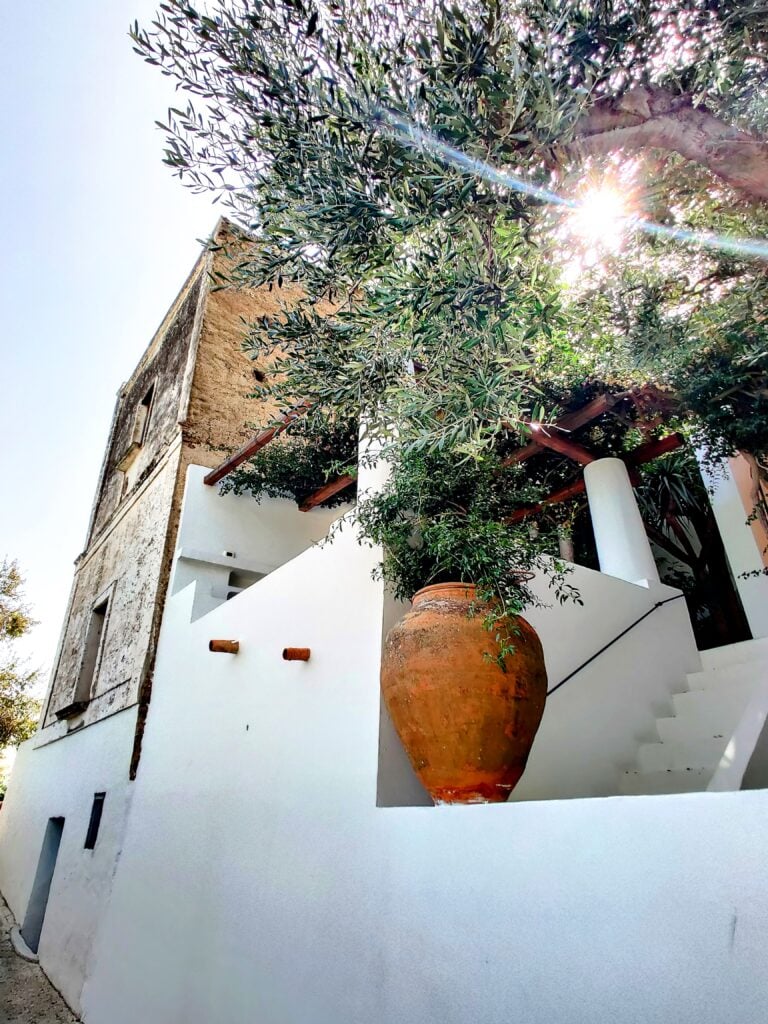
The heart of Panarea beats in San Pietro, a sun-drenched village where whitewashed houses pop against wild caper plants, swaying palms, and ancient olive trees. Mornings here are best spent meandering the quiet backstreets, soaking in the slow rhythm of island life—every villa is a character of its own, no two alike. The Church of San Pietro anchors the community, dedicated to the island’s patron saint who’s said to guard both land and sea. Just past the port and church, you’ll stumble upon a tiny thermal spring near Punta Peppemaria, where steamy waters hit 50°C (122°F) and locals swear by their healing magic.
In the mood to shop? Make a beeline for Moda Mare, an island staple since 1979, where you can design your own bespoke leather, suede, or beaded sandals—and have them ready before dinner.
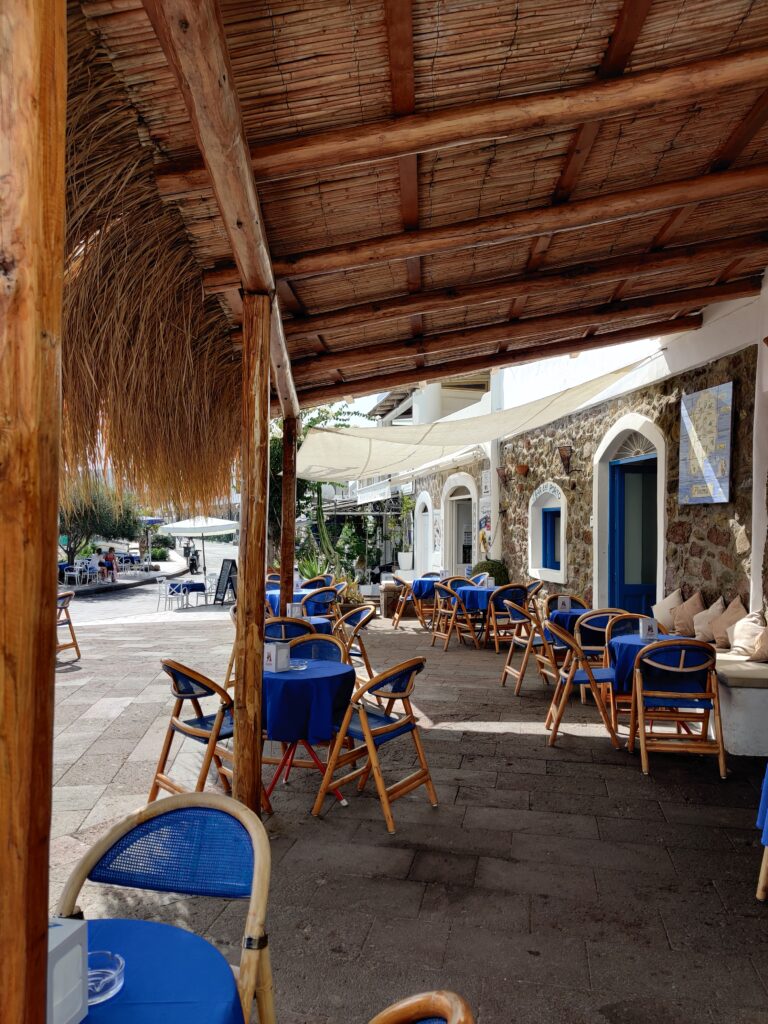
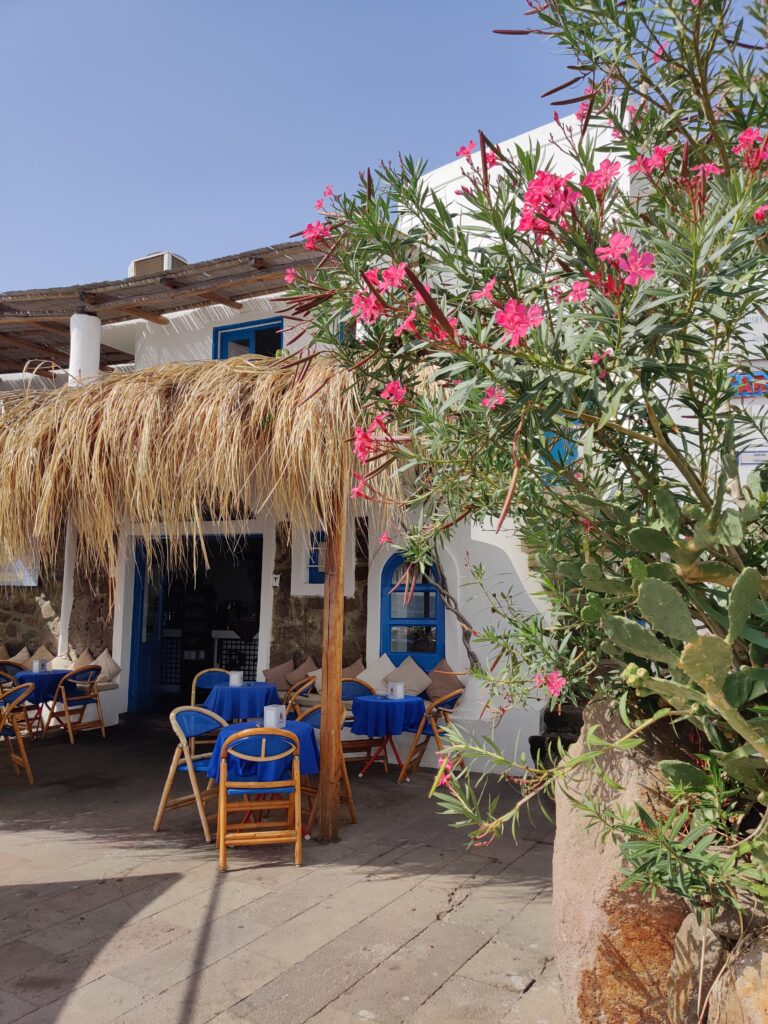
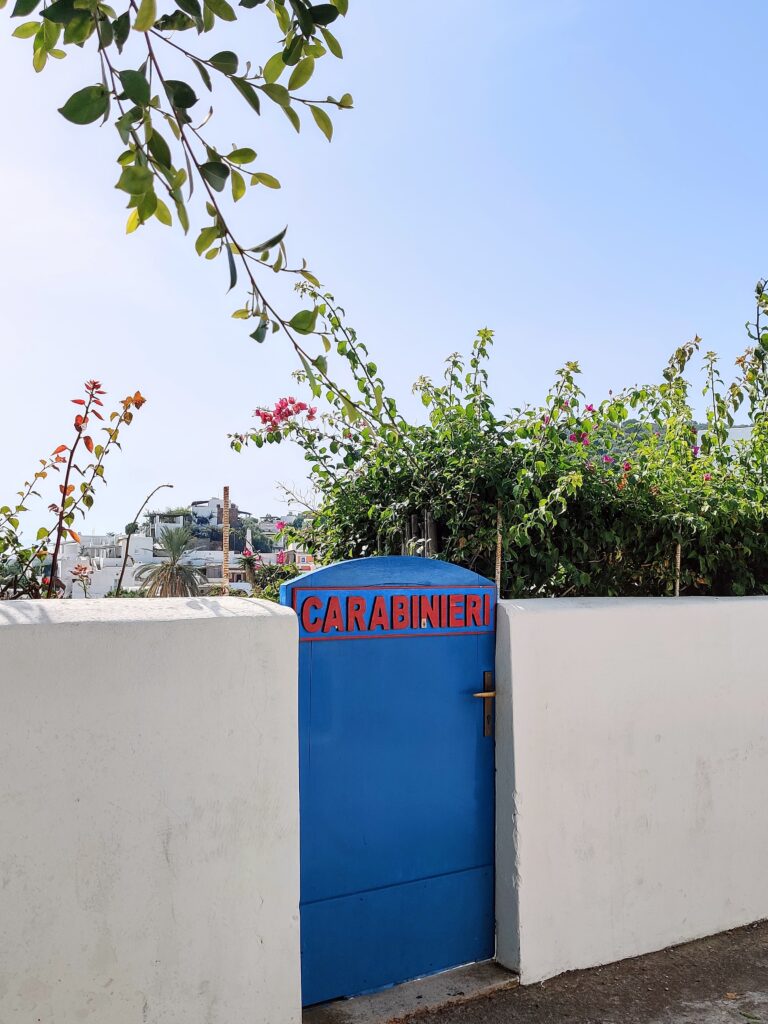
For aperitivo, Il Bar del Porto is the unofficial stage for the island’s best people-watching. And when night falls? All paths lead to the iconic Hotel Raya.
Morning: Ditella
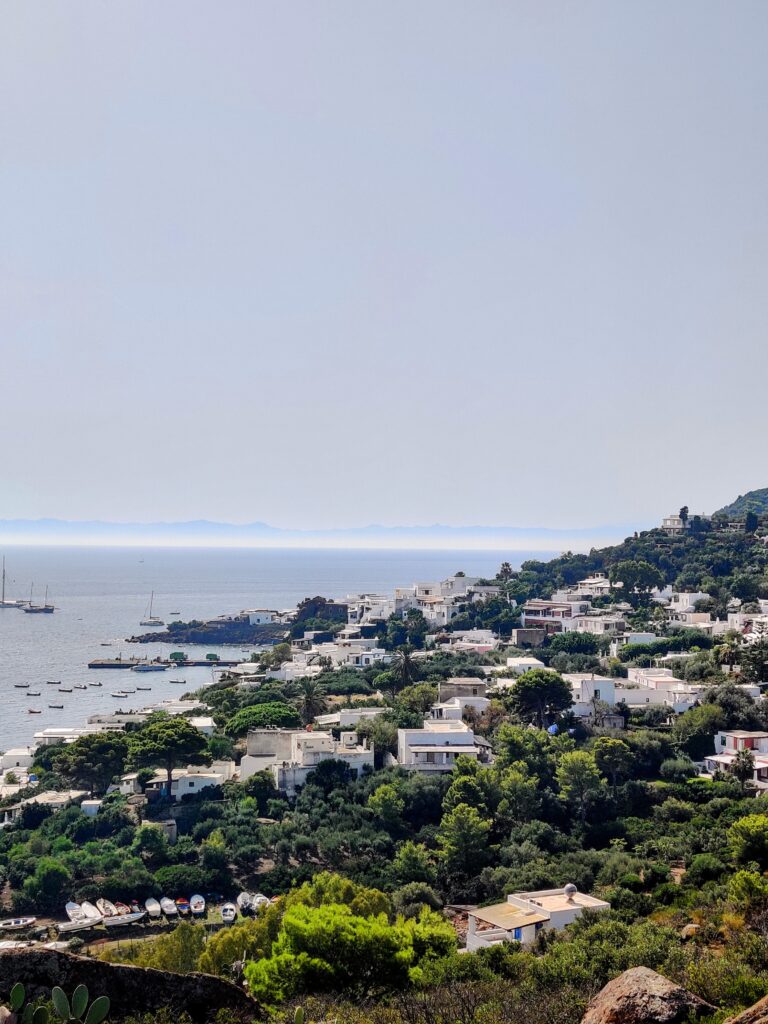
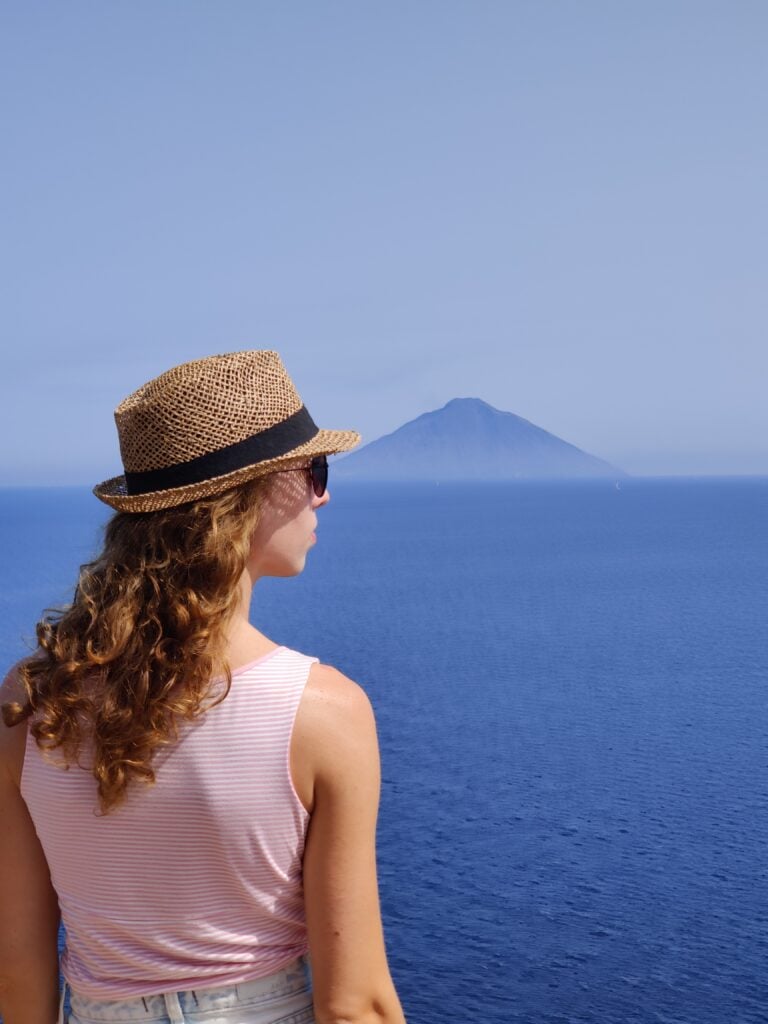
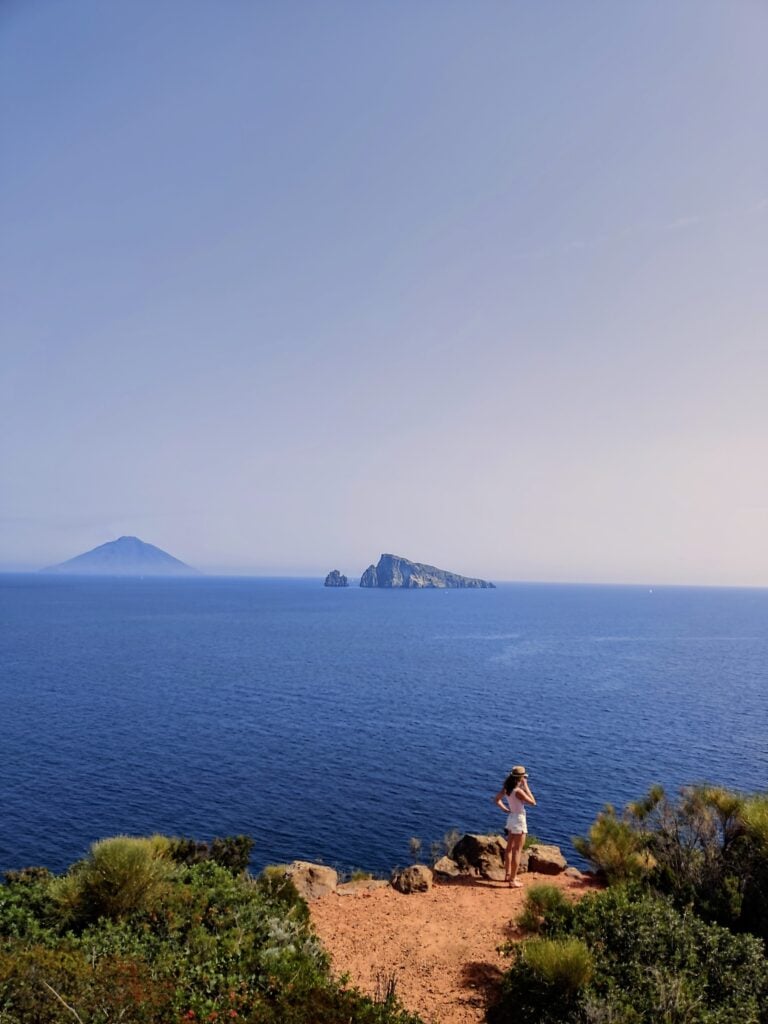
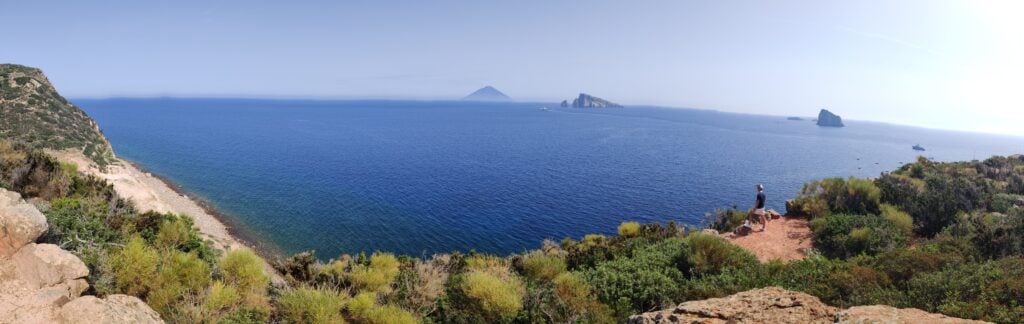
Ditella, located farther up north, is a much quieter neighborhood. It mainly caters to waterfront villas and boatyards with piles of fishing tackle. At the farthest end of Ditella you will find Spiaggia di Calcara. This is another area where the thermal waters are used as healing properties.
Lunch
Panarea serves up lunch options like it’s an art form—whether you’re craving a casual bite or something a bit more refined by the sea, it all comes down to your mood.
For a laidback, grab-and-go kind of lunch—think panini, pizza, arancini, focaccia, and all the baked carb-y goodness—head to Da Claudia or Il Forno di Panarea (literally “the oven of Panarea”). Want to eat right on the beach? Da Claudia’s beach bar, Calabeach, is the spot… if you can score a seat.
Feeling something more local and homey? Le Delizie di Nonna Pasqualina is your go-to. It’s tucked next to the port, totally unfussy, and every single dish is made from Nonna’s handwritten recipes. She’ll even proudly explain each one to you. Expect soulful island cooking—eggplant caponata, baked zucchini with cheese, rice salad with tuna and shrimp, fried zucchini flowers (some stuffed with sardines, some not), lemon marmalade, and whatever else her garden and the sea have offered that day.
If you’re leaning luxe, Bridge Ammare is your move. It sits on Cala degli Zimmari, the island’s only sandy beach, and plates up fresh-caught fish with a subtle Asian twist in a breezy, beachy-chic setting.
Afternoon: Cala degli Zimmari
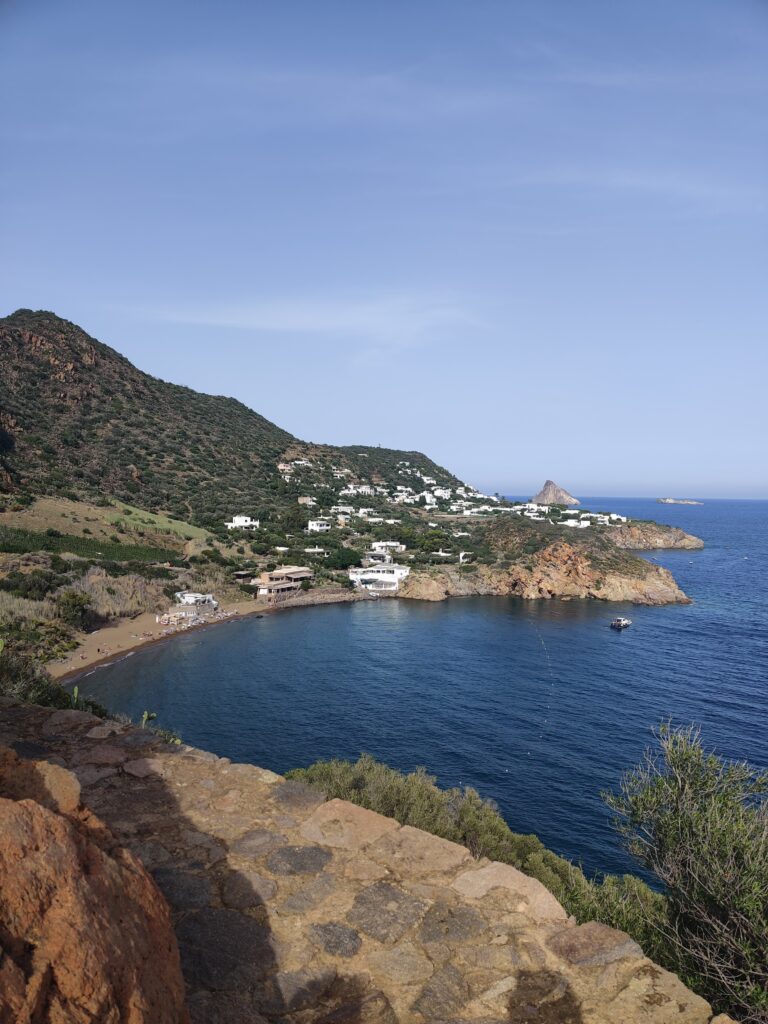
Cala degli Zimmari is Panarea’s one and only sandy beach—and yes, that means it’s the go-to in summer. Locals also call it the “red beach” thanks to the sand’s warm, rusty hue that sets it apart from the rest of the island’s rocky coast. You’ll find it in the Drautto district, named after the Turkish pirate Drauth who once anchored here, using the surrounding cliffs as his hideout while he waited to ambush passing ships. Pirates, red sand, and sunbathers—this beach has seen it all.
Afternoon: Cala Junco
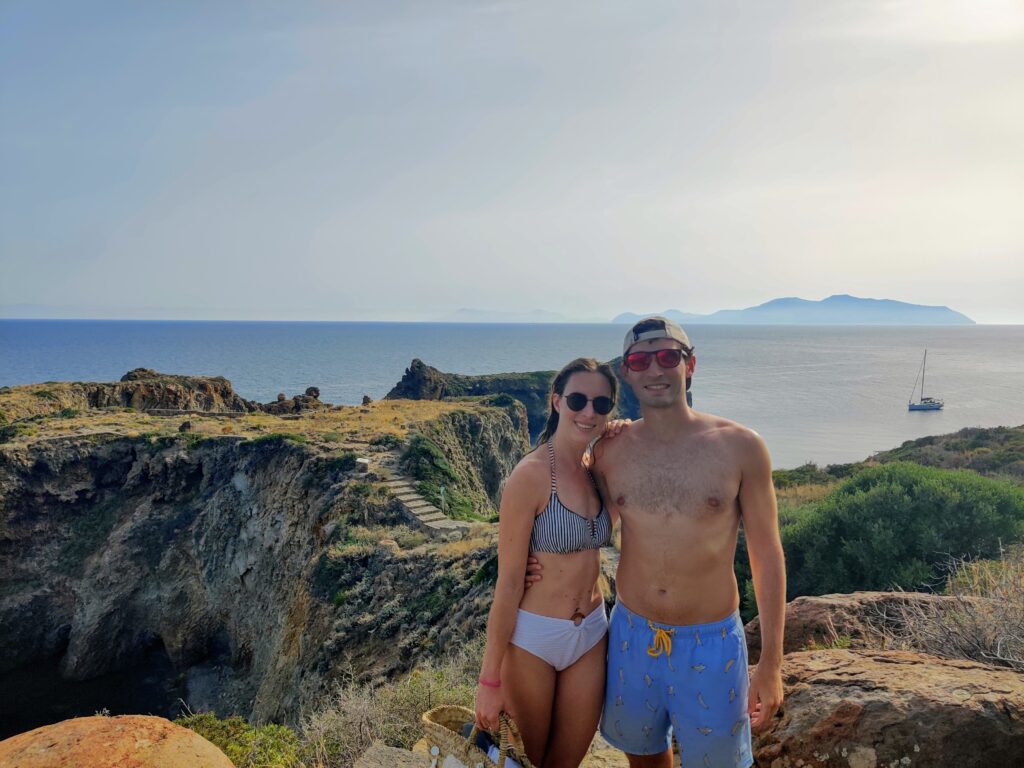
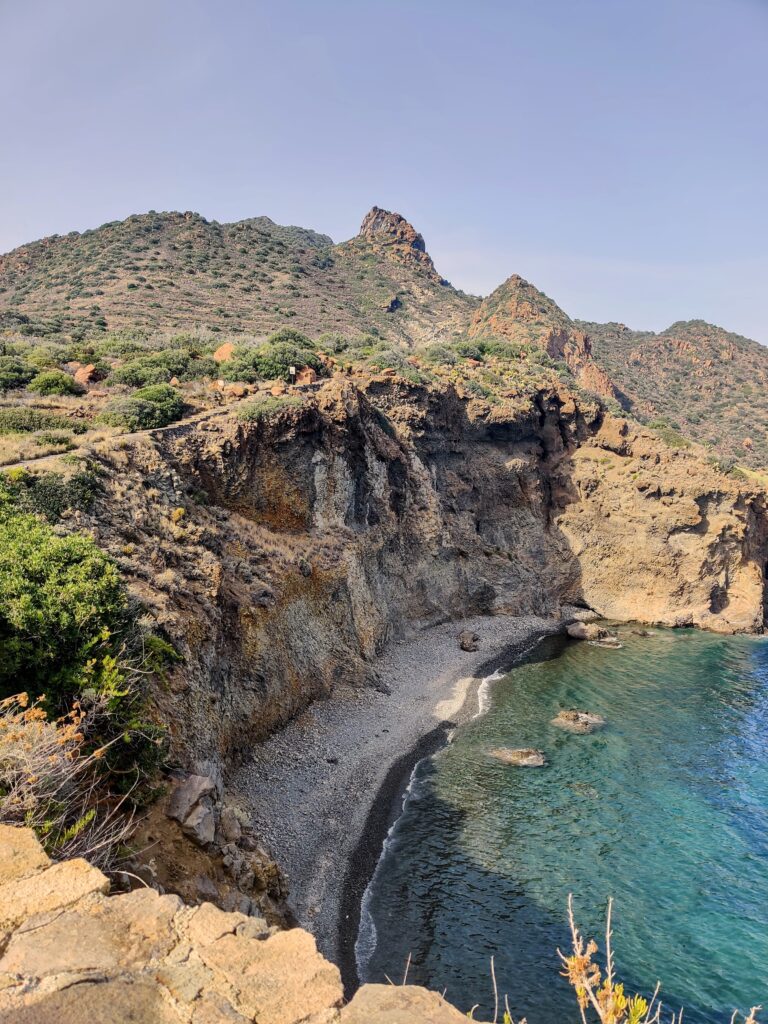
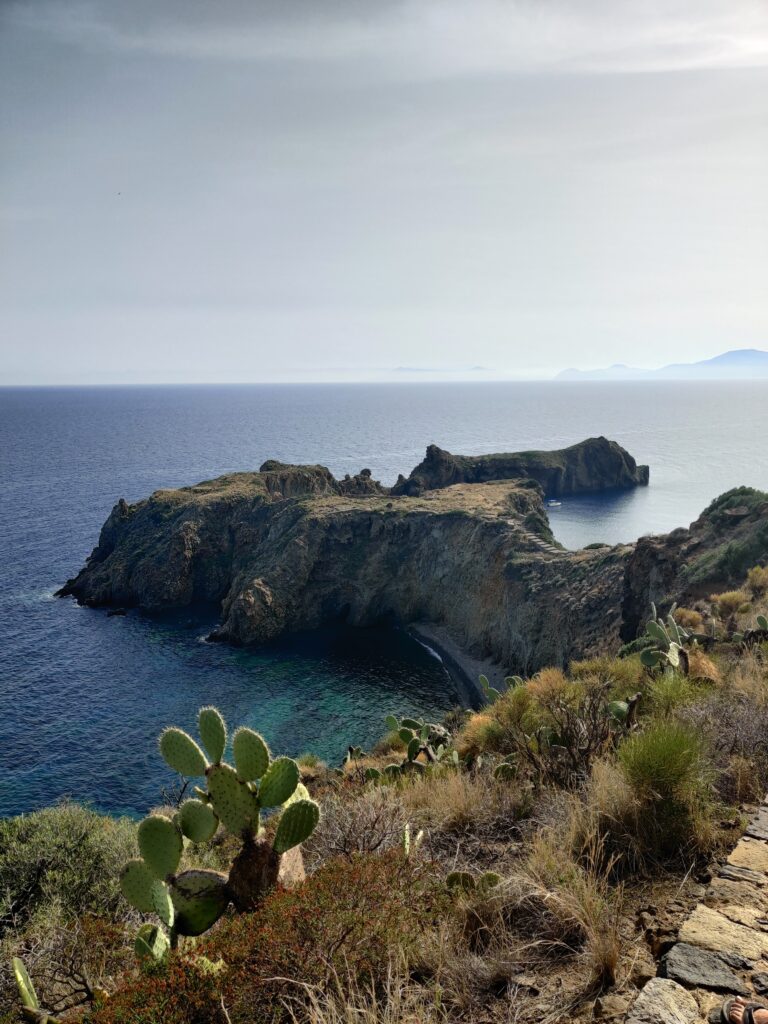
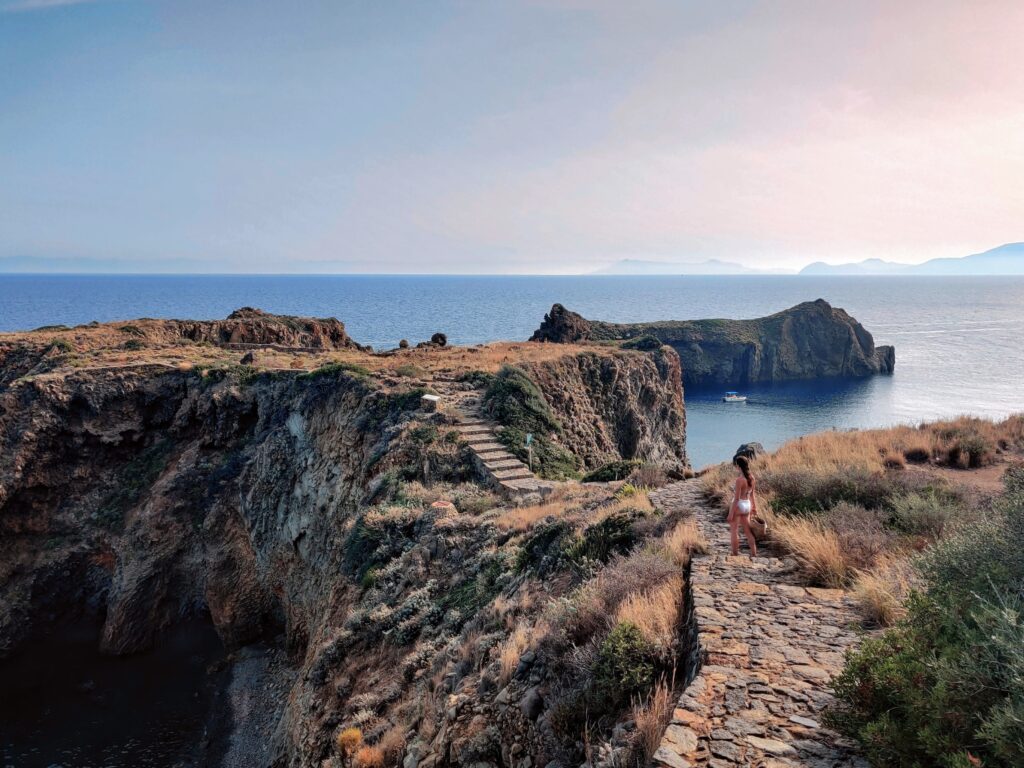
One of Panarea’s showstoppers is Cala Junco—a dreamy cove shaped like a natural amphitheater, framed by dramatic rock formations that cradle the sea like a hidden pool. The water here is unreal, shifting from emerald to turquoise to deep sapphire depending on how the light hits. If you hike just above the cove, you’ll stumble upon Punta Milazzese, a prehistoric village from the Bronze Age with the remains of 23 oval stone huts—proof that even ancient civilizations knew this spot was worth claiming.
TIP:
Remember to bring water shoes and snorkeling gear.
Dinner: Cusiritati
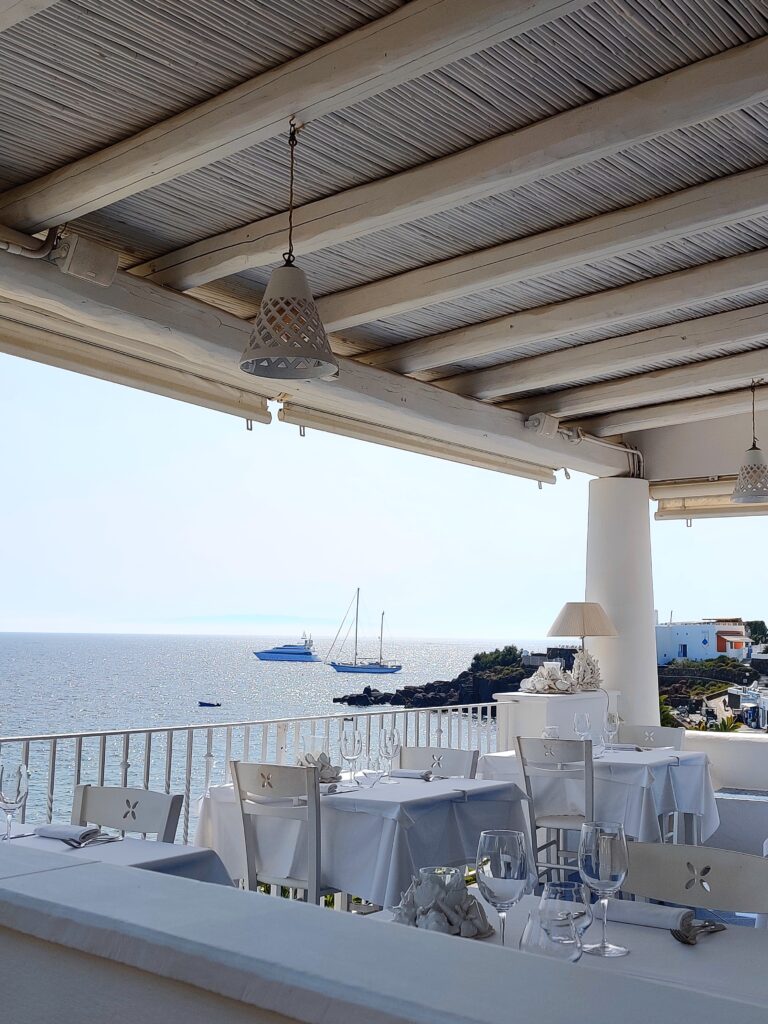
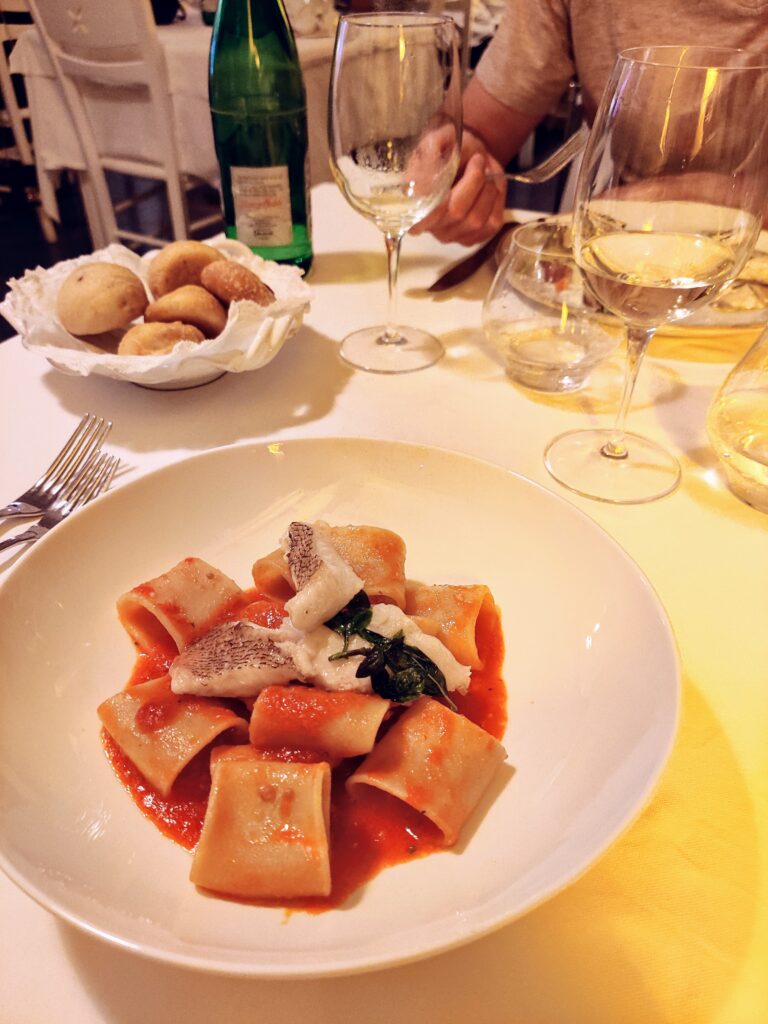
We had dinner at Cusiritati our first night in Panarea, drawn in by two things: the sweeping views of the islands (including the moody, occasionally erupting Stromboli volcano in the distance) and their signature pasta made with scorpionfish—a local delicacy and a bit of a daredevil dish. Scorpionfish, known to lurk in Panarea’s waters, are venomous little beasts with spines that can do real damage if not handled properly. But cooked the right way (minus the toxic organs and roe), they’re totally safe to eat. Or so we thought. I’m not saying the scorpionfish definitely had it out for us, but let’s just say Pat and I both woke up with some…gastrointestinal side quests. Nothing major—we still powered through the day—but our stomachs were a little off for a solid 24 to 48 hours. Coincidence? Maybe. But the scorpionfish might’ve had the last laugh.
If you're not quite feeling adventurous enough for venomous fish, head to Antonio Il Macellaio—aka the island’s answer to your “I need a break from seafood” prayers. By this point in the trip, you’ve probably had enough fish to sprout gills, so switching gears with an Italian steakhouse feels downright luxurious. Open since 1970, it’s not only the only steakhouse in the Aeolian Islands, but it’s also earned some serious bragging rights. In 2021, their Spanish Wagyu snagged the “Best Steak in Italy” title at the Braciamancora contest, and they’ve landed on the top 21 steakhouses in the country more than once. Chef Marco Tesoriero knows his way around the world’s finest cuts—from Kobe to American Angus to Rubia Gallega and Baltic Scottona—cooked low and slow over a coal grill. Not into meat? They’ve got pizza too. And for the finale? Mamma Maria’s homemade desserts made with Sicilian ingredients seal the deal.
~ Day 7: Panarea & Stromboli Island ~
Day: Explore Panarea by Boat
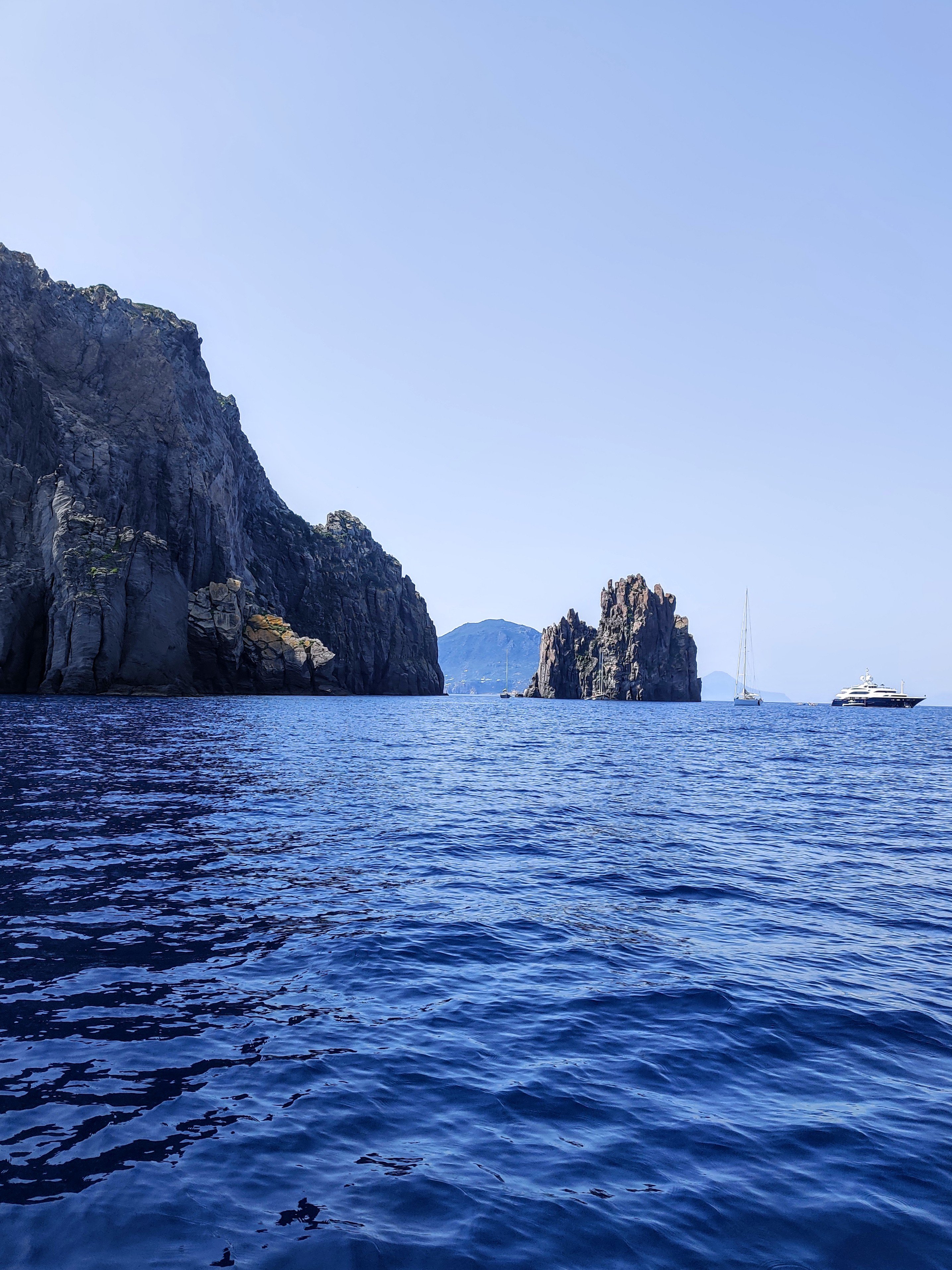
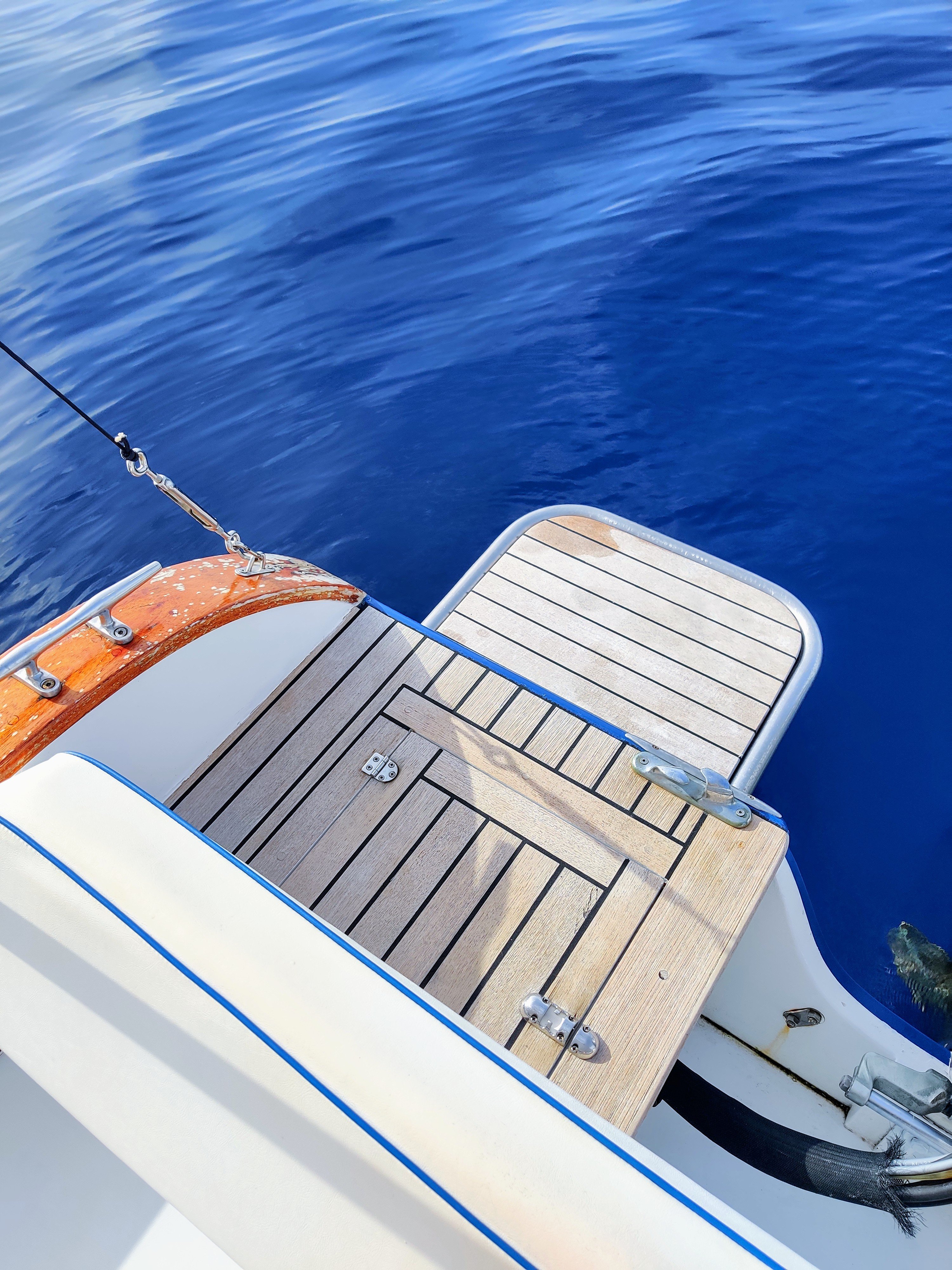
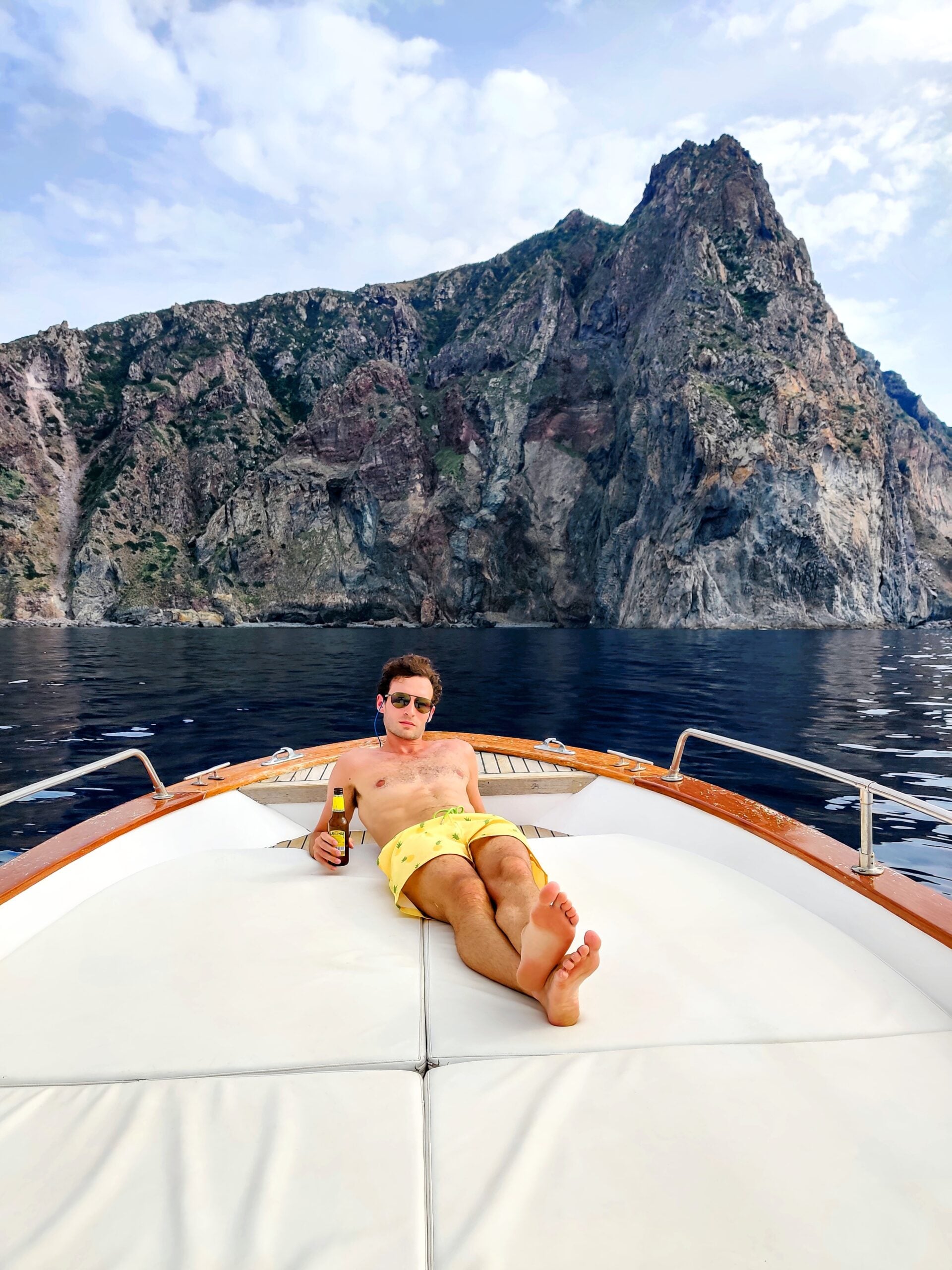
Before we hopped aboard our private old-school wooden boat (because yes, we're doing Panarea right), we swung by Il Forno di Panarea or Da Claudia to grab some panini, focacce, or pizze for the ride—plus drinks to keep things chill. The boat has a fridge, so we could stash our snacks and sip cold all day. We rented a charming, artisanal wooden boat that gave classic island vibes. Pro tip: ask them about snorkeling gear (do it!) or pick up your own in town before boarding. Cruising around Panarea by boat is the real reason people come here—you’ll get to weave around the dreamy, uninhabited islets of Basiluzzo, Bottaro, Dattilo, Lisca Bianca, and Lisca Nera. Total magic. If you don't feel comfortable driving your own boat or don't have a license, you can rent a full day skipper.
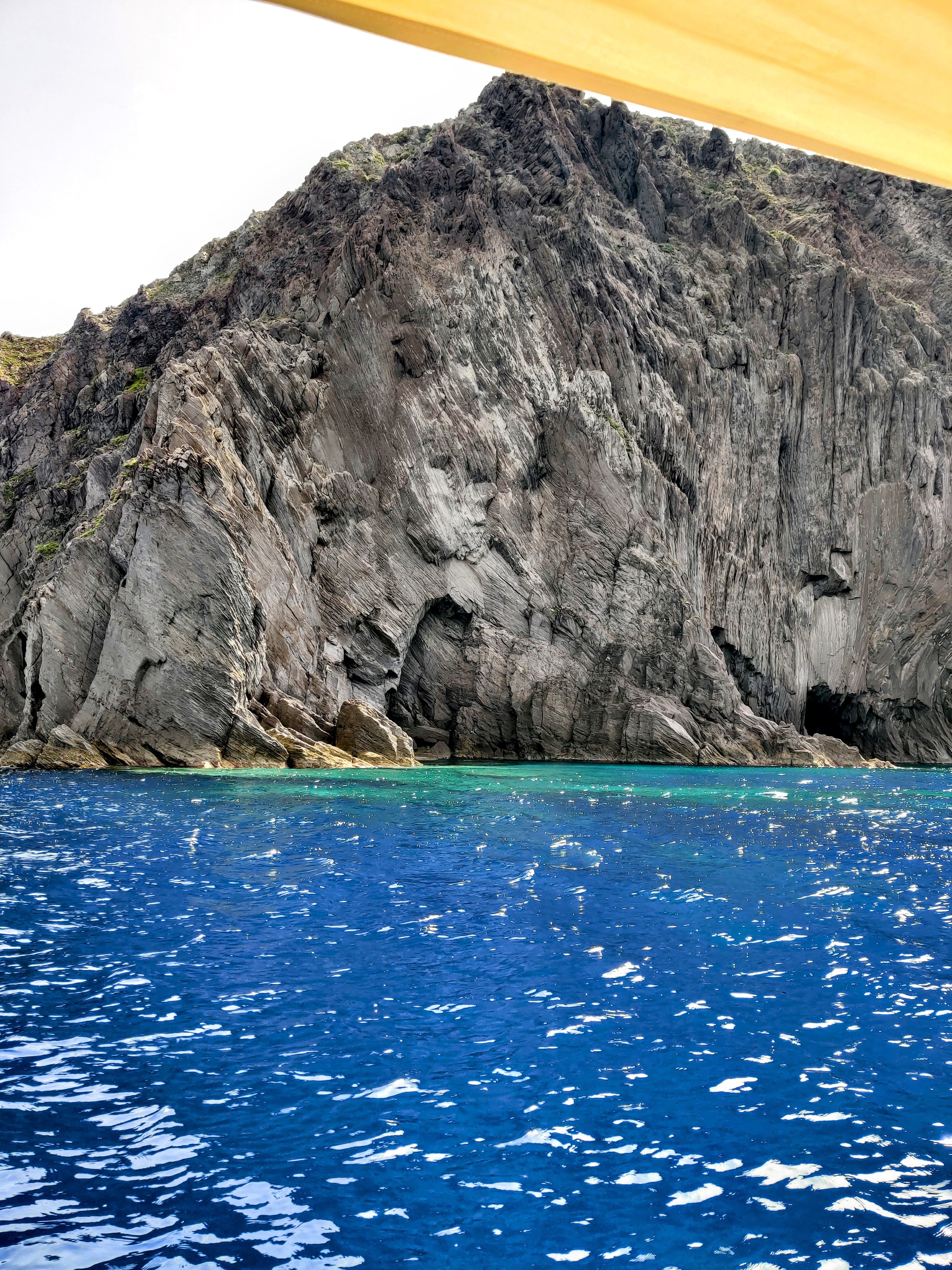
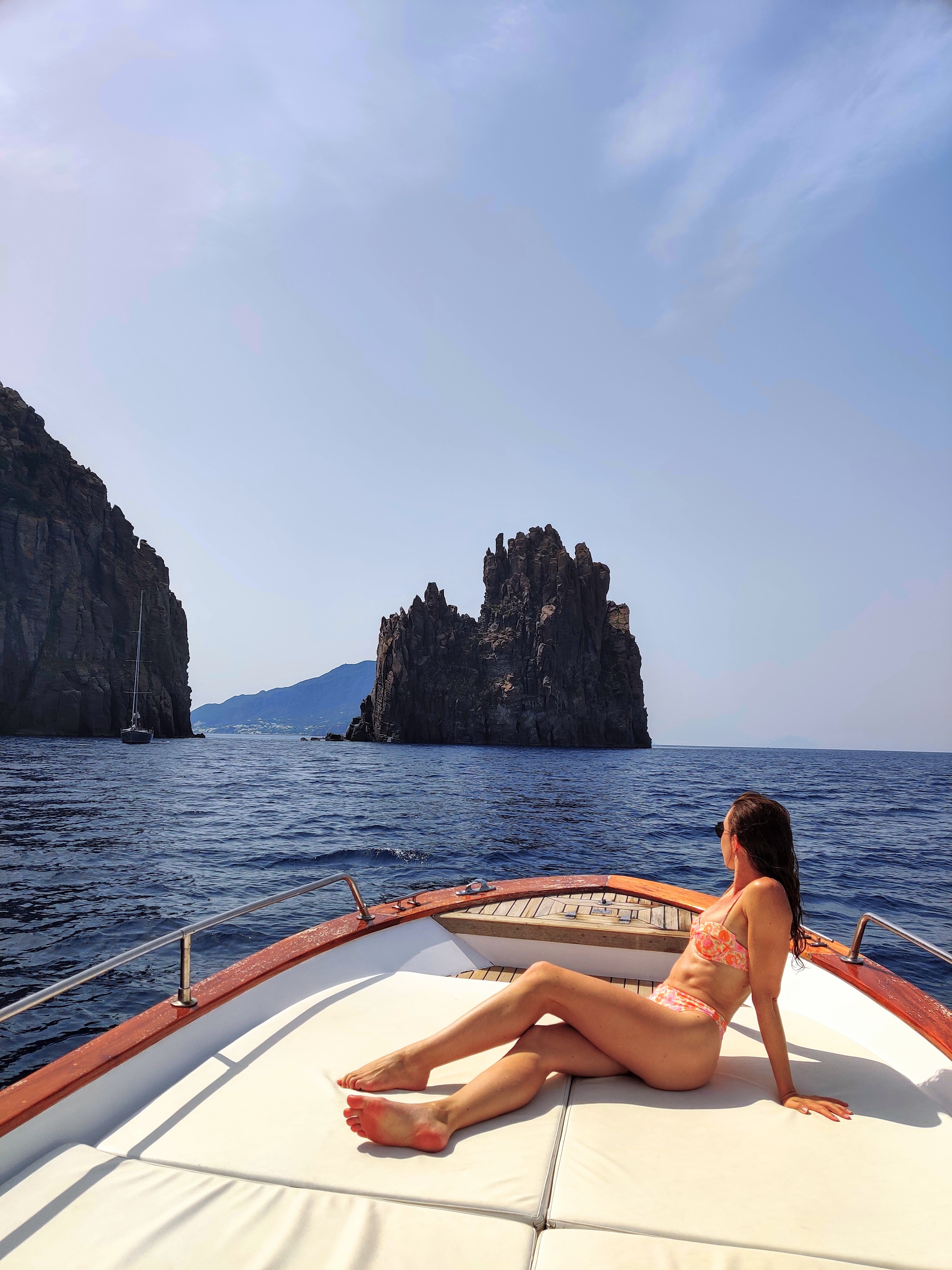
Pictured above is the Grotta degli Innamorati, or the Lovers’ Grotto, tucked inside the island of Lisca Bianca. Local legend says that if you share a kiss inside the grotto, you’ll be bound to your person for life. Romantic, a little mystical, and very on brand for the Aeolian Islands.
Evening (Optional): Stromboli Experience
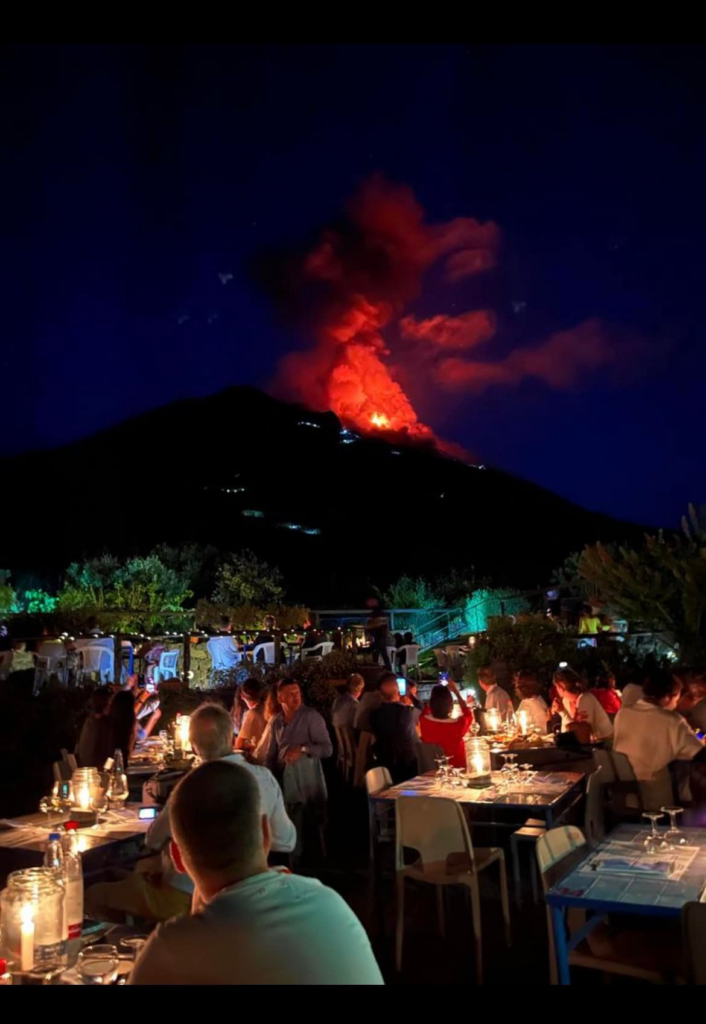
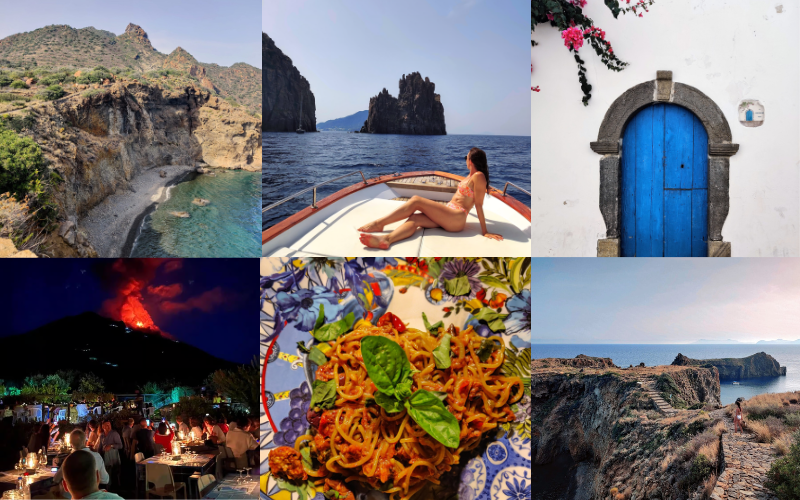
Stromboli is a little island with a big personality—home to one of Italy’s three active volcanoes, it rises dramatically out of the Tyrrhenian Sea just north of Sicily. Its name comes from the Ancient Greek Strongyle, meaning “round,” thanks to its swelling, dome-like shape. With a population hovering somewhere between 400 and 850 locals, the island feels wild, remote, and powerful. Stromboli is constantly rumbling with minor eruptions, earning it the nickname Lighthouse of the Mediterranean. And yes—she’s still very much alive. Her most recent major eruption was as recent as July 2024. At the top are three active craters, and the Sciara del Fuoco (Stream of Fire)—a massive, horseshoe-shaped scar formed from thousands of years of collapses—sends lava sliding down into the sea. Stromboli’s signature volcanic behavior, called strombolian activity, is like nature’s fireworks: every 10–20 minutes, mini explosions shoot lava and glowing lapilli high into the air. Thanks to its continuous eruptions for nearly 2,500 years, this island has become a UNESCO World Heritage site and a living study for volcanologists.
If you're chasing that kind of night you'll never forget, there are two ways to do Stromboli right. Option one: hop on the evening excursion from Panarea around 7pm. As the sky fades into gold and indigo, you’ll cruise out toward the volcano and watch it put on its fiery show from a safe distance, guided by locals who know every rumble and spark. It’s raw, otherworldly, and seriously cinematic. Option two? Go full main-character energy and book a private water taxi to Stromboli. There, you can grab dinner at the island’s famed observatory—where you’ll be eating wood-fired pizza under actual lava. I mean… come on.
Dinner: Ristorante da Pina
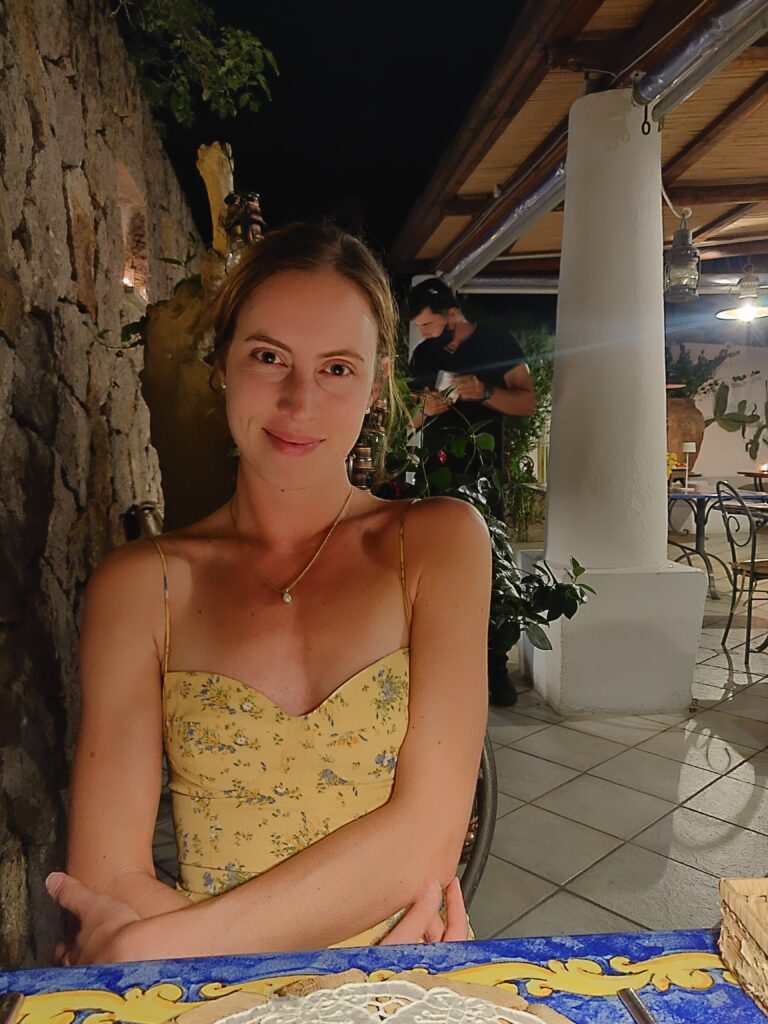
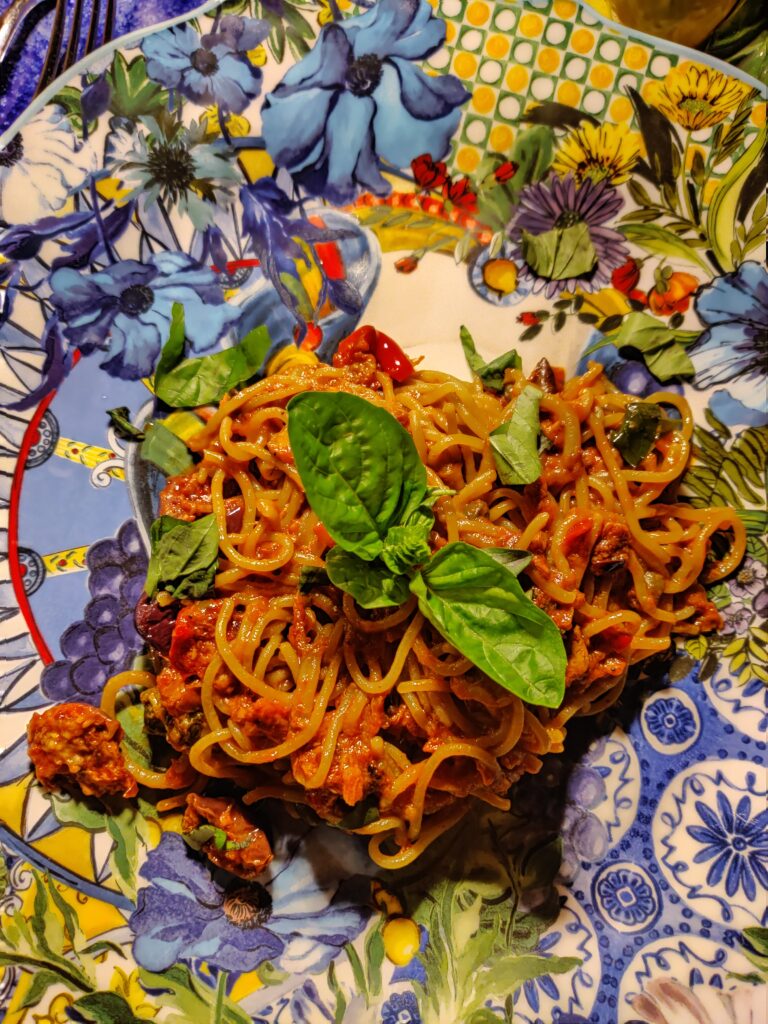
Alternatively, if you're cooked from spending the whole day out in the sun, head to Ristorante da Pina. You can’t miss the opportunity to taste the famous dishes of delicious cuisine of Mrs. Pina Cincotta Mandarano. Pina opened her first small, 4 table restaurant in Panarea back in 1968. Slowly slowly it expanded to become the 80 person restaurant it is today. Her dishes became so well-known, she is considered one of the best cooks in all of the Aeolian Islands. Today, the restaurant is run by her children. She’s known for dishes like her big shrimp al cartoccio on lemon leaves, crostini with clams, lobster fettucini, and baccalà fish with capers. If you’re in the mood for meat, try the goat with olives. For dessert, try her frittelle di ricotta and pumpkin sfinci.
~ Day 8: Savoca ~
Morning: Ferry back to Milazzo
We took the 1h 30 min ferry from Panarea back to Milazzo and picked up our car from the parking garage. Before getting to the airport hotel for the night, we decided to make a day of it and stop by the town of Savoca.
Afternoon: Savoca
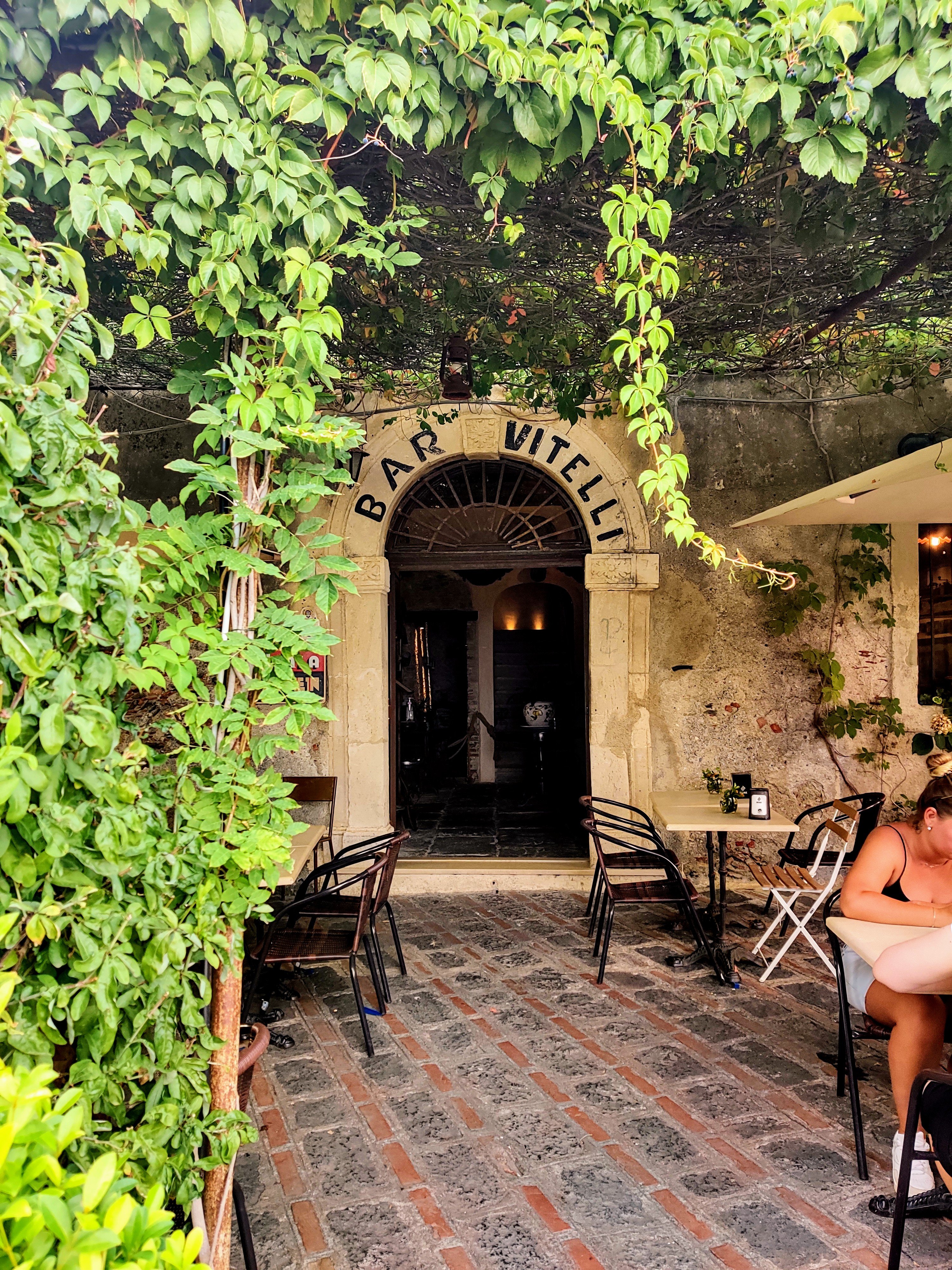
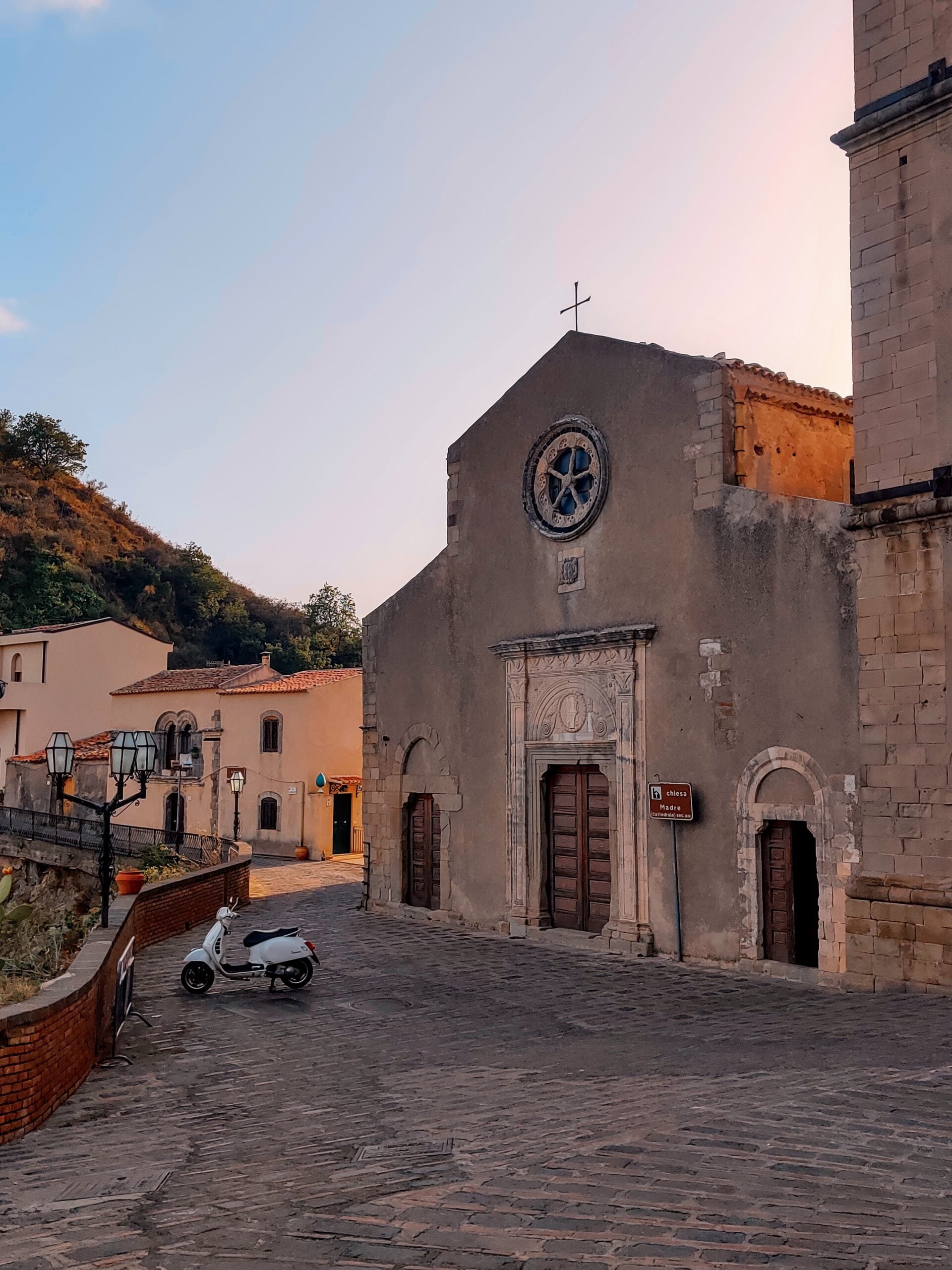
Why Savoca, Sicily Was Named One of the Most Beautiful Villages in Italy
Perched high above the Ionian coast, Savoca is the kind of place that feels like it’s holding its breath—quiet, golden, and untouched by time. Officially named one of I Borghi più belli d’Italia, this sleepy Sicilian village is more than just a Godfather film location (though yes, Bar Vitelli is very real and very worth a granita stop). It’s a labyrinth of stone alleyways, sea views, and moments that feel almost too cinematic to be accidental. Whether you're chasing movie history, hidden charm, or just a slice of slow, soulful Italy—Savoca delivers.
- How to Get Around Sicily -
A 7-8 day Sicilian Volcano Itinerary that spans Etna and the Aeolian Islands involves a mix of car rentals and ferries. Unfortunately, if you wish to see the best, most iconic, and genuine spots in Italy, a car is mandatory on both mainland Sicily and on Salina. On Panarea, it's small enough that you get around on foot—plus cars aren't allowed on island! If you are afraid of driving in Italy, please do not be scared. There is plenty of space on the roads and driving an automatic car is just as easy as driving anywhere else in the US. The only difficulty driving comes when you near a big city like Palermo, so we recommend parking on the outskirts of big historic cities.